
- Health Conditions A-Z
- Health & Wellness
- Nutrition
- Fitness
- Health News
- Ayurveda
- Videos
- Medicine A-Z
- Parenting
Byheart Formula Recall Update: 2 More Infants Hospitalized, FDA Says

Credits: Canva
Health and Me had previously reported on the recall of ByHeart Baby Formula after 10 US states reported 13 cases of infant botulism after its use. Ever since the botulism outbreak, two more cases of infant botulism was reported, making the outbreak across 12 US states, as confirmed by the Food and Drug Administration (FDA), US's advisory.
As of now, a total of 15 cases of infant botulism has been reported, confirmed the Centers for Disease Control and Prevention (CDC), US.
FDA in its advisory said, "For 14 cases with illness onset information available, illnesses started on dates ranging from August 9 to November 10, 2025. All 15 infants were hospitalized."
Also Read: Diabetes No Longer A Disease Of Aging; Four Things Youth Should Know About It, According To Doctor
From the information available, of the 14 infants, the age ranged from 16 days to just over 5 months, and half of them were females. The FDA confirmed that the infants who fell ill were all fed ByHeart Whole Nutrition powdered infant formula.
The multistate outbreak is now being investigated by FDA, CDC, and California Department of Public Health Infant Botulism Treatment and Prevention Program, and other state and local health authorities, the advisory stated. On Tuesday, ByHeart informed that the company is expanding its earlier recall in order to include all batches of the baby formula and the Anywhere Pack single-serve sticks nationwide.
"The safety and well‑being of every infant who uses our formula is, and always will be, our highest priority. This nationwide recall reflects our commitment to protecting babies and giving families clear, actionable information. Alongside this recall, we are conducting a comprehensive investigation to do our part to get the answers parents expect and deserve," said Mia Funt, the president and co-founder of the company.
Also Read: Exposure to Toxic, Poisonous Air Does Not Build Pollution Immunity, Doctors Warn!
What Is Infant Botulism?
Most common form of all botulism in babies, who are between 2 to 8 months old. It happens when the bacteria spores grow in a baby’s intestines and produce the toxin. Honey and contaminated soil can be sources of infant botulism. Adults can also get this type, though it’s rare.
What Are The Symptoms Of Botulism In Infants?
As per CDC, the symptoms include:
- Most infants with infant botulism will initially develop constipation, poor feeding, loss of head control, and difficulty swallowing
- If untreated, infants with infant botulism experience a progressive flaccid paralysis that can lead to breathing difficulties and required weeks of hospitalization.
States Hit By Infant Botulism Outbreak:
As per the FDA advisory, here is the list of states affected by infant botulism:
- Arizona
- California
- Illinois
- Kentucky
- Minnesota
- North Carolina
- New Jersey
- Oregon
- Pennsylvania
- Rhode Island
- Texas
- Washington
The company ByHeart Inc's two lots of Whole Nutrition Infant Formula has been recalled, the lots are:
- Lot: 206VABP/251261P2 ("Use by 01 Dec 2026")
- Lot: 206VABP/251131P2 ("Use by 01 Dec 2026")
What Parents Should Do?
As per the FDA advisory, parents and caregivers should stop using any ByHeart infant formula products immediately. Furthermore, the advisory notes:
- If your child consumed ByHeart formula and is experiencing symptoms (see below) seek immediate medical attention.
- If your child consumed ByHeart formula and is not currently showing symptoms, continue monitoring them and seek medical attention if symptoms develop.
- If you still have the formula in your home, you should:
•keep the container in a safe spot and be sure to label that product as DO NOT USE.
•If your child develops symptoms your state health department might want to collect your formula container for testing. If your child does not develop symptoms after 30 days, throw your containers out.
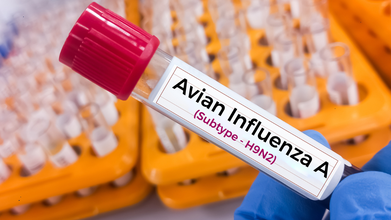
Italy Confirms First Human Case Of H9N2 Avian Flu Case In Europe
Credit: iStock
The Italian authorities this week have confirmed the first human case of H9N2 Avian Flu in the Lombardy region – also the first in the European Union.
The influenza A(H9N2) infection was identified in a traveler returning from a non-European country, where the virus has previously been identified in birds. The patient has coexisting medical conditions and is currently receiving medical treatment in a hospital.
Italy’s Ministry of Health, in a statement, said that they identified “infection with the low-pathogenicity avian influenza A (H9N2) virus of animal origin, in a frail person with concomitant illnesses, who came from a non-European country where he contracted the infection, and is currently hospitalized”.
Public health authorities in the country have performed contact tracing as a precaution to identify and control possible onward transmission and have initiated several epidemiological and microbiological investigations.
“All the required checks were promptly carried out, and the relevant contacts were identified, as part of the ordinary prevention and surveillance activities. Currently, no critical issues have been identified, and the situation is being constantly monitored,” the Ministry said.
What is H9N2?
H9N2 is a subtype of the avian influenza A virus (bird flu) that causes respiratory illness in poultry worldwide and is endemic in many parts of Asia, Africa, and the Middle East.
While low-pathogenic in birds, it sporadically infects humans—usually children—causing mild, influenza-like illness, though severe cases can occur.
According to the WHO, most human cases of infection with avian influenza A(H9N2) viruses are exposed to the virus through contact with infected poultry or contaminated environments.
Also read: Japan Confirms New Highly Pathogenic Bird Flu Outbreak: Report
Human infection tends to result in mild clinical illness. However, globally, there have been some hospitalized cases and two fatal cases reported in the past.
“Based on available information, further sporadic human cases could occur as this virus is one of the most prevalent avian influenza viruses circulating in poultry in different regions. With the currently available evidence, the WHO assesses the current public health risk to the general population posed by this virus as low,” the WHO said.
Human bird flu cases have been reported in countries like China, India, the UK, and Vietnam, often resulting in full recovery.
Also read: UK Reports Its First Human Case Of Bird Flu
Rising Global Bird Flu Cases: Are Humans At Threat
Globally, the spread of bird flu cases has been driven by migratory birds, with increasing outbreaks in poultry farms across Japan, India, South Korea, and the US, among others.
To date, most human cases have occurred in people handling infected poultry or animals.
Key Symptoms of bird flu in humans include:
Cough,
sore throat,
runny or stuffy nose,
difficulty breathing
High fever (often >38°C),
fatigue,
muscle/body aches
Conjunctivitis (red/irritated eyes),
nausea,
vomiting,
diarrhea.
In severe cases, pneumonia and Acute Respiratory Distress Syndrome (ARDS), have been reported.
Human infections remain rare, and the risk is also low, yet scientists say that the virus may someday evolve into a variant that can cause significant harm to humans. Recent infections in mammals (like cattle) increase concern.
Bird flu (H5N1) was detected in the US milk supply, particularly in raw milk from infected dairy cows, with high levels found in milk and udder tissues.
“There is a consensus among those who study how infectious diseases originate and spread that the next pandemic in humans is most likely to originate in a bird flu. Of the different types of bird flu that are especially important, H5N1 avian influenza is considered the most likely candidate for a spillover event, with a high fatality rate,” Dr. Gautam Menon, Professor of Physics & Biology, Ashoka University, told HealthandMe.
“From the small number of infections in humans that have been diagnosed, we know that about 30-40 percent of such cases can be fatal. But we don’t know the possible background of infections in which these deaths or serious cases might occur. In particular, the possibility of asymptomatic infections is open,” he added.
Noelia Castillo: 25-year-old Spanish Woman Dies By Euthanasia After Long Legal Battle

Credit: X.com
A 25-year-old Spanish woman has died by euthanasia after a long battle with her father over her right to die.
Noelia Castillo, a rape survivor who was left paralyzed in her lower half of the body after a suicide attempt in 2022, died on Thursday evening at a hospital in Barcelona.
While the Catalan regional government had granted her the right to assisted dying in 2024, her father, Geronimo Castillo, had raised legal objections. Her wish to ‘die in peace’ has also sparked debate around the country’s right-to-die law -- legalized in 2021.
Who Is Noelia Castillo?
Much of Castillo’s life during her childhood was spent in care homes. Her father's problems with alcohol had a significant impact on her mental health, and she underwent psychiatric treatment since her early teens.
Later, she was diagnosed with conditions including obsessive-compulsive disorder and Borderline Personality Disorder.
She was raped twice: first by an ex-boyfriend and later by three men in 2022 while at a state-supervised facility for vulnerable youth.
The assaults, which took a severe toll on her mental health, led her to make multiple suicide attempts.
In October 2022, she jumped from a fifth-floor window, which left her with a severe spinal cord injury and permanent paralysis in her lower body.
Also read: Harish Rana, India’s First Passive Euthanasia Case, Dies at AIIMS
Noelia Castillo’s Fight For Euthanasia
Castillo chose assisted dying to escape years of physical pain and emotional trauma.
In her final days, Castillo spoke openly about her suffering and her decision. In an interview with Spanish broadcaster Antena 3, she said: “I just cannot go on anymore… I want to go in peace now and stop suffering.”
Speaking earlier to Spanish TV programme Y Ahora Sonsoles, she added: “I am very clear… none of my family is in favour of euthanasia. But what about all the pain I’ve suffered during all these years?”
In 2024, the Catalan regional government granted her the right to assisted dying in 2024. But the process was suspended after legal objections raised by her father. According to her father, her mental health did not allow her to make better decisions about herself.
Noelia Castillo: 18-month-long Legal Battle
Christian Lawyers (Abogados Cristianos) had been attempting to block her death until the last moment. For 18 months, the case moved through multiple courts, eventually reaching Spain’s Constitutional Court, which ruled there was “no violation of fundamental rights” in allowing her euthanasia.
Finally, the European Court of Human Rights (ECHR) ruled this week in Noelia Castillo's favour, and her death was eventually confirmed late on Thursday.
In a TV interview this week, she said nobody in her family had supported her decision to die by euthanasia, and her father "hasn't respected my decision and never will".
"I want to go in peace now and stop suffering," she told Antena 3 TV the day before she died.
Critics Call Her Death A Failure Of The State
"For a girl who obviously has had a very tough life, which we all regret, the only thing that could be offered to her by the healthcare system is death," said José María Fernández, of Christian Lawyers.
The opposition conservative People's Party (PP), which voted against a 2021 euthanasia law, had a similar response.
Several senior Catholic leaders in Spain have sharply criticised the euthanasia of 25-year-old Noelia Castillo, calling it a reflection of societal failure and raising concerns over the country’s right-to-die law.“We have all failed as a society,” Jose Mazuelos Perez, Bishop of the Canary Islands, was quoted as saying by EuroNews.
In a joint statement, church leaders said the case reflected “an accumulation of personal suffering and institutional shortcomings”.
Cicada Variant: Will The Current COVID Vaccine Provide Protection?
Credit: Canva
The BA.3.2 COVID-19 variant, nicknamed Cicada, is evading capable antibodies gained from previous vaccinations. According to experts, it is less likely that the currently available COVID vaccines will provide protection.
As per the US Centers for Disease Control and Prevention (CDC), Cicada — a highly mutated variant of COVID — has already been reported in at least 23 countries, including 25 states in America. It has also been detected in 132 wastewater samples from Massachusetts.
What Is The Cicada COVID Variant?
Cicada was first identified in a respiratory sample in South Africa in November 2024.
It is a descendant of the Omicron BA.3 lineage, and is genetically distinct from the previously circulating JN.1 lineages (including LP.8.1 and XFG).
BA.3.2 comprises two major branches, BA.3.2.1 and BA.3.2.2. BA.3.2.2 also has substitutions like: K356T, A575S, R681H, and R1162P.
The World Health Organization (WHO) has designated BA.3.2 as a Variant Under Monitoring (VUM). It means the variant may not be that dangerous yet, but it may have concerning mutations.
The CDC’s latest Morbidity and Mortality Weekly Report explains that Cicada has “70 to 75 substitutions and deletions in the gene sequence of its spike protein”.
Will Current COVID Vaccines Work?
The variant is particularly concerning as it provides no immune protection to people with previous infection or even vaccination.
“The number of mutations from JN.1 viruses makes it less likely that the current vaccines will be highly effective against Cicada, but we need more data to better answer this question,” Dr. Robert H. Hopkins Jr., medical director of the National Foundation for Infectious Diseases, told USA TODAY.
However, according to the WHO, current COVID vaccines are expected to continue protecting against severe disease. Moreover, the WHO said BA.3.2 doesn’t seem to be making people sicker so far and hasn’t resulted in increased hospitalizations and deaths.

“Overall, available evidence suggests that BA.3.2 poses low additional public health risk compared with other circulating Omicron descendant lineages,” WHO said.
And unlike previous strains, BA.3.2 hasn’t rapidly overtaken other variants; in fact, it hasn’t fueled enough cases nationally to land on the CDC’s variant tracker.
“If it had really special advantages, we’d probably have seen it take off and dominate globally relatively quickly,” Andrew Pekosz, a virologist at the Johns Hopkins Bloomberg School of Public Health, told TODAY.com. “We didn’t see that, but it’s not going away, so it’s something to keep an eye on.”
Also read: Unique Symptoms Of 'Cicada' The Highly Mutated New COVID Variant Of 2026
Will Cicada Become The Dominant COVID Strain
Hopkins Jr. expressed the possibility that "Cicada can become the dominant strain in the US”. While it is not certain, it can also "drive a US summer surge.”
The CDC has also warned that a new variant "with substantial capacity to evade immunity from previous infections or vaccines could be associated with seasonal increases in COVID-19 activity.”
Also read: COVID Variant BA.3.2 Spreads To 23 Countries: Is The Variant Under Monitoring A Cause Of Worry?
What Makes Cicada So Unique?
T Ryan Gregory, a professor of evolutionary biology at the University of Guelph stated that Cicada is emerging as a contender for the next major lineage.
He wrote on social media platform X: "Well, it's that time again. Meet "Cicada", BA.3.2* (including descendant RE.*). This one has been underground for years (its ancestor BA.3 hasn't been circulating since early 2022, and didn't do much then either) but is now emerging as a contender for the next major lineage."
While most of the symptoms of this new variant remain the same as those of the other variants, one thing that stands out here is the gastrointestinal symptoms that cicada could cause.
However, experts note that this variant will not make anyone sicker. Other symptoms include:
- Cough
- Fever or chills
- Sore throat
- Congestion
- Shortness of breath
- Loss of smell or taste
- Fatigue
- Headache.
- Follow Us :


© 2024 Bennett, Coleman & Company Limited