
- Health Conditions A-Z
- Health & Wellness
- Nutrition
- Fitness
- Health News
- Ayurveda
- Videos
- Medicine A-Z
- Parenting
California Covid-19 Cases Surge: What Must You Know About It
Credits: Canva
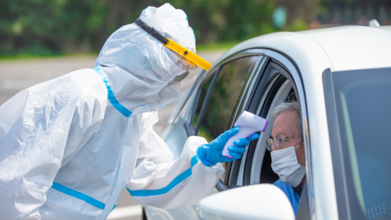
California is once again seeing COVID-19 climb back into the headlines, with test positivity rates nearly doubling since late July, even as hospitalizations remain far below levels seen in previous summers. While some counties suggest the wave may be peaking, health experts warn the coming fall and winter could bring a much more challenging season for infections, hospital strain, and vaccine availability.
COVID-19 Levels Rising, But Milder Than Previous Years
Statewide data show California’s test positivity rate hit 12.8% for the week ending August 30, up sharply from 7% at the start of the month. Los Angeles County, which historically sees some of the state’s highest case counts, reported an even higher positivity rate at 14.8%, compared with 9.3% just four weeks earlier.
Wastewater surveillance, now one of the most reliable early indicators of community spread, shows elevated levels of coronavirus in multiple regions, including Santa Clara County, Northern California’s most populous county, where viral concentrations remain in the “high” category.
Despite the rise, this summer’s surge has been relatively mild compared with prior years. COVID-19 hospital admissions statewide have increased to 3.93 per 100,000 residents, up from 2.38 in early August. But hospitalization levels remain much lower than in the summer surges of 2023 and 2024.
“This is not the kind of severe surge we saw during previous pandemic years,” L.A. County’s Department of Public Health said in a statement. “But it is still enough to disrupt workplaces, schools, and daily life.”
Signs of a Possible Plateau
While statewide metrics remain high, there are early indicators that the current wave may be leveling off. In Orange County, positivity rates dropped from 18% in mid-August to 13.1% at the end of the month. Wastewater data in Los Angeles County also show a slight week-over-week decline.
San Francisco reported a similar trend: its positivity rate dipped to 8.1% after peaking at 8.7% the week prior, though it remains significantly higher than the 5.8% seen in early August.
Health officials caution that these declines could be temporary, and a return to schools and workplaces after summer holidays may affect transmission patterns.
Uncertain Outlook for Fall and Winter
Even if the summer wave continues to slow, epidemiologists warn that California is not necessarily in the clear. Historically, respiratory viruses, including COVID-19, intensify during colder months when people spend more time indoors.
State health models have left open two possible scenarios: either a stronger summer wave followed by a quieter winter or a mild summer followed by a more significant winter surge. “We are preparing for the possibility of a more severe wave later this year,” the California Department of Public Health said in July.
Vaccine Access Emerging as a Major Challenge
The biggest shift this year is not just viral activity, but how Californians can access vaccines. Federal policy changes under Health and Human Services Secretary Robert F. Kennedy Jr., a vocal vaccine skeptic, have restricted eligibility for the latest COVID-19 shots.
The Food and Drug Administration now authorizes COVID-19 vaccines primarily for people 65 and older and those with certain underlying health conditions. Adults under 65 who wish to get vaccinated must either provide documentation of a qualifying condition or sign an attestation at a pharmacy.
Public health experts worry these new hurdles could suppress uptake just as protection from earlier doses wanes. “Barriers to vaccine access, even minor ones, can lead to fewer people getting immunized, which increases the risk of larger outbreaks,” said one infectious disease specialist at UCLA.
West Coast Pushes Back With Alternative Guidance
In response, California has joined Washington, Oregon, and now Hawaii to form the West Coast Health Alliance, a regional pact aimed at issuing independent, science-based guidance on vaccines. State officials hope this will reassure residents and counter mixed messaging from federal authorities.
However, it remains unclear whether this alliance will improve actual access to shots at major pharmacy chains, where most Americans receive their vaccines. Medical associations, including the American Academy of Pediatrics and the American College of Obstetricians and Gynecologists, are also issuing their own recommendations to guide individuals and families.
California’s current COVID-19 wave is not yet overwhelming hospitals, but the rise in cases serves as a warning ahead of the fall and winter respiratory season. Health experts recommend Californians stay alert to local data, consider masking in crowded indoor settings, and speak with their healthcare providers about vaccine eligibility, especially those with chronic conditions or compromised immune systems.
With vaccination policy now more fragmented than at any time since the pandemic began, public health agencies stress that timely communication will be key. Whether California can maintain relatively low hospitalization rates through winter may depend as much on clear access to vaccines as on the trajectory of the virus itself.
New Zealand Launches Surveillance After Spotting Dengue, Zika-carrying Mosquito Larvae
Credit: Canva
New Zealand has stepped up surveillance after the first detection of a dengue and Zika-carrying mosquito larvae in the country.
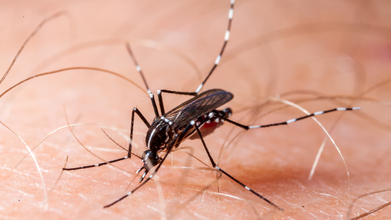
The larval species was confirmed as 'Aedes aegypti' — known to carry diseases including dengue fever, yellow fever, Zika, and chikungunya, across the globe.
As New Zealand does not normally have the mosquito species, the larvae detected were counted as "exotic".
The mosquito species did not cause any outbreak, but were spotted during a routine surveillance program in Auckland.
"The National Public Health Service has commenced a heightened surveillance and interception programme following mosquito larvae being collected from a routine surveillance trap at Queens Wharf, Auckland, on Monday 30 March," Health New Zealand said in a statement.
Health New Zealand reported that exotic species were occasionally found at ports and airports.
Not A Public Threat Yet
The health body noted that the larvae were not considered a public health or biosecurity threat yet because there was no indication they had become established.
But the agency aimed to continue "intensive monitoring for at least three weeks".
"The monitoring would take place within a 400m radius of the site where the larvae were identified. Health Protection Officers would place mosquito traps in the survey area," the statement said.
"These have been hidden away from plain sight so they are not disturbed, for example, in old tyres, bushes, or pools of water. We ask members of the public to avoid touching or disturbing these traps if they find them, as it may disrupt our monitoring and trapping efforts," medical officer of health Dr David Sinclair said.
Sinclair said New Zealanders were most at risk from diseases transmitted by mosquitoes when travelling overseas, including to Pacific Island countries and territories where dengue fever was known to be present.
Dengue Surging In 17 Countries
The US Centers for Disease Control and Prevention recently issued a travel alert of dengue outbreaks across 17 countries.
The CDC alert issued on March 23 identified 17 countries reporting an increased number of cases of dengue. These include: Afghanistan, Bangladesh, Bolivia, Colombia, Cook Islands, Cuba, Guyana, Maldives, Mali, Mauritania, New Caledonia, Pakistan, Samoa, Sudan, Timor-Leste, Vietnam, and the United States territories of American Samoa, Puerto Rico, and the US Virgin Islands, where local transmission is already common.
Also read: Long-term Exposure To Air Pollution Increases Fatality Rates In Dengue: Study
What Is Dengue?
Dengue is a disease caused by a virus spread through mosquito bites. It is transmitted through infected mosquitoes, primarily the species Aedes aegypti.
The breakbone fever is caused by an infection with any of four different dengue viruses. These include:
• Dengue virus type 1 (DENV-1 or DEN-1)
• Dengue virus type 2 (DENV-2 or DEN-2)
• Dengue virus type 3 (DENV-3 or DEN-3)
• Dengue virus type 4 (DENV-4 or DEN-4)
Also read: New dengue vaccine over 80% effective, prevents severe disease for up to 5 years
Common Symptoms of dengue include:
• Sudden onset of high-grade fever.
• Intense headache
• Severe muscle, joint, or bone pain.
• Skin Rash that often appears 2–5 days after the fever starts
• Nausea and Vomiting
• Minor bleeding
• Fatigue.
COVID Cicada variant: Are Children More At Risk? How To Safeguard?
Credit: iStock
The COVID Cicada variant, currently circulating in 23 countries, is likely to affect children more than the previous variants.
Children have largely escaped severe illness from the SARS-COV-2 virus.
However, the new Cicada variant with around 75 genetic changes in its spike protein is likely to disproportionately affect children, as per an expert, who noted its presence in the UK.
“Some people have done analysis on this, suggesting it may be more prevalent among young children. Children get infections all the time, but this might be something to do with the fact that they have never been exposed to Covid vaccines," Prof Ravindra Gupta, of Cambridge University, who advised the UK government during the pandemic, was quoted as saying to The Mirror.
“So this is something we’re looking at in the lab to try and work out why. The problem with this is that it is an infection that spreads fast. Eventually, it ends up in someone vulnerable," he added.
Key Symptoms
Symptoms seem to be similar to those of other recent variants and include
- sore throat,
- cough,
- congestion,
- fatigue,
- headache
- fever.
Also read: Cicada Variant: Will The Current COVID Vaccine Provide Protection?
What Do The 75 Genetic Changes Mean?
Cicada, a descendant of the Omicron variant that emerged in 2021, was first detected in South Africa in 2024. However, it disappeared soon after, only to emerge early this year.
Prof Gupta told the publication that “the Cicada variant developed the 75 mutations to escape immunity, and it evolved by incubating a single patient for over a year”.
"This 'patient zero' would have been unable to clear the virus due to a compromised immune system," due to HIV or anti-cancer drugs.
Further, he explained that due to 75 mutations to the spike protein, the body’s antibodies will take a longer time to fight the Cicada variant.
However, there is no evidence yet that it is likely to cause more severe disease.
Will The Cicada Variant Cause Severe Illness?
The Cicada variant is particularly concerning as it provides no immune protection to people with previous infection or even vaccination.
Yet, the World Health Organization and health experts advise that existing COVID vaccinations can help prevent severe illness and hospitalization.
"It would appear that all the protections we have from our experience with the virus and with vaccines probably offer more limited—not zero—but more limited protection against this strain," Dr. William Schaffner, professor of infectious diseases at Vanderbilt University Medical Center, was quoted as saying by Time.
Also read: COVID Variant BA.3.2 Spreads To 23 Countries: Is The Variant Under Monitoring A Cause Of Worry?
How To Safeguard
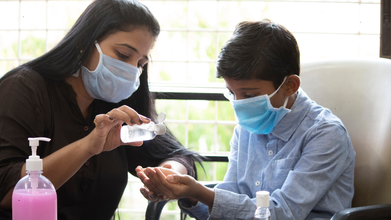
Dr. Sai Balasubramanian, a doctor and healthcare strategy executive, writing in Forbes, stressed the need to follow COVID practices such as masks and hand hygiene.
"Healthcare professionals recommend taking general precautions, similar to those used to prevent most viral transmission: get vaccinations when appropriate, wear masks in crowded areas or indoors where there is a high risk of transmission," he said.
He also urged “avoid individuals who have known illness or infections, wash hands frequently, and continue to stay apprised of local community guidelines and the infection spread”.
India To Strictly Inspect GLP-1 Drugs To Curb Misuse: Govt Flags Risks Amid Weight-loss Hype

Credit: iStock
GLP-1 drugs are powerful tools that can improve health, but it comes with risks and caveats. While these are medical therapies, they are being misused as cosmetic products by cosmetologists, physiotherapists, dermatologists, among others.
To curb its misuse and improve public health, the Indian government today issued guidelines on its use, while also flagging risks around it.
In an official statement issued today, the government has stated that it will roll out stricter inspections to curb the misuse of GLP-1 drugs in the country and will punish those who violate the rules.
“GLP-1 drugs are a significant medical breakthrough in treating type 2 diabetes and obesity, but they are not without risk. The drugs carry a wide range of side effects - from common symptoms like nausea and vomiting to severe complications including pancreatitis, kidney injury, and bowel obstruction. These risks make it essential that GLP-1 drugs are only taken under the supervision of registered medical practitioners/specialists,” the statement said.
In the wake of its hype over weight loss, the country's regulatory authorities have taken firm steps to prevent unsupervised use and malpractices in the supply chain.
It has “strongly advised” patients and the public to” consult a qualified medical specialist before use, and to obtain these medications with prescription only through legitimate, regulated channels”.
“Stricter inspections and surveillance will continue in the coming weeks. Businesses that break the rules will face license cancellation, fines, and legal action,” the statement said.
Also read: GLP-1 Drugs: Why India Needs Stricter Rules Now
What Are The Side-effects Of GLP-1 Drugs?
GLP-1 drugs work to keep food in the digestive system for longer – making people feel fuller for longer, thus reducing appetite and inducing weight loss. Hence, the drugs are also prescribed to people with obesity.
However, when done without clinical oversight, it can lead to severe health complications.
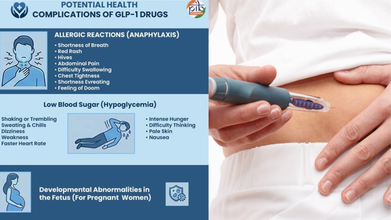
There are various side effects to taking GLP-1 drugs, including nausea and dizziness, to pancreatitis and medullary thyroid cancer.
Some serious side effects include
- Pancreatis
- Thyroid Cancer
- Acute (Sudden) Kidney Injury
- Worsening Diabetes-Related Retinopathy
- Gallstone & Bile Duct Blockage
- Rapid loss of fat in the face
- Wrinkles
- Sunken eyes
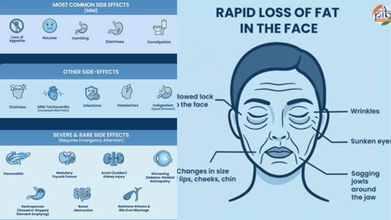
GLP-1 medications may also complicate various health conditions, such as allergic reactions, with shortness of breath and low blood sugar.
Rush For Generic Weight Loss Drugs
The government's advisory comes as patent for semaglutide -- an active ingredient in diabetes and anti-obesity drugs, specifically Wegovy and Ozempic -- expired on March 20.
This has led to a rush among Indian pharma companies to launch cheaper generic versions, significantly increasing affordability and access for millions battling Type 2 diabetes and obesity.
Also read: CDSCO threatens action against pharma companies for promoting GLP-1 weight-loss drugs
Major Indian drugmakers who launched their generic semglutide injection in the country in March include Sun Pharmaceutical Industries, Zydus Lifesciences, Alkem Laboratories, and Dr. Reddy’s Laboratories.
WHO Guidelines on GLP-1 drugs
Amid the increasing prevalence of GLP-1 drugs, the World Health Organisation (WHO), late last year, acknowledged its role in treating obesity.
However, it warned that medications like GLP-1 alone will not solve the problem affecting more than one billion people worldwide.
The global health body also issued conditional recommendations for using these therapies as part of a comprehensive approach that includes healthy diets, regular physical activity, and support from health professionals.
- Follow Us :


© 2024 Bennett, Coleman & Company Limited