
- Health Conditions A-Z
- Health & Wellness
- Nutrition
- Fitness
- Health News
- Ayurveda
- Videos
- Medicine A-Z
- Parenting
CDC Travel Advisory Issued For These Islands Amid Chikungunya Outbreak
Credits: CDC and Canva
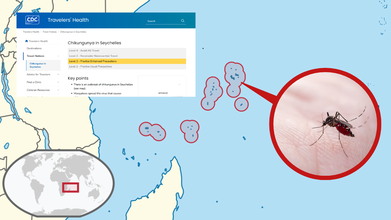
CDC Travel Advisory: The US has warned travelers to be careful if they plan to visit the Seychelles islands anytime soon. The island is located in northeast of Madagascar and is known for its secluded beaches. As per the Centers for Disease Control and Prevention (CDC), a 'Level 2' advisory for the island has been issued and travelers have been asked to 'practice enhanced precautions' if they do plan to visit.
CDC Travel Advisory: Why Did US Issue Health Warning?
The warning has been issue in response to an outbreak of chikungunya, which is a viral disease that could spread to humans by mosquitoes.
A Level 2 travel advisory has been issued, which means the travelers are expected to practice enhanced precautions as compared to a Level 1 advisory that only asks travelers to practice usual precautions.
In more serious cases, Level 3 advisory is issued that asks travelers to reconsider non-essential travel, whereas a Level 4 advisory asks travelers to avoid all travel.
Read: Chikungunya Spreads Across Tamil Nadu: All You Need To Know
CDC Travel Advisory: What Is Level 2 Health Warning?
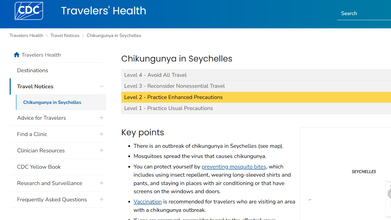
As CDC issues travel advisory, here is what travelers are expected to do:
- Travelers are expected to protect themselves by preventing mosquito bites, which includes using insect repellent, wearing long-sleeved shirts and pants, and staying in places where air conditioning or that have screens on the windows and doors
- The CDC also tells travelers to get vaccinated for those who are visiting the area affected by a chikungunya outbreak
- If a traveler is pregnant, they are asked to reconsider travel to affected area, especially if they are closed to delivering their baby. Mothers infected around the time of delivery can pass the virus to their baby before or during delivery. Newborns infected in this way or by a mosquito bite are at risk for severe illness, including poor long-term outcomes
- If someone has a fever, joint pain, headache, muscle pain, joint swelling, or rash during or after the travel, they must seek medical care
CDC Travel Advisory: Which Other Places Got The Chikungunya Level 2 Notice
From September 26, 2025 to February 11, 2026, the CDC issued travel advisory against five places for Chikungunya, which includes:
- Bolivia: There is an outbreak of chikungunya in Santa Cruz and Cochabamba Departments
- Seychelles: Notice details mentioned above
- Suriname
- Sri Lanka
- Cuba
CDC Travel Advisory: What Is Chikungunya?
This is a disease that is transmitted from mosquitoes to humans and affects many people in the world. Found in densely populated countries and continents, like Africa, Asia and the tropics of the Americas, this has severe symptoms. This viral disease is caused by the Chikungunya virus of the Togaviridae.
First identified in the United Republic of Tanzania in 1952 and subsequently in other countries like Africa and Asia. Since 2004 the outbreak of CHIKV virus has become more widespread and caused partly due to the viral adaptations allowing the virus to be spread more easily by Aedes albopictus mosquitoes. The transmission has been noted to persist in countries where there is a large population, but interestingly, the transmission has been interrupted on islands where a high proportion of the population is infected and then immune.
CDC Travel Advisory: Symptoms of Chikungunya
The onset of the disease is usually in 4-8 days and after a bite of an infected mosquitoes, it is characterized by an abrupt onset of fever and then joint pain. This joint pain is severed and lasts for a few days but may prolong for months maybe even years. Other signs are joint swelling, muscle pains, headache, nausea, fatigue and rash.
Flea-borne Typhus Surging Across Los Angeles, Officials Urge For Precautions
Credit: Canva
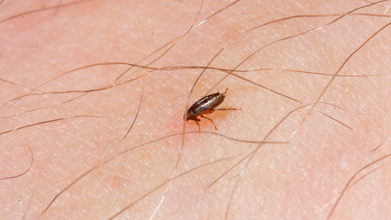
The Los Angeles County Department of Public Health has issued a warning about a surge in cases of flea-borne typhus, a bacterial infection transmitted by infected fleas, which are often carried by animals such as rats and cats.
In 2025, 220 cases were identified — the highest-ever recorded — with nearly 9 out of 10 requiring hospitalization.
While the disease needs more awareness and urgent prevention, the flea-borne typhus is treatable with antibiotics, especially when diagnosed early.
“Flea-borne typhus can cause serious illness, but it is preventable with simple steps,” said Muntu Davis, Los Angeles County Health Officer, in an official statement.
“With cases at an all-time high and most requiring hospitalization, it’s critical that people take simple steps now, such as routinely using flea control on their pets, avoiding contact with stray animals, and preventing wildlife from living in or around their homes,” Davis said.
The officials noted that people are often exposed in and around their homes when infected fleas are carried indoors on pets or other animals. Fleas that spread typhus are commonly found on stray animals, rodents, and other wildlife such as opossums.
The statement said that cases have been reported across Los Angeles County, including three localized outbreaks investigated in 2025 in Central Los Angeles City, the City of Santa Monica, and the unincorporated neighborhood of Willowbrook in South LA County.
“This marks a continued rise from 187 cases in 2024 and reflects a sustained upward trend in recent years,” it added.
Also read: More Than 45% Bacteria In Eye Infections Drug-resistant: Study
Flea-borne Typhus: Symptoms and Treatment
Typhus is an acute febrile bacterial infection caused by Rickettsia Typhi bacteria, which is spread by infected fleas.
Because animals carrying infected fleas often appear healthy, people may not realize they are at risk.
Pets that spend time outdoors can carry fleas into homes and expose household members. People can also become infected through bites or feces of infected fleas, lice, or mites.
However, the flea-borne typhus is not spread from person to person.
The three main types—Epidemic, Murine, and Scrub typhus—all share common symptoms like high fever, headache, and rash.
Other symptoms of flea-borne typhus can include
- body aches
- muscle pain,
- nausea,
- vomiting.
"Some patients can develop severe illnesses in which multiple organ systems can be involved and really can result in death as well," said Medical Epidemiologist Dr. Aiman Halai with the Los Angeles County Department of Public Health, ABC7 reported.
Flea-borne typhus is treatable with antibiotics, and early diagnosis helps prevent severe illness and hospitalization.
The public health department in Los Angeles urged people to:
- Protect pets: Use flea control year-round
- Avoid stray animals: Don’t feed or handle them
- Keep wildlife out: Secure trash and block entry and hiding points.
Telangana Makes Cancer A Notifiable Disease: Why It’s Important?
Credit: Canva
In a significant move for public health, Telangana has declared cancer as a notifiable disease and launched a cancer registry.
The state reports about 55,000 to 60,000 new cancer cases every year.
A cancer registry would help the government in having accurate data for preparing better plans to deal with the spread of cancer, said the state Health Minister C Damodar Rajanarasimha.
He noted that the state government has expanded healthcare to treat cancer by establishing Day Care Cancer Centers in district headquarters towns. Further, the government is conducting health checks for 46 lakh members of women self-help groups (SHGs).
In addition, the government would also start Regional Cancer Centers and take measures to detect diseases like cancer through AI.
Is Cancer A Notifiable Disease In India?
A notifiable disease means that it is required by law to be reported to government authorities. The mandatory reporting facilitates surveillance, helps control.
Cancer is not currently a centrally mandated notifiable disease across all of India, as the central government focuses on surveillance through the National Cancer Registry Programme (NCRP). The NCRP was established in 1981 under the Indian Council of Medical Research (ICMR).
However, over 17 states and UTs in India have declared cancer a notifiable disease to improve data, registry accuracy, and early detection.
Also read: Cancer Is The 10th Leading Cause Of Death In Indian Children: Study
India operates two primary types of cancer registries to monitor the disease burden:
- Population-Based Cancer Registries (PBCRs): These collect data on all new cancer cases and mortality within a specific geographic area. Nearly 40 PBCRs are covering approximately 16.4 percent of India's population.
- Hospital-Based Cancer Registries (HBCRs) record information on patients diagnosed or treated at specific hospitals. There are currently over 269 HBCRs across the country.
“Cancer is emerging as a major public health problem in India. There is a need to collect accurate and robust data on cancer for planning optimal cancer care services across the country,” Dr (Prof) SVS Deo, Chairman – Surgical Oncology, Max Super Speciality Hospital, Saket, told HealthandMe.
The Role Of A Cancer Registry
Dr. Raghav Kesri, Senior Consultant & HOD, Medical Oncology, Yatharth Hospital, Greater Noida, said that cancer registration is significant in determining the types of cancers that are most common in a certain region.
It also allows us to pinpoint the risk factors that might contribute to the increasing number of cancer cases. In India, there are cancer registrations conducted by individual states and the country as a whole.
“These statistics allow us to analyze the trend when coupled with demographics, giving us important information to consider. This is critical knowledge to ensure that we go in the right direction in our health policies, including cancer prevention, early detection, and treatment,” Kesri told HealthandMe.
How To Prevent Cancers
Also read: Are Young Indians At Risk? The Rising Burden Of Early-Onset Cancers
Approximately 60 percent of cancers in India are preventable, including tobacco-related (lung and head and neck cancers), infection-related (stomach, liver, and cervical cancer), and lifestyle-related cancers (breast and colorectal cancers).
Common ways to prevent cancer include:
- Eating a healthy diet rich in fruits and vegetables
- Avoiding alcohol
- Quit smoking
- Avoiding tobacco consumption
- Stay physically active
- Maintain healthy weight.
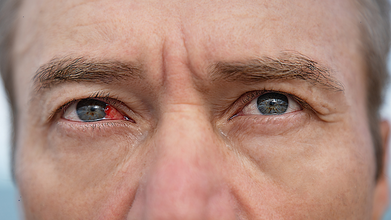
More Than 45% Bacteria In Eye Infections Drug-resistant: Study
Credit: Canva
Another alarming study has highlighted the growing risk of drug resistance, this time in pathogens responsible for eye infections.
A team of Indian researchers has detected multidrug-resistant bacteria in more than 45 per cent of isolates from patients with eye infections.
The study, jointly led by CSIR-Centre for Cellular and Molecular Biology (CCMB) and LV Prasad Eye Institute (LVPEI), also reported widespread resistance to fluoroquinolones — one of the main classes of antibiotics — across all pathogens examined.
Further, the team found samples with vancomycin-resistant Staphylococcus aureus and extensively drug-resistant (XDR) Klebsiella pneumoniae strains involved in eye infections.
"These findings are worrying because they can spread their AMR genes to other bacteria, too. Also, these pathogens can infect other parts of our bodies," said Karthik Bharadwaj from CCMB.
The study, published in 'Communications Biology', raise concerns over current treatment approaches in ophthalmic care.
How Was The Study Conducted?
Researchers described the work as one of the most comprehensive genomic analyses of eye pathogens from India to date. CCMB handled genomic and bioinformatics analysis, LVPEI contributed clinical expertise, patient samples, and microbiological characterization, PTI reported.
Whole-genome sequencing helped identify new resistance mechanisms and mutations, offering deeper insight into how these pathogens evolve and spread.
Researchers said the high prevalence of resistance makes such an approach increasingly unreliable.
Also read: Gender-based Violence Surging Global Antimicrobial Resistance, Say Experts
The study underscores the need for microbiology-guided diagnosis and treatment, particularly in severe infections such as microbial keratitis and endophthalmitis.
"While genomic tools are not yet part of routine clinical workflows, the insights generated through this study provide a critical foundation for developing region-specific treatment guidelines and strengthening antimicrobial stewardship efforts in ophthalmology," said Dr Joveeta Joseph, head of microbiology at LVPEI.
Researchers also stressed that eye infections should not be viewed in isolation. The microbes involved often originate from the skin or environment, linking ophthalmic infections to the broader AMR burden.
"This study positions the eye as a valuable site for AMR surveillance in the environment around us," said Dr Prashant Garg, executive chair, LVPEI.
Increasing Drug Resistance In India
A recent Lancet Study reported that drug resistance is driving severe typhoid disease, hospitalization, and death among children under-5s in India.
Another 2024 Indian Council of Medical Research (ICMR)-led study also revealed a significant increase in antibiotic resistance and a decrease in the effectiveness of key antibiotics. This indicates a growing public health threat that requires immediate attention.
It showed E. coli, a common bacterium found in both ICU and outpatient settings, demonstrated a concerning rise in resistance to antibiotics like cefotaxime, ceftazidime, ciprofloxacin, and levofloxacin.
Also read: Study Links Widespread Use of Antibiotics During COVID To Surge In AMR Cases
Rising Global Antimicrobial Resistance
Antimicrobial resistance (AMR) occurs when germs develop the ability to defeat the drugs designed to kill them.
It is one of the 10 top global health threats, undermining the effectiveness of essential treatments and placing millions at risk of untreatable infections.
As per WHO data, AMR is an urgent global public health threat, killing at least 1.27 million people worldwide and associated with nearly 5 million deaths in 2019.
The WHO, in a 2025 report, noted that one in six laboratory-confirmed bacterial infections causing common infections in people worldwide in 2023 were resistant to antibiotic treatments.
- Follow Us :


© 2024 Bennett, Coleman & Company Limited