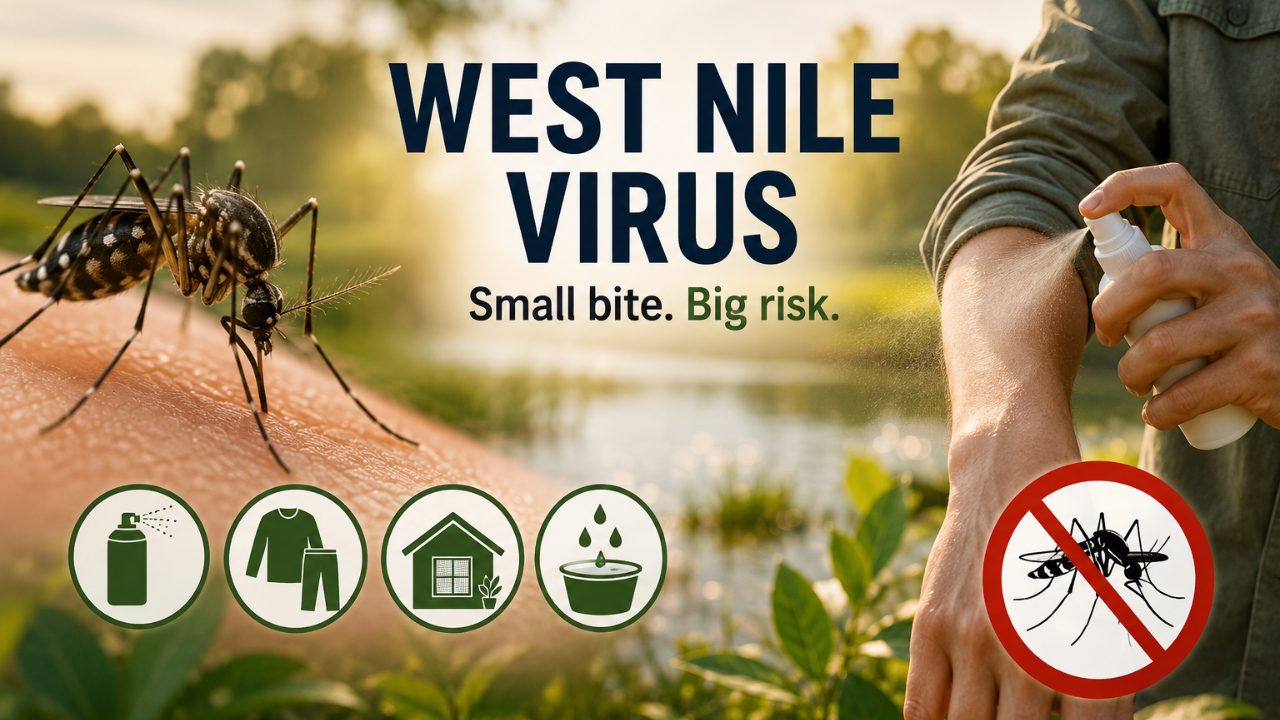
The Centers for Disease Control and Prevention (CDC) has issued a prevention advisory against West Nile virus as the transmission season has begun early and more intensely. As of June 30, the virus has been detected in at least 23 states, with most in Arizona, making this season the widest geographic spread this early in the season in a decade. West Nile Virus: CDC Issues Warning Against Mosquito Bites At least 48 confirmed cases of West Nile virus were reported in the US. 38 of them are neuroinvasive (severe) cases, making it the strongest season in two decades. Arizona has recorded the highest number of infections, particularly in Maricopa County, where 32 cases and four deaths have been reported. The first case of 2026 emerged in California’s Long Beach. Authorities have warned, saying that senior citizens and people with weakened immune systems remain at the highest risk. The CDC has issued a prevention advisory to control West Nile virus. It includes: Use mosquito repellents containing DEET, picaridin, or oil of lemon eucalyptus. Wear long sleeves and long pants. Remove stagnant water around the house to remove mosquito breeding sites. Repair damaged window and door screens. Seek medical care if you have a high fever, severe headache, confusion, neck stiffness, or muscle weakness, especially if it develops after mosquito exposure. Also read: Scientific Breakthrough: US Scientists Create First Synthetic Cell That Eats and Reproduces About West Nile Virus West Nile virus (WNV) is a mosquito-borne virus that belongs to the flavivirus family, the same group that includes the viruses causing Dengue fever, Zika virus disease, Yellow fever, and Japanese encephalitis. It is primarily spread through the bite of an infected Culex mosquito. Mosquitoes become infected after feeding on infected birds, which are the virus's first host. About 80% infected with West Nile virus have no symptoms. About 20% develop West Nile fever. Its common symptoms include: Fever Headache Body and muscle aches Fatigue or weakness Joint pain Nausea or vomiting Diarrhea Skin rash on the trunk or back Swollen lymph nodes The disease could become serious in a few infected people who may develop its neuroinvasive disease. In this situation, the virus affects the brain, spinal cord, or surrounding tissues. Severe complications include encephalitis (brain inflammation), meningitis, and acute flaccid paralysis. Also read: The Lancet: Young Adults With Obesity Face Higher Heart Risk; Statins Benefit Older Adults The symptoms of severe West Nile virus include most of the commons ones as well as: Neck stiffness Confusion or disorientation Tremors Loss of coordination Vision problems Seizures Paralysis Coma (rare cases) Why The West Nile Virus Season Is Early This Year? Prolonged Warmer Climate Mosquito populations usually do not thrive in cold weather. A warmer winter in several parts of the U.S. meant more mosquito populations survived into spring, leading to early breeding and virus transmission. Warm Temperatures Accelerate Mosquito Breeding Warm spring weather speeds up mosquito breeding. The virus becomes active enough to reach infectious levels in warmer mosquitoes, shortening the time between when a mosquito becomes infected and when it can spread the virus to humans. Stagnant Water In most regions, warm weather is followed by periods of rain, creating ideal habitats for mosquitoes to breed. Climate Change Extend Mosquito Seasons Longer mosquito seasons are usually due to a milder-than-average warm climate. Warm temperatures also help the mosquito population to expand in newer regions. This leads to faster viral development and more cases of infection.