
- Health Conditions A-Z
- Health & Wellness
- Nutrition
- Fitness
- Health News
- Ayurveda
- Videos
- Medicine A-Z
- Parenting
Childhood Obesity In India To Surge To 56 Million By 2040, Says Global Report

Credit: Canva
Childhood obesity in India is expected to surge to a whopping 56 million by 2040 -- nearly a 20 percent rise from 2025, according to an alarming new global report released today by the World Obesity Federation.
The World Obesity Atlas 2026, released on World Obesity Day -- observed globally on March 4 -- revealed that of the 56 million, about 20 million children in the country will be obese, while the remaining will be overweight.
Globally, the number of children aged 5-19 years living with obesity or overweight is predicted to increase to 507 million by 2040 -- from 419 million in 2025.
Also Read: COVID Survivors At Nearly Fivefold Risk Of Kidney Failure: Study
Overweight Children: India Second-Highest Globally In 2025
Among children aged 5-9 years, 14.921 million were overweight or obese in 2025
In children aged 10-19 years, more than 26.402 million were overweight or obese.
India was among the top 10 countries -- second after China -- that accounted for over 200 million school-age children, aged 5-19 years, with high Body Mass Index (BMI).
Between 2010 and 2025, India had a 4.8 percent increase in the prevalence of high BMI and obesity among children aged 5-19 years.
"The increase in childhood obesity worldwide shows we have failed to take seriously a disease that affects one in five children," said Johanna Ralston, chief executive at the World Obesity Federation.
"Governments urgently need to step up prevention and management efforts for children living with overweight and obesity, and ensure that they receive the care they need," Ralston added.
High BMI To Surge Chronic Disease By 2040 In India
By 2040, the report also projected a substantial increase in the risk of diseases among children aged 5-19 years due to a high BMI in India. This includes:
- Hypertension (high blood pressure) expected to spike by 4.21 million from 2.99 million
- hyperglycemia (high blood sugar) to 1.91 million from 1.39 million
- high triglycerides (excess fats in the blood) to 6.07 million from 4.39 million
- metabolic dysfunction-associated steatotic liver disease (MASLD) to 11.88 million from 8.39 million
The key preventable risk factors in the country include:
- 74 percent of adolescents aged 11-17 fail to meet recommended physical activity levels
- Only 35.5 percent of school-age children (primary and secondary) receive school meals
- 32.6 percent of infants aged 1-5 months experience sub-optimal breastfeeding
- 13.4 percent of women aged 15-49 are exposed to high BMI
- 4.2 percent of women aged 15-49 live with Type 2 diabetes
- Children aged 6-10 consume an average of 0-50 ml of sugary drinks per day
Obesity: A Global Health Concern
Globally, the number of school-age children living with obesity now exceeds those living underweight.
Currently, more than one in five (20.7 per cent) 5-19 year-olds worldwide are living with obesity and overweight -- an increase from 14.6 per cent in 2010.
In 2025, about 177 million children aged 5-19 years were living with obesity. The number is expected to jump to 228 million in 2040.
By 2040, the Atlas also predicts that 227 million children aged 5-19 years will be living with obesity compared to 142 million living with underweight.
Notably, most of the world’s school-age children aged 5-19 living with obesity reside in the middle-income countries. By 2040, this is estimated to be as many as 169 million children.
Call To Action
The World Obesity Federation called for strong action to reverse current trends. These include imposing:
- taxes on sugar-sweetened beverages,
- restrictions on marketing to children (including digital platforms), implementation of global physical activity recommendations for children, protection of breastfeeding,
- healthier school food standards,
- integration of prevention and care into primary health systems.
US To Face Nearly 28,000-Surgeon Shortfall By 2038: What Could This Mean For Patients?

Credit: iStock
Amid rising demand for surgical care, the US is expected to face a significant shortage of surgeons by 2038, according to the first unified assessment of the country’s surgical workforce.
The study, presented at the American College of Surgeons (ACS) Clinical Congress 2026, projects that the US will face a shortfall of 27,940 surgeons nationally.
This comes as demand for surgeons is projected to increase by 12.8%, while the overall surgeon workforce is expected to decline by 4.2% between 2023 and 2038. The workforce would meet just 84.3% of projected national need.
“Studies usually look at one specialty at a time, so a shortage looks like that specialty’s problem,” said lead author Fernando Ribeiro Duraes, a medical student at Case Western Reserve University School of Medicine.
“When you put all 10 specialties together, you can see supply is projected to fall while demand keeps rising, and that the gaps are worse in rural areas. The fixes have to be targeted by specialty and by geography, not incremental.”
Which Specialties Will Face The Biggest Shortages?
Researchers used the Health Workforce Simulation Model (HWSM), a federal model from the US Department of Health and Human Services, to analyze surgeon supply and demand across 10 surgical specialties from 2023 to 2038.
The analysis found that overall surgeon supply is projected to decline 4.2% from 2023 to 2038, while demand is expected to rise 12.8%.
The specialties projected to face the most critical shortages include:
- Vascular surgery — 65.8% of need met
- Ophthalmology — 71.8%
- Thoracic surgery — 73.1%
- Plastic surgery — 74.1%
- Urology — 84.4%
- Otolaryngology — 87.5%
- Orthopedics — 87.9%
- Neurosurgery — 88.7%
Only general surgery, at 91.3% and colorectal surgery, at 98.3%, are projected to remain close to meeting demand.
At the same time, the gaps between surgeon supply and demand are also projected to be greater in rural areas.
What Could This Mean For Patients?
For patients, surgical shortages could mean longer waits for procedures.
Patients may also need to travel farther for medical care, particularly in rural areas where some people may have to drive hours to access treatment.
The researchers said the findings point to the need for targeted workforce policies and geography-focused strategies rather than incremental changes.
Duraes pointed to a proposed bill, H.R. 3890, the Resident Physician Shortage Reduction Act, as one potential response.
The bill would increase the number of residency positions, which the ACS says has not changed since 1997. It also proposes addressing federal student loan limits and expanding loan-forgiveness programmes to encourage physicians to practise in rural areas.
“The fixes have to be targeted by specialty and by geography” if they are expected to work, Duraes said.
Global Health Workforce Crisis
The US shortage projection comes amid broader concerns about health workforce shortages worldwide.
Nearly one in four doctors globally is older than 55 and could retire within the next decade, according to the World Health Organization’s National Health Workforce Accounts: Health Workforce Levels and Trends 2026.
The report, the first in an annual series providing a global picture of health workforce levels and trends, said ageing among health workers is intensifying shortages in some countries, while population ageing is simultaneously increasing demand for healthcare services.
The global health worker shortage has fallen from 20 million in 2013 to 15 million in 2020. However, newer analysis has revised the projected shortage for 2030 upward to 11.1 million, compared with an earlier estimate of about 10 million.
Congo Ebola Cases Top 8,000; Deaths Near 4,000 As Treatment Delays Remain A Concern

Credit: iStock
The Ebola outbreak, declared an emergency in May, continues to spread in the Democratic Republic of the Congo (DRC). According to the latest update from DRC health authorities, confirmed cases have surpassed 8,000, while the death toll is nearing 4,000.
The World Health Organization (WHO) warned that the outbreak remains large, geographically expanding and marked by sustained transmission.
The DRC “had recorded 8,067 confirmed cases, including 3,901 deaths, with a case fatality rate of 48.4 per cent,” according to the latest government situation report. It has spread to seven health zones.
“The continuously high case fatality ratio, and especially the continuous high rate of deaths occurring in communities, highlights the seriousness of the disease and the persistent challenges in timely case detection and access to early and adequate patient care,” the WHO said in its latest Disease Outbreak News.
However, Dr Janet Diaz of the WHO’s Health Emergencies Program told reporters in Geneva that “we are beginning to see a reduction in transmission in some areas, the number of cases remains high for this outbreak”.
Treatment Delays Remain A Concern
Dr Diaz said that although it is known that “early access to care can significantly improve chances of survival,” “Yet in this outbreak, many people are still dying at home or in their communities because they are unable to reach health facilities on time.”
“Delays in seeking care, together with challenges in access and referral, continue to complicate the response,” she said, adding that WHO and its partners have focused on improving early recognition of illness, rapid referral systems and early supportive care.
“Every patient bed requires a skilled workforce to provide safe, quality care around the clock,” Dr Diaz said.
Oxygen Access A Key Challenge
A key component of supportive care for patients with Ebola, particularly those with severe illness, is oxygen. Yet this life-saving medicine remains “unavailable or unreliable in many health facilities, especially in emergency settings”.
Ensuring access to oxygen requires functioning health systems, reliable infrastructure, trained health workers and sustainable delivery systems “that reach patients wherever they are”.
“Without previous oxygen scale-up efforts in Ebola and Marburg [virus disease] responses, we would not be where we are today in terms of more positive outcomes for patients,” she noted.
Vaccine Trials Underway
While there is currently no approved vaccine against Ebola Bundibugyo virus, vaccine trials are underway.
Clinical trials of specific vaccines and treatments against the Bundibugyo virus are also ongoing. The DRC also received more than 70,000 doses of the Ervebo vaccine last month. Ervebo is approved for protection against the more common Zaire Ebola virus.
DRC’s 17th Ebola Outbreak
The outbreak, caused by the rare Bundibugyo virus, was declared by the WHO on May 15. It is the DRC’s 17th Ebola outbreak since the virus was first identified in 1976.
It is also the second-deadliest Ebola outbreak on record, behind the West African outbreak that lasted from 2014 to 2016.
World Heart Day: You Feel Healthy. But Plaque May Already Be Building In Your Arteries In Your 20s
Credit: iStock
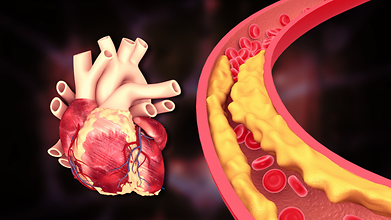
You can exercise regularly, eat reasonably well and have no obvious symptoms — yet still have plaque building up inside your arteries.
The process called atherosclerosis is often slow and silent, with symptoms appearing only after plaque significantly affects blood flow — sometimes with a heart attack or stroke.
A study published earlier this month in The New England Journal of Medicine (NEJM) found that plaque buildup can begin decades before symptoms appear. Researchers detected atherosclerosis in many apparently healthy young adults, including those in their 20s.
Atherosclerosis Can Start Decades Before Symptoms
The NEJM study showed that signs of hidden atherosclerosis could be detected in approximately one in 13 people aged 18–29. Among those aged 60–70, nine out of 10 showed signs of atherosclerosis.
Dr. Robert Grant, St. George’s University School of Medicine, Grenada, West Indies, told HealthandMe that the most important message is that atherosclerotic cardiovascular disease often begins decades before symptoms appear. Heart attacks and strokes are usually late manifestations of a process that develops gradually over many years.
“Atherosclerosis is not exclusively a disease of older adults. Clinical complications remain predominantly diseases of older adults. The pathological process often starts much earlier than the clinical disease becomes evident," he said.
The study therefore shifts our thinking from "atherosclerosis is an old-age disease" to "atherosclerosis is a lifelong disease that becomes clinically important with advancing age," he added.
Can Exercise And A Healthy Diet Protect?
Regular exercise, a healthy diet, avoiding smoking, maintaining a healthy weight, and good sleep remain important preventive measures, said Dr. Robert.
“These habits lower LDL cholesterol, improve blood pressure, reduce inflammation, improve insulin sensitivity, and substantially reduce cardiovascular event rates," he said. “They are foundational and should not be minimized.”
However, healthy lifestyles do not guarantee the absence of atherosclerosis. Other risk factors include:
- Genetic predisposition and family history
- Elevated lipoprotein(a) [Lp(a)]
- Insulin resistance or diabetes
- Previously elevated LDL levels during earlier life
- Hypertension that has gone undetected or untreated
Dr. Rajat Mohan, Senior Consultant Cardiologist at Sir Ganga Ram Hospital, also stressed that people who exercise and eat in moderation can still develop coronary disease because of other risk factors, including genetic tendencies.
He also emphasized the need to check cholesterol levels and avoid smoking.
Why Indians May Be More Vulnerable
Coronary artery disease has a high burden in the Indian population, with diabetes, family history, smoking and tobacco use among the factors contributing to risk, Dr. Rajat told HealthandMe.
"Diabetes is a precursor for developing coronary artery disease," he said.
Dr. Ramakanta Panda, renowned cardiac surgeon and Chairman, Asian Heart Institute, Mumbai, also pointed to studies suggesting greater vulnerability to early atherosclerosis among Indians.
Referring to the INTERHEART study, he said that Indians get their first heart attack 5-6 years earlier than people from other regions, and a UK study found double the risk compared with Europeans.
Can Normal Cholesterol And Blood Pressure Be Reassuring?
“Yes. The "normal" LDL range is not truly safe for arteries. In US adults without traditional risk factors, coronary atherosclerosis rose from 13.2% when LDL-C was below 70 mg/dL to 48.2% when it was 160 mg/dL or higher. Non-HDL cholesterol and apoB showed similar associations," Dr. Ramakanta told HealthandMe.
He added that beyond standard readings, doctors should consider:
- apoB and lipoprotein(a)
- HbA1c and insulin resistance
- Waist circumference and fatty liver
- hsCRP
- Premature family history
- Kidney disease and pregnancy complications
- Where appropriate, calcium scoring
Should Screening Be Universal?
Dr. Ramakanta said that mass screening has not been shown to reduce death rates significantly. However, targeted screening or testing can be helpful. For an apparently healthy person with no symptoms, a sensible approach is:
- Blood pressure
- Fasting glucose/HbA1c
- Lipid profile, particularly LDL
- Weight/BMI and waist circumference
- Smoking/tobacco, physical activity, diet and family history of premature heart disease
- Assess the person’s overall cardiovascular risk and treat modifiable risk factors accordingly
"The ESC specifically recommends systematic risk assessment in people without known cardiovascular disease. I would not recommend routine ECG, treadmill testing, echocardiography, or coronary CT for every asymptomatic individual unless they have risk factors.”
- Follow Us :


© $2026 Times Horizon Private Limited