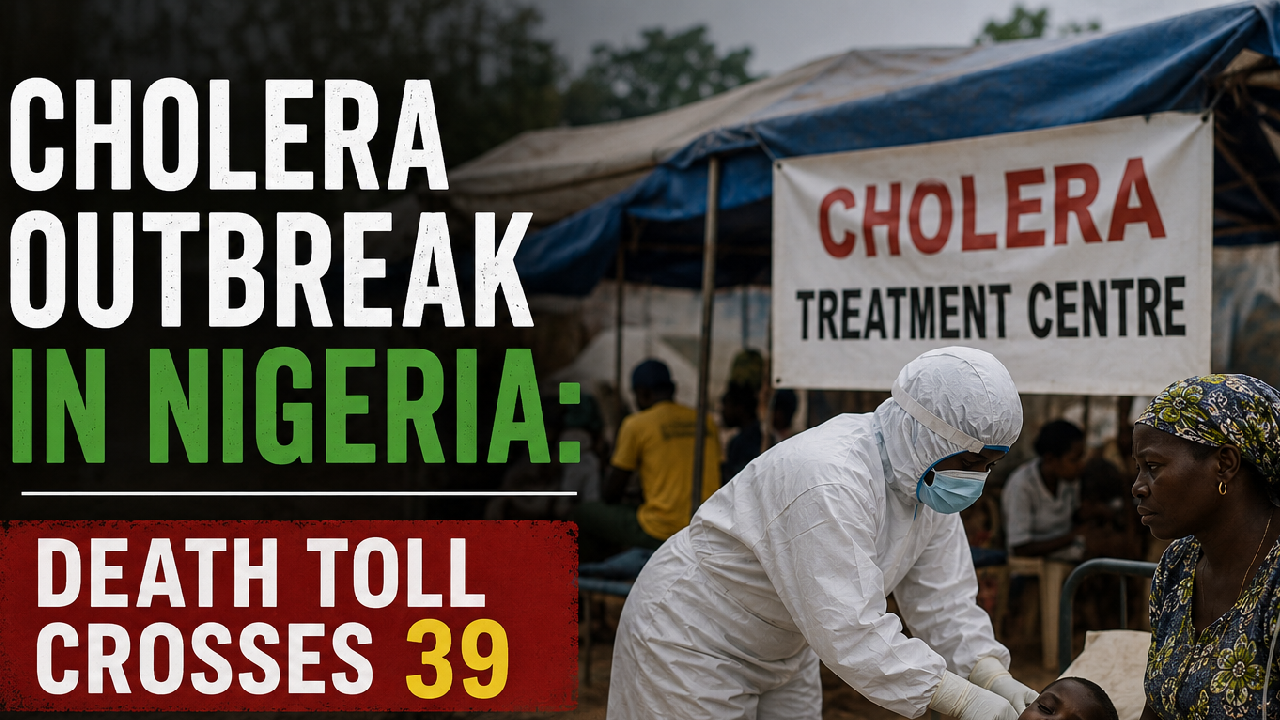
Nigeria is witnessing an outbreak of cholera, and to curb the spread of the disease, the police there have ordered sanitation measures in the northeastern state of Borno. According to the local media and authorities, about 39 people have died due to the waterborne disease. Local authorities have also reported at least 4,204 cases of infection. According to the local health authorities, the outbreak is spreading in the Borno capital, Maiduguri, and the surrounding Jere district. The state police commissioner "has directed the full enforcement of the monthly environmental sanitation exercise." The statement added, "Residents are therefore urged to actively participate in the exercise by cleaning their homes, business premises, drainage channels, and surrounding environments."He added, "To ensure compliance, police personnel and other relevant stakeholders will be deployed to strategic locations across the state during the sanitation period."The nation is very cautious about the outbreak and has taken several steps to contain the disease as much as possible. The state government has set dedicated treatment centers for public convenience. Notably, cholera is spread by bacteria-tainted water and food, which can easily cause dehydration and diarrhoea.The advent of modern sewerage systems has eradicated diseases throughout the modern world. Though war, conflict, and social unrest in nations like Nigeria and Sudan result in these unfortunate outbreaks, which take thousands of lives and affect many families. As Ebola is spreading in African nations of the Democratic Republic of the Congo (DRC) and Uganda, another breakout of Cholera in Nigeria is showing the vulnerabilities of how rampant it is in Africa. What Is Cholera?According to the Centers for Disease Control and Prevention (CDC), it is caused by the bacterium Vibrio cholerae. This can be transmitted through drinking water or eating food that contains the bacteria. While most people who get cholera don't get sick, it can cause life-threatening diarrhea and vomiting.CDC notes that each year, 1.3 to 4 million people around the world get cholera. Among them, 21,000 to 143,000 people die.What Are The Common Symptoms?The common symptoms include:watery diarrheavomitingleg crampslosing body fluidsdehydration and shockUsually, people develop symptoms within 1 to 10 days of consuming the bacteria.Who Is At More Risk?People who live in areas with unsafe drinking water, poor sanitation, and inadequate hygiene are at the highest risk of getting cholera. The disease can spread quickly in areas where sewage and drinking water are not adequately treated. It can also live in brackish water, which is slightly salty, or in coastal water. Thus, eating raw shellfish can also cause cholera.