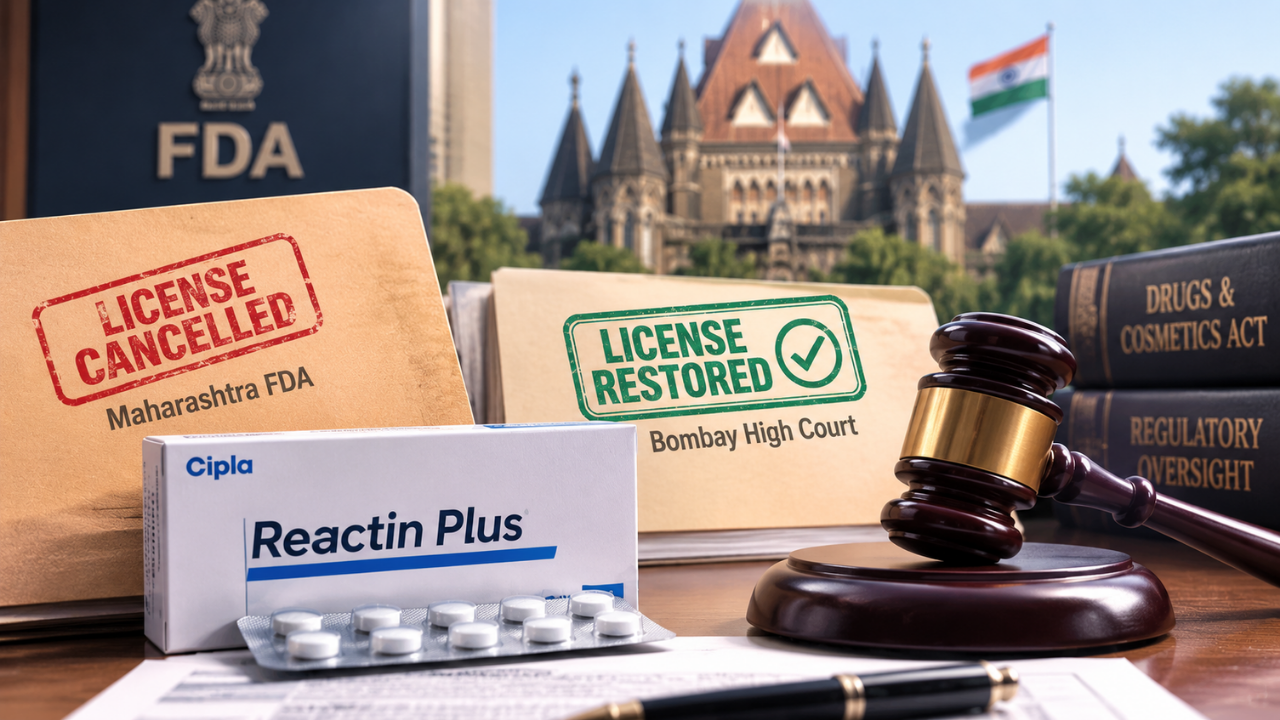
The Maharashtra Food and Drug Administration (FDA) has recently sparked headlines for bringing several known brands under its tight scrutiny. Cipla was one of them after the drug regulator cancelled one of its facility’s licenses over alleged violations associated with Reactin Plus tablets. Soon after that, the Bombay High Court questioned the manner in which the action was taken, prompting the Maharashtra Food and Drug Administration (FDA) to withdraw its cancellation order. The dispute has now become more about how far a regulator can go while enforcing drug safety rules, and whether due process was followed before cancelling the license. Why Did Maharashtra FDA Cancel Cipla Facility’s License? Maharashtra FDA recently conducted an inspection of Cipla Pharma & Life Sciences’ carrying and forwarding facility at Wadki in Pune. During an inspection in June, FDA officials found that the packaging of Reactin Plus, a Schedule H prescription medicine, described it as an “analgesic and antipyretic”. The FDA said this amounted to unauthorised advertising of a prescription drug and violated provisions of the Drugs and Cosmetics Act and Rules. The regulator seized Reactin Plus stock worth around Rs 11.19 lakh and instructed that the product be recalled. But the FDA said the recall directions were not fully complied with. A subsequent inspection also found discrepancies between physical stock, computerised records and purchase and sales data. Medicines were reportedly found stored directly on the floor, with inadequate proper storage arrangements. Deficiencies were also identified in the handling of expired medicines. Based on these findings, the FDA cancelled the drug-sale licenses of the facility with effect from August 27. Maharashtra FDA Commissioner Tukaram Mundhe said, “The Food and Drug Administration will not show any leniency regarding the safety of medicines and the health of citizens.” He added, “Any entity within the pharmaceutical manufacturing and distribution system found violating regulations will face stringent legal action.”Also read: FSSAI Proposes Red Front-Of-Pack Warning Labels On Junk Food: How Will This Benefit Consumers’ Health? Why Did The Bombay High Court Step In? Cipla challenged FDA's action before the Bombay High Court. On August 30, the court criticised the regulator's approach, describing it as “high-handed” and saying the FDA had gone “overboard”. The court also questioned whether the principles of natural justice had been followed. During the hearing, the court asked, “Do you feel you are a Lord and you can do anything?” The court's concern was not necessarily that the FDA should not regulate Cipla. Instead, it questioned the manner and procedure through which the license was cancelled. Following the court's intervention, the Maharashtra FDA withdrew the cancellation order and said it would issue a fresh show-cause notice before passing an order. So, the license has been restored for now, but that does not mean the underlying regulatory concerns have disappeared.Also read: Everest Hing Sale Prohibited By FSSAI; 3 Other Masalas Flagged For Violations What Does Cipla Say? Cipla has maintained that the matter is under judicial consideration and therefore declined to comment in detail. The company said the FDA order relates to the operations of a C&F warehouse, rather than allegations concerning the medicine's safety or effectiveness. According to mint, Cipla said, “Cipla has been a trusted healthcare organization for nine decades and continues to uphold the highest standards of quality, regulatory compliance, and patient safety.” The company also clarified that the FDA order “does not allege any concerns relating to the safety, quality or efficacy of its products”. Reactin Plus Is Safe The FDA action focuses on violations related to labelling, recall compliance, storage, inventory records and distribution practices. It did not establish that Reactin Plus was unsafe, ineffective, or contaminated. Cipla has specifically said the order did not concern the product's safety, quality, or efficacy.