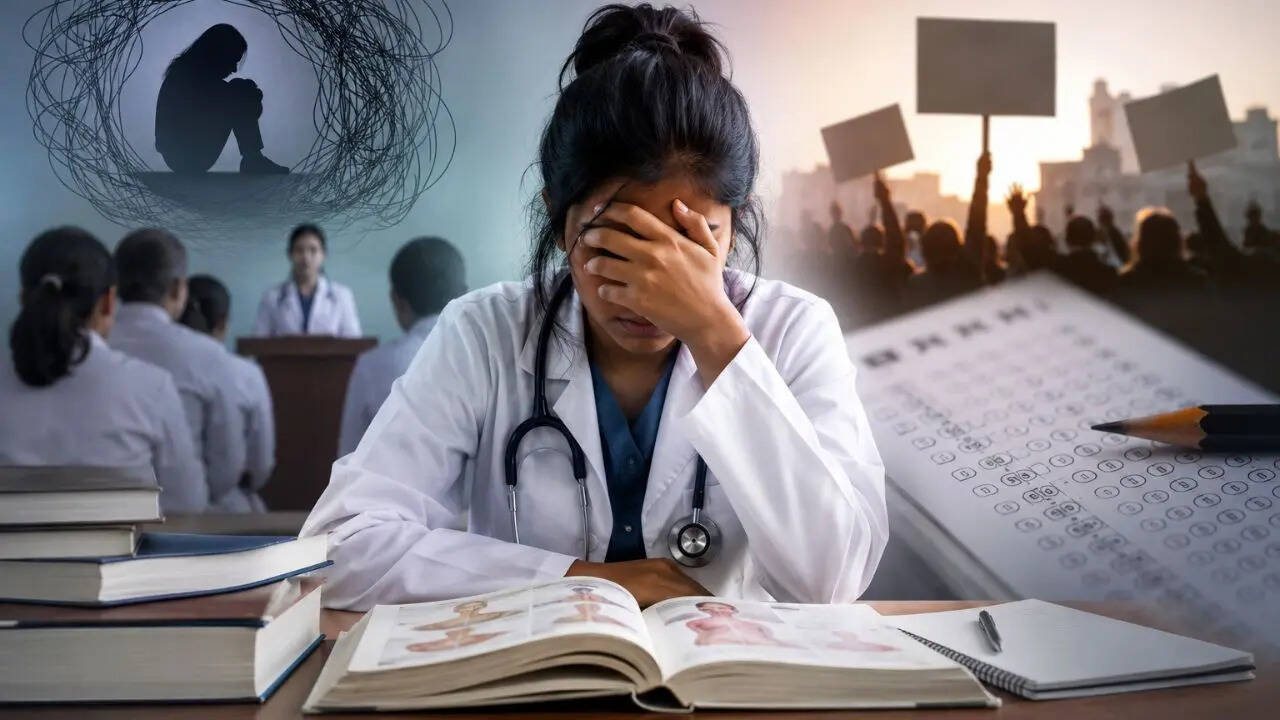
Medical education often gets associated with intense academic pressure, long study hours, and fierce competition. But a new Indian study suggests that a less visible challenge could be affecting future doctors: low self-esteem. The findings come when thousands of aspiring doctors across India are protesting irregularities in the conduct of NEET-UG 2026 examination controversy, with protests highlighting mounting academic stress, uncertainty, and mental health challenges among medical aspirants. While the new research did not examine NEET candidates specifically, experts say it adds to growing evidence that psychological well-being deserves greater attention throughout the medical education journey. Nearly 4 In 10 Medical Students Had Social Anxiety According to the researchers, students with lower self-esteem may be more likely to fear criticism, negative evaluation, or embarrassment during social interactions, all of which are traits of social anxiety. The study, published in Cureus, surveyed 507 undergraduate medical students at a medical college in Kerala using validated psychological questionnaires to assess social anxiety and self-esteem. Researchers found that 39.64% of students screened positive for social anxiety. Nearly one-third (31.16%) had low self-esteem. Students with low self-esteem were significantly more likely to experience social anxiety than those with normal or high self-esteem. Female students reported social anxiety slightly more often than males, although the difference was not statistically significant. Students from nuclear families and those in the early years of medical school also showed relatively higher rates of social anxiety, though these factors were not statistically significant. Also read: As Sonam Wangchuk's Indefinite Fast Continues, Doctors Explain When Hunger Strike Becomes Medically Dangerous NEET-UG 2026 Paper Leak Row The findings arrive at a time when the anxiety surrounding NEET-UG 2026 is at an all-time high. Students across the country are protesting paper leaks and demanding fairness and transparency. The rampant suicides among medical students after news of question paper leak surfaced also reminds of the intense mental pressure they go through. Mental health experts have warned that uncertainty surrounding high-stakes entrance examinations can increase stress, anxiety, sleep disturbances, and emotional exhaustion among aspirants. Although this study is based on students who are already in medical school rather than NEET aspirants, it underscores an important point: the psychological challenges of pursuing medicine often extend beyond getting admission in college. It confirms that the journey of becoming a doctor is marked with several psychological obstacles.Also read: Student Suicides Surpasses Population Growth: Are Parents to Blame? Experts Weigh In Why This Needs to Be Addressed? The transition from competitive entrance examinations to the demanding environment of medical college may continue to place students under intense pressure which could worsen existing mental health issues. Social anxiety can interfere with classroom participation, practical training, teamwork, and communication with patients, potentially affecting both academic performance and professional development. The new study highlights that social anxiety affects a substantial proportion of medical students and is closely linked with low self-esteem. While it does not establish a cause-and-effect relationship, the findings call for stronger mental health support within medical education. As conversations around student well-being gain momentum amid ongoing NEET paper row, the research serves as a reminder that supporting future doctors requires more than academic excellence.