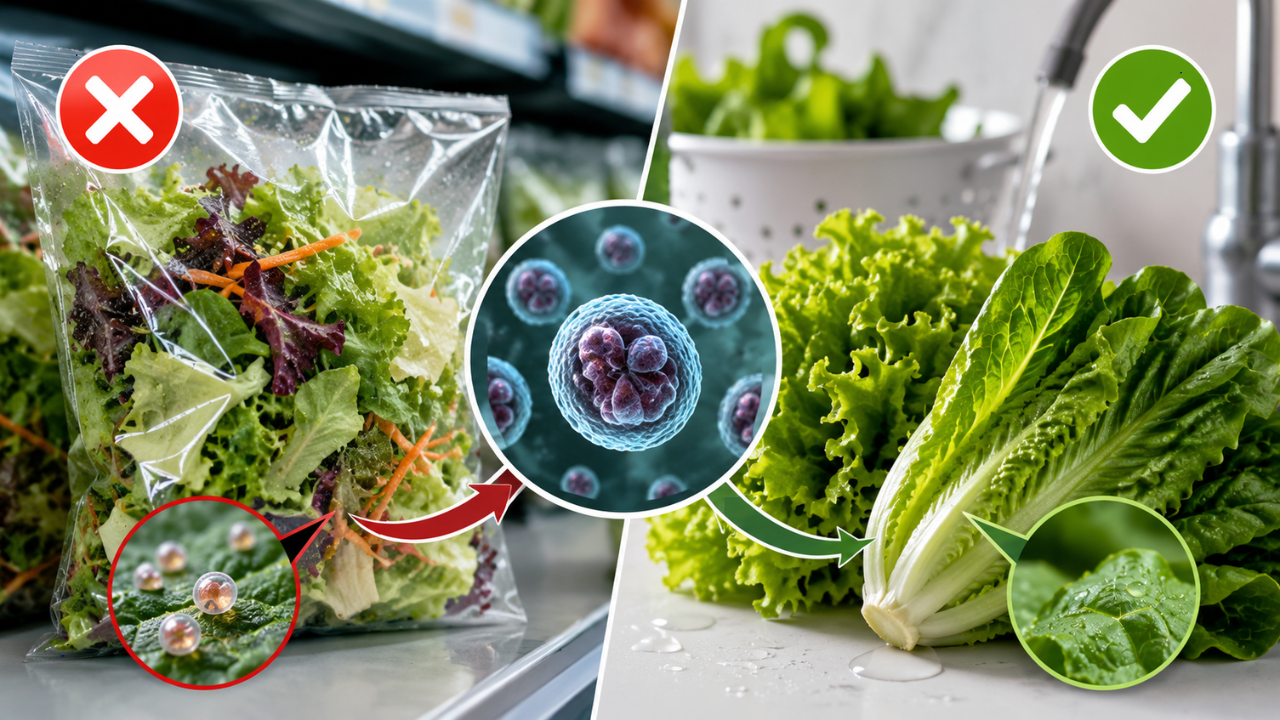
The United States is grappling with a growing Cyclospora outbreak that has sickened more than 3,000 people across Michigan and Ohio, with dozens requiring hospitalization.While the US Centers for Disease Control and Prevention (CDC) has not yet confirmed the source, Michigan health officials say lettuce and mixed salad greens have emerged as a common factor in the ongoing investigation. However, officials stress that no specific type of lettuce, grower, or supplier has been identified, and other foods have not been ruled out."Early information has shown lettuce as a common product that regularly comes up during the investigation," said Dr. Natasha Bagdasarian, Michigan's chief medical executive, in an official statement.Michigan has reported 2,640 cases, including 44 hospitalizations, while Ohio has recorded 361 cases and at least 46 hospitalizations since June 1.As per the CDC, 31 states have reported Cyclospora infections this season, with confirmed cases increasing compared with the same period last year.Why Packaged Salads Carry Higher RiskAlso read: Cyclospora Parasite Spreads to More US States: Foods to Avoid Right Now Health experts say pre-packaged salad mixes may be more vulnerable to contamination than whole heads of lettuce because they are pre-cut, extensively handled, and contain a larger exposed surface area.Cutting leafy greens creates tiny openings where contaminants can adhere more easily. Once chopped, the leaves also lose nutrients faster due to increased exposure to oxygen.Although manufacturers wash packaged salads using antimicrobial solutions approved by the US Food and Drug Administration (FDA), these sanitizers do not reliably eliminate Cyclospora, making contamination difficult to remove.Food safety expert Gevork Kazanchyan noted that, based on recent foodborne illness investigations, bagged leafy greens have been linked to more outbreaks than whole heads of lettuce.Why Loose Greens Are Considered SaferMichigan health officials have advised consumers to choose whole heads of lettuce instead of pre-packaged salad kits while the investigation continues.Experts recommend:Buy whole heads of lettuce instead of bagged salads.Remove and discard the outer two to three leaves.Wash the remaining inner leaves thoroughly under running water.Cook leafy greens whenever possible, as heat effectively kills the parasite.Dr. Priyam Bordoloi, an internal medicine specialist from the Indian state of Assam, also advised consumers "to avoid bagged salads during the outbreak and wash fresh produce thoroughly under running water rather than soaking it".Washing Alone May Not Be Enough According to the US FDA, Cyclospora is resistant to common produce disinfectants, including chlorine-based washes commonly used in commercial processing.Unlike bacteria, the parasite can survive routine washing and sanitizing. While rinsing produce removes dirt and some contaminants, it cannot guarantee the removal of Cyclospora.Cooking vegetables to at least 70°C (158°F) is considered the most effective way to inactivate the parasite.Foods With Lower RiskNo fresh fruit or vegetable is completely risk-free during an outbreak, but foods with thick, inedible peels generally carry a lower risk because the edible portion is naturally protected, Texas State University professor Rodney Rohde told Newsweek.Lower-risk options include:BananasCitrus fruitsAvocadosPineapplesWatermelonsMangoesExperts also recommend choosing cooked vegetables whenever possible during an active outbreak.Read More: Explosive Diarrhea Parasite Spreads Across US: Why CDC Is Unable To Find The Source?Foods More Commonly Linked to CyclosporaCertain fresh produce has been repeatedly associated with Cyclospora outbreaks because the parasite can cling to rough or complex surfaces. These include:Lettuce and mixed salad greensCilantroRaspberriesRaw pea podsAs per experts, the tiny oocysts of Cyclospora attach more easily to textured surfaces, while smoother fruits such as blueberries are less likely to retain the parasite.Symptoms of Cyclospora InfectionCyclospora infection, known as cyclosporiasis, primarily causes severe gastrointestinal illness.Common symptoms include:Watery or explosive diarrheaLoss of appetiteAbdominal crampsBloatingNauseaFatigueWithout treatment, symptoms can persist for weeks or even months.TreatmentPeople experiencing persistent diarrhea or other symptoms should seek medical attention. Cyclospora infection can be diagnosed through laboratory testing and is treatable with antibiotics when prescribed by a healthcare provider.