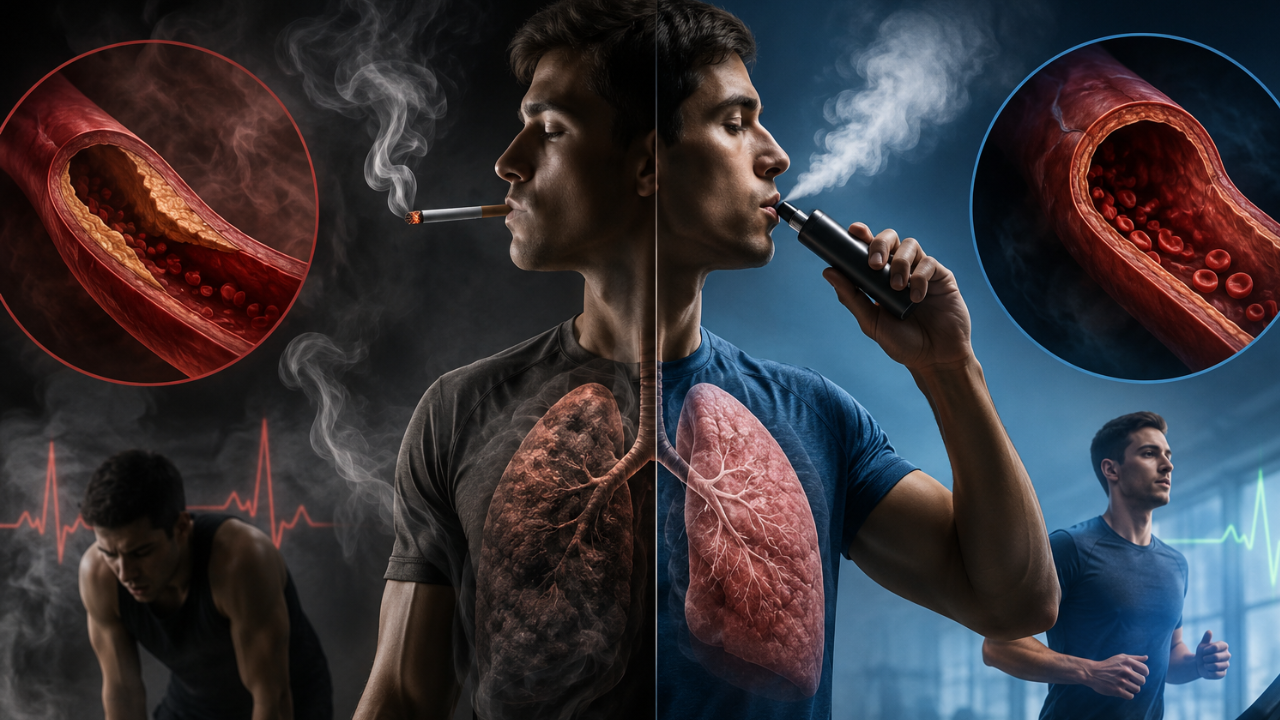
Young adults who believe vaping is safer than smoking may be in for some surprising news. According to a new study, vape users presented reduced fitness and impaired blood vessel function similar to traditional cigarette smokers. The research, published in the peer-reviewed journal ERJ Open Research, compared healthy adults aged 18 to 30 and found that both regular vapers and smokers had around 15% lower exercise capacity than people who had never smoked or vaped. About The StudyThe study involved 75 healthy young adults divided into three groups: non-smokers/non-vapers, cigarette smokers, and regular vapers who had never smoked. Participants completed an incremental cycling test while researchers measured heart and lung function, oxygen activity, blood lactate levels, and overall vascular health. Researchers also observed equally poor blood vessel function, reduced breathing efficiency during exercise, and early muscle fatigue in both those who vaped and smoked. What Did The Study Find? At peak exercise, both smokers and vapers showed significantly lower oxygen uptake and reached exhaustion sooner than non-users. They also accumulated lactic acid more quickly, leading to greater breathlessness and increased leg discomfort during exercise. Ultrasound scans and blood tests further showed signs of impaired blood vessel function and inflammation. Dr. Azmy Faisal, senior lecturer in cardiorespiratory physiology at Manchester Metropolitan University and lead author of the study, said, “In active, healthy young adults with normal lungs, both vapes and tobacco smoking led to worsened exercise capacity, shortness of breath, and intense leg fatigue.” "Like smoking, our research indicates that vaping can lead to harmful changes to the blood vessels, lung efficiency during exercise, and approximately a 15% reduction in fitness compared to those who have never smoked or vaped," Faisal added. Dr. Stamatoula Tsikrika of the European Respiratory Society commented on the findings, saying the growing popularity of vaping among young people who have never smoked is becoming an increasing public health concern.Also read: How Smoking, Alcohol, And Vaping Are Quietly Hurting Women’s Fertility "More and more young people who have never smoked are using vapes," Tsikrika said. "As the popularity of vaping continues to rise, so too do concerns that it is becoming normalised behaviour, functioning as a gateway to nicotine addiction and introducing serious health risks." She noted that although e-cigarettes may contain fewer cancer-causing substances than conventional cigarettes, they can still lead to significant genetic changes. "Vapes may contain lower levels of cancer-causing substances, but they can still trigger genetic changes such as DNA damage and inflammation, which are linked to increased lung cancer risk," Tsikrika said. "For people who have never smoked and are therefore not using vapes as a cessation method, the health consequences of vaping are becoming harder for policymakers and the tobacco industry to justify."Also read: Friends Can Have A Big Impact On Vaping Habits, Study SuggestsSmoking Vs Vaping The researchers, however, caution that the study does not suggest that vaping is equally harmful as smoking in every respect. Traditional cigarettes still strongly remain linked to major disorders like cancer, chronic obstructive pulmonary disease (COPD), and many other life-threatening illnesses. But the new study indicates that when it comes to cardiovascular fitness, breathing efficiency, lung function and blood vessel health in young adults, vaping may offer far less protection.