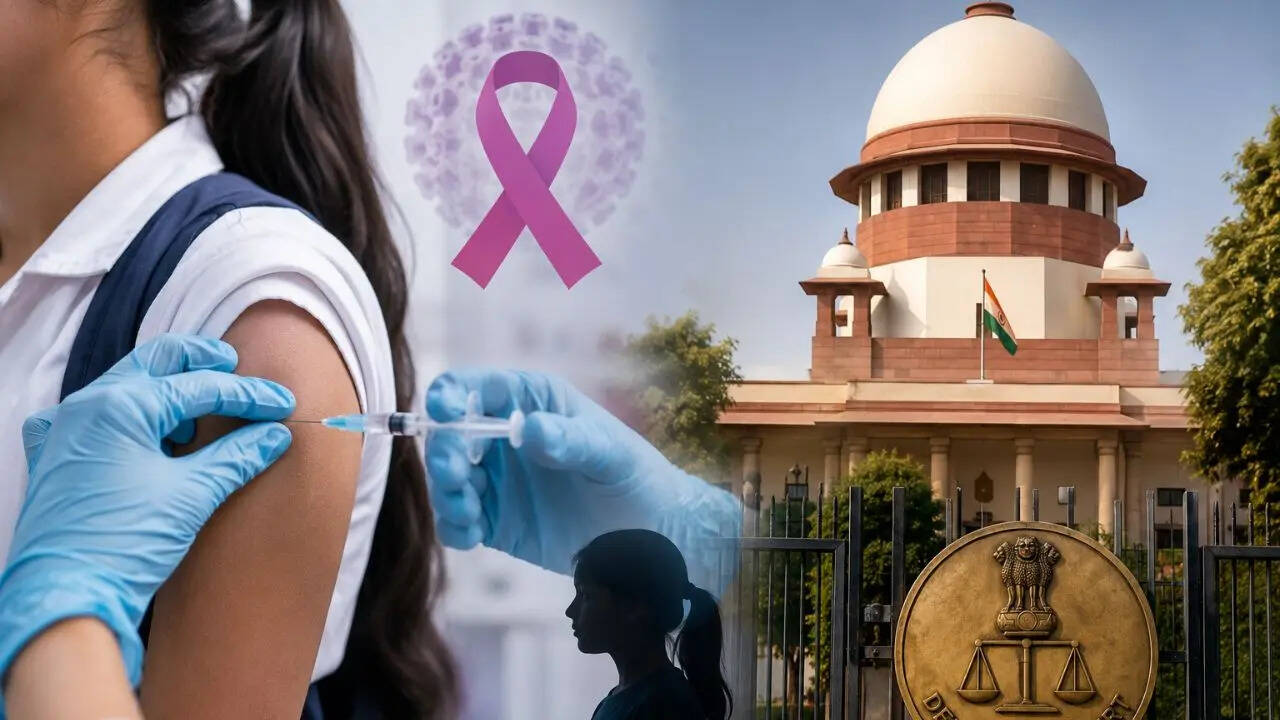
The Delhi High Court has refused to stay the Centre's ongoing Human Papillomavirus (HPV) vaccination programme for adolescent girls. The court said that there is no evidence of "immediate harm" from the vaccine. It also said that the concerning questions around its rollout, safety and scientific backing remain open for judicial scrutiny. Delhi High Court Refuses To Stay HPV Vaccination Drive A public interest litigation (PIL) was filed by gynaecologist Dr. Sujata Mittal and health entrepreneur Jitendra Chouksey, who challenged the nationwide rollout of Merck's Gardasil vaccine. The plea states that the vaccination programme violates the constitutional rights of adolescent girls, including their rights to bodily autonomy, informed parental consent and personal liberty under Articles 19 and 21 of the Constitution of India. It also raises concerns over long-term safety, efficacy, and post-vaccination monitoring. A Division Bench comprising Chief Justice D.K. Upadhyaya and Justice Tejas Karia rejected the plea for an interim stay. The Bench observed, "There may not be long-term benefit (of HPV vaccination) but there is no immediate harm." It added that the safety concerns related to the vaccine would be examined during the course of the proceedings.Also read: Delhi High Court Questions Govt, ICMR Over HPV Vaccine Rollout, Issues Notice Centre Defends HPV Vaccination Programme Representing the Centre, Additional Solicitor General Chetan Sharma told Delhi HC that over 55 crore people worldwide have received HPV vaccines across nearly 160 countries. He also informed the Bench that more than 55 lakh doses have been administered in India so far and only around 120 recipients reported minor side effects like nausea or headache. "The government is taking appropriate and adequate measures while administering the vaccination," Sharma said, arguing that there was no scientific basis to drop the programme. The High Court directed the Centre, the Indian Council of Medical Research (ICMR), the Central Drugs Standard Control Organisation (CDSCO) and the National Immunization Technical Advisory Group (NITAG) to file detailed replies explaining the scientific and regulatory justification for introducing the vaccine.Also read: India Vaccinates Over 5.2 Million Girls Against HPV To Fight Cervical Cancer What Does The Petition Allege? Apart from arguing that the programme violates the bodily autonomy of adolescent girls, the petition also alleged that the vaccinations are being administered through schools and public health systems without adequate informed parental consent. It also states that frontline health workers have been assigned with enrolment targets. This directly creates pressure on the workers who compel these girls to receive the vaccine. The plea also includes cases of reported adverse events after vaccine administration, including that of a 14-year-old girl from Tamil Nadu.Also read: Cervical Cancer Cases In India Drop 37% Over A Decade, Highlighting Impact Of Screening & HPV Vaccination About The Case The case was first heard by the Delhi High Court on July 22, when the Bench described the issue as "extremely important" and sought the Centre's response. During the latest hearing, the court declined to halt the programme but clarified that its order should not be considered as the final endorsement of the vaccine rollout. The court will continue hearing arguments on the programme's scientific basis, efficacy, informed consent process, and adverse event reporting. HPV is one of the most common sexually transmitted viruses and persistent infection with high-risk strains, particularly HPV-16 and HPV-18, and is responsible for nearly all cases of cervical cancer. Vaccination before exposure to the virus is considered one of the most effective ways to prevent cervical cancer and many other HPV-related cancers. India launched its HPV vaccination campaign in February 2026, offering a free single-dose quadrivalent HPV vaccine to eligible 14-year-old girls as part of its cervical cancer prevention strategy.