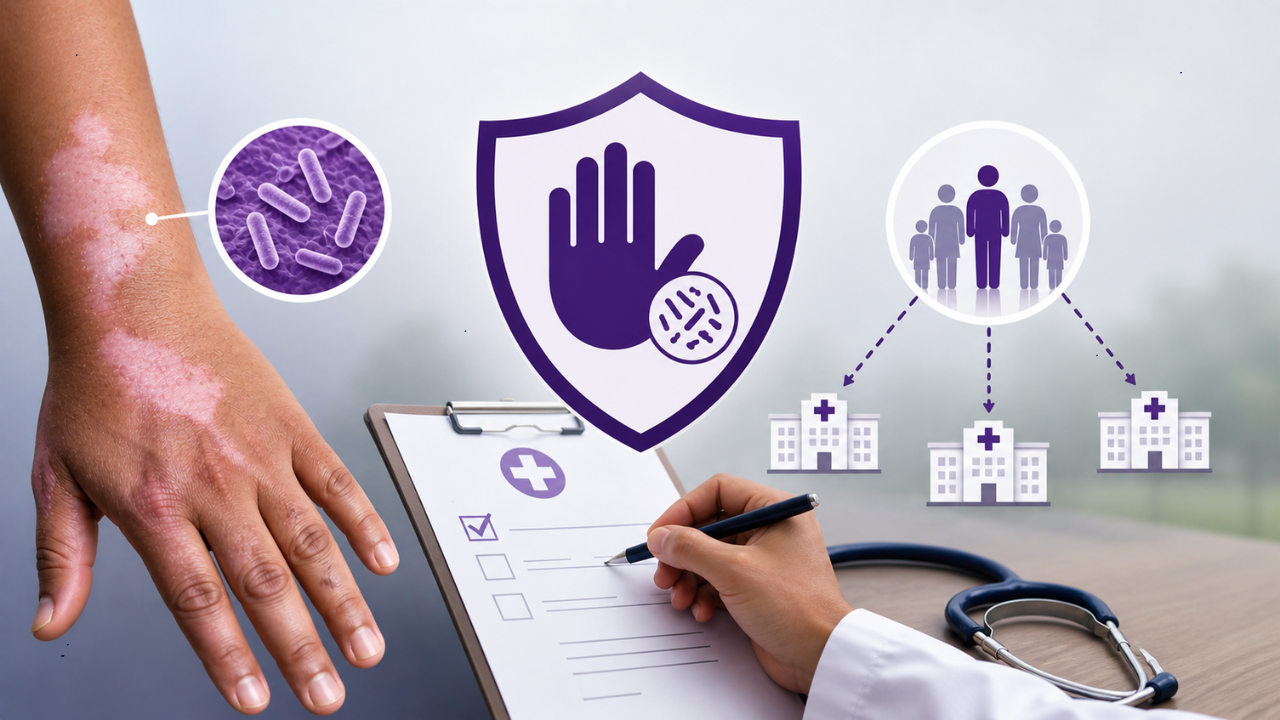
Leprosy will soon be a notifiable disease in India’s national capital, Delhi, in a move to boost surveillance, improve early diagnosis and treatment, the state health department has said. The Delhi Health Department has submitted the proposal, under the Delhi Epidemic Diseases Act, for necessary approval. Once approved, Delhi will join states like Tamil Nadu, Maharashtra, Karnataka, and West Bengal that have already made leprosy notifiable. “Leprosy is completely curable. Making it a notifiable disease will help us find hidden cases, stop transmission, and ensure every patient gets standard treatment with dignity. This is a critical step towards honoring our commitment to a leprosy-free Delhi and supporting India’s journey towards the interruption of its transmission by 2030,” Health Minister Pankaj Singh said, in a statement.Why Notifying Leprosy Is Important?More than 40 per cent of leprosy patients are managed by private health facilities in India, revealed a recent pan-India study. As a result, most go unreported to the National Leprosy Eradication Programme (NLEP). Cases that go unreported continue to spike the risk of transmission. The variance in treatment protocols also raises the threat of drug resistance. WHO's Independent Evaluation of the NLEP program in India suggests that leprosy should be included in the list of diseases mandatory for notification. According to the Ministry, the notification will mandate all government and private healthcare providers, including clinics, hospitals, and individual practitioners, to report every new leprosy case to the District Leprosy Officer. Mandatory notification willboost surveillanceboost targeted interventionslead to early diagnosisprompt early treatment with standard Multi-Drug Therapy (MDT)reduce disability riskprevent transmission through timely contact tracing and post-exposure prophylaxis (PEP), reduce stigma and discrimination by normalizing leprosy as a treatable medical condition, improve treatment compliance and reduced defaulter rates, boost ownership among all healthcare establishments toward the common goal of leprosy eradication. The proposed notification will be issued following the advice of the Delhi Government as per the GNCTD Act 1991. Detailed reporting formats and guidelines will be shared with all health institutions and practitioners across the National Capital Territory of Delhi. Also read: ORS For Schoolchildren, Cool Roofs, Misting Systems: Here's All About Delhi’s Heatwave Action Plan 2026What Is Leprosy? Leprosy is also known as Hansen's disease. It is a chronic infectious disease that is caused by the bacterium Mycobacterium leprae. It affects the skin, peripheral nerves, upper respiratory tract mucosa, and eyes. If it is not treated promptly, it could lead to permanent nerve damage, disabilities, and social stigma. However, the condition is fully curable with multidrug therapy, and early detection could prevent further complications. Leprosy is also a neglected tropical disease (NTD), which occurs in more than 120 countries, with around 2,00,000 new cases reported every year.The Prevalence Of Leprosy In IndiaIndia achieved the official elimination of leprosy as a public health problem (less than 1 case per 10,000 population) nationally in December 2005. However, the country still accounts for approximately 59 per cent of global annual new leprosy cases. As per data from the Health Ministry, till March 2025, 31 states/UTs and 638 districts have achieved less than 1 case per 10,000 population of leprosy, with a prevalence rate of 0.57 per 10,000.The NLEP now targets "Zero Transmission, Zero Leprosy" by 2027 through early detection, free multidrug therapy (MDT), and stigma reduction.Under the NLEP, the government provides services such as free diagnosis and treatment (MDT) at all government health facilities, microcellular rubber footwears for patients, free assistive devices for leprosy patients, self-care kits for patients with ulcers, and reconstructive surgery for Grade 2 deformities with a welfare allowance of Rs 12,000.All services under NLEP are available free of cost at all government health facilities.