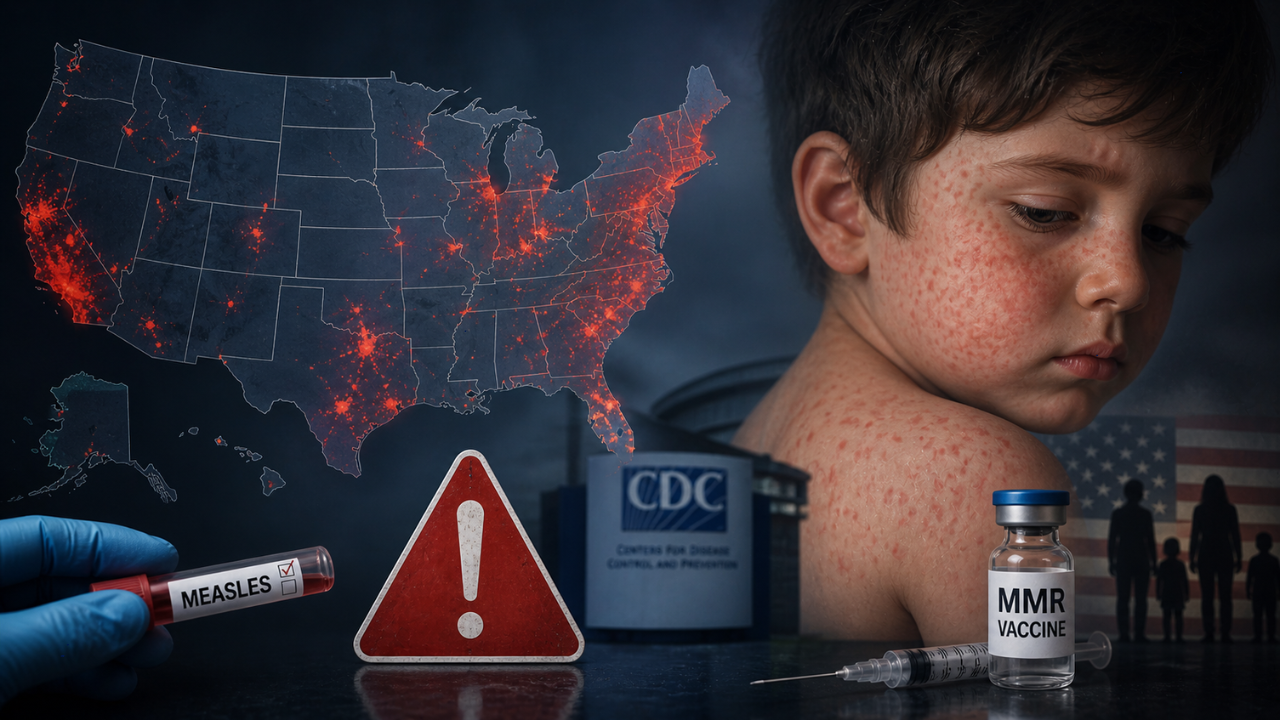
The US eliminated measles in 2000, but since 2025, the highly infectious disease has spread to 45 states. As of early May 2026, the US has recorded 1,814 confirmed measles cases this year across 36 states. This follows a record-high 2,288 cases in 2025. Now, the US Centers for Disease Control (CDC) has warned about additional measles cases ahead of the travel season. The CDC urged public health agencies across the US to be prepared for more measles cases in the coming months. "With continued measles transmission in areas across North America and expected increases in international and domestic travel and large events during spring and summer, additional measles cases are anticipated in the coming months," the agency said. Travel Guidance By CDC The guidance advised public health agencies to document and report details of each case of measles, including close contacts and locations visited while a person was infectious. Active surveillance should be conducted to identify any additional suspected cases and quickly transport specimens for laboratory confirmation, the guidance said. The agency also encouraged outreach to under-vaccinated communities and suggested using state-based syndromic surveillance systems to detect changes in health care–seeking behavior for fever and rash illnesses or signs of vitamin A toxicity.Measles is a highly contagious virus that spreads through direct contact or through the air when an infected person coughs or sneezes. It is a vaccine-preventable disease that can cause devastating complications, including blindness, pneumonia, encephalitis, and long-term immune dysfunction. Is The US At Risk Of Losing Measles Elimination Status? Also read: Robert F. Kennedy Jr. Denies Link To Measles Outbreak At Senate HearingSo far, there have been 24 new outbreaks reported in 2026, and 93 per cent of confirmed cases (1,688 of 1,814) are outbreak-associated (415 from outbreaks starting in 2026 and 1,273 from outbreaks that started in 2025).In 2025, 48 outbreaks were reported, and 90 per cent of confirmed cases (2,065 of 2,288) were outbreak-associated. According to researchers at Boston Children's Hospital, the US has missed four of the seven criteria for measles elimination status, which could put the country off track. More are at risk, they said. In a Correspondence published in The Lancet, the researchers explained the missed indicators of measles elimination status in the US. Low number of cases with a cutoff of less than one case per 10 million people. As of early 2026, the US had about 93 cases per 10 million people, exceeding this limit. Most of the measles cases should come from abroad rather than from internal spread. Since the start of 2025, only 6–7 per cent of the measles cases have come from abroad, meaning most cases derive from within the US. A limited number of outbreaks (a cutoff of approximately four) with no more than about six cases each. Last year in the US, 48 outbreaks resulted in more than 2,000 cases. And in early 2026, at least 19 outbreaks have already resulted in more than 1,600 cases. A level of transmission less than one, meaning one infected person only spreads measles to fewer than one other person on average. The US exceeded this rate more than 75 per cent of the time since early 2025.Indicators At Risk Read More: India Concerned Over Measles Outbreak, Action Underway: Dr N K Arora| Exclusive The country achieves four weeks with all infections deriving from outside the US. Since the first infection in January 2025, the US hasn't gone four weeks without infections, with 90 per cent of cases acquired here. Herd immunity through vaccination. An estimated 95 per cent of people need to receive two doses of the measles vaccine to achieve herd immunity, typically given as part of the MMR (measles, mumps, and rubella) vaccine. However, the US average vaccination rate of kindergartners in the 2024–2025 school year was 92 per cent, meaning this indicator is at high risk. Measles cases don't share a common viral strain. From ongoing genetic analyses, preliminary data show that the majority of cases share the same viral strain and are likely part of the same transmission chain. The researchers believe these findings make a strong case for vaccinating children to protect them from a young age."Viral infections aren't all benign, and a measles infection, even when cleared, can result in lifelong problems," said Maimuna Majumder, from Boston Children's. "Babies less than a year old are among those at greatest risk for severe complications, and the full impact on children exposed during the current outbreak may only show up years later," Majumder added.