
- Health Conditions A-Z
- Health & Wellness
- Nutrition
- Fitness
- Health News
- Ayurveda
- Videos
- Medicine A-Z
- Parenting
Delhi Under Orange Alert for Cold Wave, AQI Remains 'Severe'; Here’s How It Could Affect Your Health
Credits: iStock
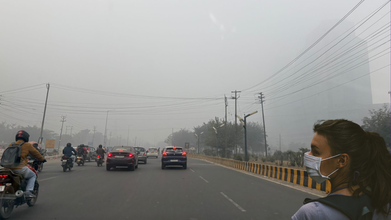
Today, Delhi again woke up to a thick layer of smog, and the adjoining cities like Noida, Ghaziabad, Gurugram, and Faridabad too woke up to zero-visibility fog on Monday. The air quality too dipped down to 'severe' category, with AQI registered at 400 plus on the index. While on Sunday, the AQI did show some improvement, as the city registered 'very poor' AQI, however, by the end of the day, the capital city was trapped under fog and pollution.
Delhi Struggling With Pollution And Cold Wave
The Indian Meteorological Department (IMD) has also issued an orange alert for Delhi on 29 December, Monday. The maximum temperature is expected to be around 22 degree Celsius, while the minimum will be at 7 degree Celsius. Mornings would encounter heavily dense fog, while there is an expectation of marginal relief on December 30. Most of North India is also said to be worst hit, including states like Uttar Pradesh, where thick fog is predicted till December 31, Punjab and Haryana is expected to face cold wave through December 30, and Himachal and Uttarakhand could see rain and snowfall from December 30 onwards.
As per IMD, cold wave is a condition of air temperature which becomes fatal to human body when exposed. This happens during the winter seasons and the cold wave impact gets aggravated due to wind speed. Cold Wave is considered when minimum temperature of a station drops to 10 degree Celsius or less for plains and 0 degree Celsius for Hilly regions.
How Can Cold Waves Impact Your Health?
IMD says that cold wave could cause mild to severe hypothermia. The common symptoms include shivering, dizziness, drowsiness, irritability, confusion, slowed, slurred speech, and altered vision. This happens when body experiences a lowered core temperature below 34.4 degree Celsius.
Frostbite is another health hazard that can happen due to cold waves. It is freezing of body tissue, accompanied with hypothermia. When ice crystal form between the cells of the skin and grow by extracting fluid from the cells, the circulation is obstructed, causing additional damage to the tissue affected. It commonly affects hands, feet, ears, nose and cheeks. The common symptoms are redness in skin, or skin turning grey. Some may also experience tingling sensations, fingers turning numb yellowish, waxy, or grey color.
Chilblains could be caused due to exposure to cold, wet, and humid conditions. Repeated prolonged exposure of bare skin could lead to this development in just few hours. It could impact your ears, nose, cheeks, fingers, and toes. Common symptoms include skin turning pale and colorless, prickly sensations, red, swollen, hot, and itchy skin and blisters.
Dehydration could also happen due to lack of fluid intakes, which is common during extreme cold. This could lead to headaches, dizziness, dry mouth, stomach cramps, and increased heartbeat. IMD notes carbon monoxide poisoning or CMP, snow blindness, and trench foot are also common during cold seasons, and provides ways to prevent these from happening.
What Do These Alerts Mean?
Delhi is currently under Orange Alert for cold wave. What do these different alerts mean?
Green Alert: This means no action will be taken, as this is a normal day during winter season
Yellow Alert: This means 'be updated' and refers to cold wave alert where the conditions in isolated areas may persist for two days
Orange Alert: This means 'be prepared' and refers to severe cold wave conditions that could persist for two days. This could also mean that though the condition is not severe, but the conditions could persist for four days or more
Red Alert: This means 'take action' and refers to severe cold wave conditions that persists for more than two days, or total number of cold wave days exceeding six days
TV Presenter Julia Bradbury Opens Up About The Lifestyle Changes She Made After Being Diagnosed With Cancer
Credits: LinkedIn Julia Bradbury
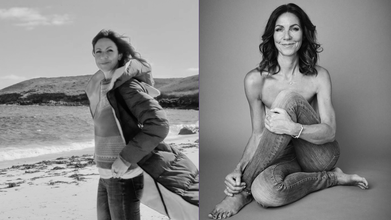
BBC Countryfile presenter Julia Bradbury, who was diagnosed with breast cancer during the lockdown, in 2021, underwent a single mastectomy back to remove her tumor. Now, 55, she has recently opened up about a big lifestyle change that she has made to ensure that her cancer does not come back.
She said that she has given up alcohol completely, which some people also find "infuriating". In an interview with The Times, she said that doctors had warned her that every drink she consumes which is above a certain limit could increase the chance of her cancer returning. She said "death looked me in the eyes".
Speaking to The Times, she said, "I get a lot of pushback on social media about this. People go, ‘I was healthy, I go to the gym, I got cancer, and now it’s metastasized, and I’ve got secondary cancer. So, are you blaming me for my illness? No. All I’m saying is, this is what I went through. It was a wake-up call, and it made me look at life differently. It made me prioritize my sleep, emotional health, and gave me more time for my loved ones. If I drink more than four units of alcohol a week, my risk of recurrence goes up by 28 per cent. But people find me giving up drinking infuriating.”
What Does Data Say About Alcohol And Cancer?
The National Cancer Institute, US, notes that there s strong scientific evidence that alcohol drinking can cause cancer. The International Agency for Research on Cancer (IARC) classified alcohol as a Group 1 carcinogen (cancer-causing substance) in 1987 due to sufficient evidence that it causes cancers of the oral cavity, pharynx, larynx, esophagus, and liver in people. The National Toxicology Program has listed consumption of alcoholic beverages as a known human carcinogen in its Report on Carcinogens since the ninth edition, in 2000.
Epidemiologic studies have shown that people who drink alcohol are at higher risk of certain cancers than those who do not drink alcohol and that the more someone drinks, the higher the risk of these cancers. Even light drinkers can be at increased risk of some cancers.
In the US in 2019, alcohol consumption was responsible for about 5% or nearly 100,000—of the 1.8 million cancer cases. It also led to 4% or nearly 25,000 of the 600,000 US cancer deaths that year.
Read: Can Drinking Beer Cause Cancer? A New Study Says There Is No Safe Limits
Julia also notes that her poor health took a hit on her confidence as well as her bank balance. This is why she has taken a new approach to life, as reported by the Express. She said, "I am very, very fortunate, and overall, I am having a wonderful life."
“But I’ve had a cancer diagnosis, both my parents have had cancer, I’ve lost people along the way, I’ve had financial worries, I’ve had to reinvent myself, and I’m not 100 per cent happy all of the time - of course not. But you can get through things, you can overcome hardships, and I like to think that’s what I do," she said.
While she is now healthy, she continues to go on her routine check-ups every year. "I wasn’t close to death, but death looked me in the eyes. So I am more focused on my health than I ever have been. I don’t drink, I eat a healthy diet, and exercise every day. When I came home from my mastectomy, I promised I would spend time outside every day, and that is my mantra, however poor it might be in this winter.”
Melanie Watson, Disability Advocate And Diff'rent Strokes Actress, Dies At 57
Credits: NBC
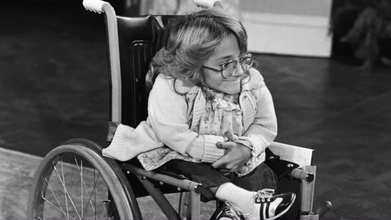
Melanie Watson, Diff'rent Strokes actress and disability advocate dies at 57 on Friday, December 26. The news was confirmed by her brother Robert, and told that she was hospitalized prior to her death. While her cause of death has not been revealed yet, her brother said that she was in hospital due to some bleeding issue.
What Is Osteogenesis Imperfecta?
Melanie was born with osteogenesis imperfecta or OI, which the Johns Hopkins Medicine notes is an inherited (genetic) bone disorder that is present at birth. It is also known as brittle bone disease. A child born with OI may have soft bones that break or fracture easily, bones that are not formed normally and other problems Signs and symptoms may range from mild to severe.
OI also have eight different forms and the types vary greatly both within and between types. As per the Johns Hopkins Medicine, here are the eight types of OI:
Type I. Mildest and most common type. About 50% of all affected children have this type. There are few fractures and deformities
Type II. Most severe type. A baby has very short arms and legs, a small chest, and soft skull. He or she may be born with fractured bones. He or she may also have a low birth weight and lungs that are not well developed. A baby with type II OI usually dies within weeks of birth
Type III. Most severe type in babies who don’t die as newborns. At birth, a baby may have slightly shorter arms and legs than normal and arm, leg, and rib fractures. A baby may also have a larger than normal head, a triangle-shaped face, a deformed chest and spine, and breathing and swallowing problems. These symptoms are different in each baby.
Type IV. Symptoms are between mild and severe. A baby with type IV may be diagnosed at birth. He or she may not have any fractures until crawling or walking. The bones of the arms and legs may not be straight. He or she may not grow normally.
Type V. Similar to type IV. Symptoms may be medium to severe. It is common to have enlarged thickened areas (hypertrophic calluses) in the areas where large bones are fractured
Type VI. Very rare. Symptoms are medium. Similar to type IV.
Type VII. May be like type IV or type II. It is common to have shorter than normal height. Also common to have shorter than normal upper arm and thighbones.
Type VIII. Similar to types II and III. Very soft bones and severe growth problems.
What Causes OI?
This is a disease that could be passed on through genes and there are different types that could be passed on in different ways. These genes could be inherited from one or both parents, or could be passed on from an unexplained change or a mutation of the gene.
Most babies who have OI have a defect of one of two genes. These genes help in collagen forming, which is a main part of connective tissue that connects and supports the whole body, including bones. Because of a certain defect, there is no enough collages, or the collagen is abnormal, which causes this disease.
The main aim of treatment for this disease lies in prevention of deformities and fractures.
Measles Alert Issued After Exposure At Two Major US Airports: All You Need To Know
Credits: Canva
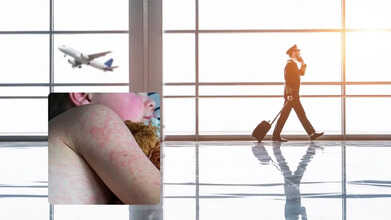
New Jersey health authorities have issued an alert for travelers who passed through Newark Liberty International Airport on December 19, warning of a possible measles exposure.
According to the state Department of Health, an infected passenger who does not live in New Jersey traveled through at least two airport terminals that day. Officials said anyone who was in Terminal B around 7 a.m. or Terminal C around 7 p.m. may have been exposed to the highly contagious virus. Authorities do not know where the individual was during the hours between those times.
As per NBC News, health officials have issued warnings about possible measles exposure for travelers passing through Boston and Denver.
Measles Alert Issued After Exposure At Two Major US Airports
People who were exposed could begin showing symptoms as late as January 2, as per NBC News. Health officials are urging anyone who believes they may have been exposed or who develops symptoms to contact their local health department or healthcare provider before visiting a clinic or hospital.
Officials noted that special arrangements can be made for medical evaluation to reduce the risk of spreading the virus to other patients and healthcare workers.
Measles Symptoms and Health Risks
Measles typically begins with a high fever, cough, runny nose, and red, watery eyes. A rash usually appears three to five days after symptoms start. It often begins as flat red spots along the hairline and face, then spreads downward to the neck, torso, arms, legs, and feet.
In some cases, measles can lead to serious complications, including pneumonia and encephalitis. Pregnant individuals face added risks, such as miscarriage, premature delivery, or having a baby with low birth weight.
What Is Measles?
Measles (rubeola) is a highly contagious viral infection causing fever, cough, runny nose, red eyes, and a characteristic full-body rash, spread through air and surfaces, which can lead to severe, even deadly, complications like pneumonia or brain swelling, though it's preventable with the measles vaccine, as per Mayo Clinic.
The virus is extremely infectious, with one infected person potentially infecting up to 90% of unvaccinated close contacts, and remains contagious for hours in the air or on surfaces
How Measles Spreads
Measles spreads easily through the air when an infected person coughs or sneezes. The virus can remain airborne for up to two hours after the person has left the area. Infection can also occur through direct contact with mucus or saliva from someone who is infected.
Rising Measles Cases and Protection
New Jersey has reported 11 confirmed measles cases in 2025, compared with seven cases in 2024. Across the United States, cases have climbed sharply, reaching 2,012 across 44 jurisdictions as of December 23, the highest number reported since 1992.
State health officials are working with local agencies on contact tracing and outreach to alert those who may have been exposed. Individuals most at risk include those who are not fully vaccinated or who have never had measles.
The MMR vaccine, given in two doses, remains the most effective protection against measles, mumps, and rubella.
- Follow Us :


© 2024 Bennett, Coleman & Company Limited