
- Health Conditions A-Z
- Health & Wellness
- Nutrition
- Fitness
- Health News
- Ayurveda
- Videos
- Medicine A-Z
- Parenting
Denmark 1st European country to eradicate mother-to-child transmission of HIV, syphilis

Credit: WHO
Denmark has become the first country in the European Union (EU) to eliminate mother-to-child transmission (EMTCT) of HIV and syphilis -- two serious, and often co-occurring, sexually transmitted infections (STIs).
The World Health Organization (WHO) validated Denmark for the EMTCT of HIV and syphilis, for low transmission rates and high coverage of prenatal testing and treatment for pregnant women from 2021 to 2024.
“The elimination of mother-to-child transmission of HIV and syphilis marks a major public health achievement for Denmark,” said Dr Tedros Adhanom Ghebreyesus, WHO Director-General.
“This milestone demonstrates that with strong political commitment and consistent investment in primary care and integrated maternal and child health services, countries can protect every pregnant woman and newborn from these diseases,” he added.
With the recognition, Denmark is now among 22 other countries and territories validated by WHO for the elimination of mother-to-child transmission of HIV, syphilis, or hepatitis B virus.
How Denmark Achieved EMTCT Of HIV And Syphilis
Elimination can be defined as testing and treating at least 95 out of every 100 pregnant women. This also includes keeping new infant infections below 50 per 100,000 births, year after year.
"Denmark has met these benchmarks through strong antenatal care, reliable data systems, and respect for women's rights. We will support Denmark as it works toward full triple elimination, when it adds hepatitis B," said Dr. Hans Henri P. Kluge, WHO Regional Director for Europe.
"This validation by WHO is a proud moment for Denmark and the result of decades of work by our health-care professionals, midwives, and public health teams to ensure that every pregnant woman receives the screening and care she needs,” added Sophie Løhde, Minister for the Interior and Health, Denmark.
Denmark has low rates of HIV and syphilis among pregnant women. While 5,950 people are living in the country with HIV, less than 0.1 percent of pregnant women are affected. With regular testing and treatment, mother-to-child transmission was reduced to zero.
Further, the systematic prenatal screening and care also reduced the cases of congenital syphilis (syphilis passed from mother to baby). In 2024, the country reported 626 cases of syphilis, more in men (524) than in women (102).
The country is now on track towards validating hepatitis B virus elimination.
The prevalence of chronic hepatitis B infection in Denmark is estimated at around 0.2–0.3 percent, mainly among migrants from endemic regions.
In October 2025, the Maldives became the first country in the world to achieve ‘triple elimination’ of mother-to-child transmission of hepatitis B, HIV, and syphilis. The country had achieved WHO validation for EMTCT of HIV and syphilis in 2019.
Global Prevalence Of HIV And syphilis
Globally, more than 39 million people were living with HIV in 2022, and over 20 million cases of syphilis were reported among women of childbearing age by 2021.
Syphilis sores create entry points for HIV, while HIV can accelerate syphilis progression.
While syphilis is curable with antibiotics, HIV is manageable but not curable.
The sexually transmitted infections are also increasing in prevalence worldwide.
More than 1 million curable STIs are acquired every day worldwide in people 15–49 years old, the majority of which are asymptomatic.
STIs have a direct impact on sexual and reproductive health through stigmatization, infertility, cancers, and pregnancy complications, and can increase the risk of HIV.
Zepto Customer Claims To Find 'Plastic' Inside Eggs, FSSAI Says Impossible

Credit: Instagram/ @climbwithshalini
In a shocking video, a woman who ordered packaged eggs sold by Eggoz from Zepto claims they were filled with plastic-made strands instead of yolk, however the brand soon quoted FSSAI's rules and issued a clarification.
Earlier this week, Shalini Singh shared an Instagram video of six eggs that appear to have yellow, thread-like strands emerging from within, suggesting that instead of slimy yolk, she found a plastic substance bursting out of the eggs after boiling them.
In the clip, the visibly upset customer is heard saying: “Until now we had only heard that fake eggs or plastic eggs were being sold in the market, but today I witnessed an example in my own home. I ordered Eggoz Everyday brand eggs from Zepto and as soon as I put them on to boil, instead of yolk, plastic started coming out from inside."
Pointing at the cracked eggs, she added, “You can see in the video yourself, plastic is coming out in the form of noodles. Each egg has the Eggoz Everyday stamp on it. Look at how plastic fake eggs are reaching our homes.
“This is what we are buying today. If they had been cooked in another way, we might not even have realized we were consuming plastic. These boiled eggs burst, and that is how we found out it was plastic. If this is the condition of such big brands today, what is even left safe to eat?"
Can Egg Yolks Be Filled With Plastic?
According to the Food Safety and Standards Authority of India (FSSAI), it is impossible for eggs to be made artificially or with plastic. In a guidance titled 'Eqq Quality And Safety', the agency wrote: "Plastic eggs or artificial eggs are a myth mainly due to the fact that there is no technology available to produce a plastic/ artificial egg that would perfectly resemble a natural egg."Consumers need to remember that the quality and appearance of the egg mostly depend on the way they are stored and for how long they are stored. Egg quality is best maintained when they are stored in cold temperatures preferably inside refrigerators and consumed within a period of 2 to 3 days.
"When kept in room temperature, several changes take place in an egg that bring about differences in the smell, texture and appearance of the egg."
The FSSAI further suggested holding up an egg against a very bright light in a dark room to detect its age. If its fresh, the egg will display a small air gap usually at the broader (blunt) end and if its starting to age, the air cell will expand in volume.
Upon hard boiling a fresh egg, you can clearly see the indentation left behind at the top of the egg once the shell is peeled off.
When fresh eggs are boiled, the yolk normally stays in the center and is not very mobile because of the chalaza (the strings of tissue) that hold it in place. These strings break down as the egg ages (during storage or transportation). When hard boiled eggs are cut length wise, one can see that the yolk has moved off the centre.
What Did The Company Say?
In response to the video, Eggoz said: “We’re really sorry to hear about your experience and completely understand your concern. This is not the kind of situation we ever want our customers to face. Kindly DM us your contact information and our customer support team will connect with you to resolve this at the earliest."Thank you for bringing this to our attention."
They also reached out with an official clarification, stating that there is no such thing as plastic eggs and that the claims stem from common misconceptions, quoting FSSAI's guidance.
In an official statement, the brand commented: "There are no plastic eggs. Eggs are a natural agricultural product, and variations in texture or appearance may occur due to storage or temperature conditions at different stages after production. Such natural changes do not indicate the presence of artificial or plastic material and do not affect food safety."
The company also highlighted its commitment to strict farm-to-shelf quality processes, including hygienic handling, batch traceability and temperature-controlled logistics.
1st-Ever In-Womb Stem Cell Therapy for Spina Bifida Found Safe, Gets US FDA Backing: The Lancet
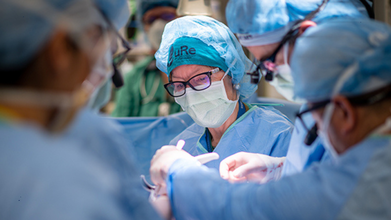
Credit: University of California-Davis Health
In a medical milestone, a team of US surgeons has deemed an in-utero surgery that adds stem cells to treat spina bifida -- a birth defect -- to be safe. This new type of fetal therapy does not just repair the defect but may also help heal and protect the baby’s developing spinal cord.
The Phase 1 clinical trial, published today in The Lancet and based on six babies, showed that adding a layer of human placenta-derived stem cells to standard fetal surgery can be done safely. The early safety results have prompted the US Food and Drug Administration (FDA), along with an independent monitoring board, to approve the next phase of the study.
Also Read: Priyanka Chopra, Nick Jonas Open Up About Malti’s Premature Birth And NICU Battle
Spina bifida, also known as myelomeningocele, occurs when spinal tissue fails to fuse properly during the early stages of pregnancy. The birth defect can lead to a range of lifelong cognitive, mobility, urinary, and bowel disabilities.
While surgeons have previously performed prenatal surgeries, this is the world’s first in-utero stem cell therapy for spina bifida. It is also the only clinical trial aimed at improving outcomes beyond those achieved with fetal surgery alone.
“Putting stem cells into a growing fetus was a total unknown. We are excited to report strong safety results,” said Diana Farmer, the clinical trial’s principal investigator and chair of the Department of Surgery at the University of California-Davis Health.
“It paves the way for new treatment options for children with birth defects. The future is exciting for cell and gene therapy before birth,” she added.
How The Breakthrough Fetal Surgery Was Conducted
Surgeons made a small opening in the mother’s uterus and gently positioned the fetus to expose its back and the spina bifida defect.
A small patch containing living stem cells was then placed directly over the exposed spinal cord before closing the layers of the back to allow the tissue to regenerate.
The stem cells, taken from donated placentas, are designed to protect the developing spinal cord from further damage before birth.
Treating Spina Bifida Before Birth
The findings from the first six babies in the trial, who were closely monitored from surgery through birth, revealed no safety concerns related to the stem cells.
After surgery, the babies experienced no infections or spinal fluid leaks. No abnormal tissue growth or tumors formed at the repair site.
All six surgeries were successful, and the stem cell patch was placed as planned in every case. All surgical wounds healed completely.
MRI scans also showed reversal of hindbrain herniation -- a condition commonly associated with spina bifida -- in all infants, an indicator of surgical success.
Hindbrain herniation in babies, often referred to as Arnold-Chiari II malformation, involves the lower part of the brain descending into the cervical spinal canal.
This can block the flow of cerebrospinal fluid, causing dangerous hydrocephalus (fluid buildup). None of the babies required a shunt for hydrocephalus before hospital discharge, the researchers said.
What Is Spina Bifida
Spina bifida affects about 1 in 2,500 births worldwide, with an estimated 1,500 to 2,000 babies diagnosed each year in the United States alone.
It is a common neural tube defect, with higher prevalence observed in regions with lower folic acid fortification. Open spina bifida specifically occurs in approximately 1 in every 2,875 births.
This surgical intervention aims to significantly improve motor function, and increase the likelihood of walking independently.
The first phase of the trial was funded by a $9 million state grant from the California Institute for Regenerative Medicine (CIRM).
The trial is now enrolling up to 35 patients in its Phase 1/2a study.
Children will be followed through age six to evaluate long-term safety and early signs of improved movement, as well as bladder and bowel function.
Indian Drugmakers Are Gearing Up To Launch Generic Semaglutide Injections As Weight-loss Drugs Patent Expires In March
Credits: Canva
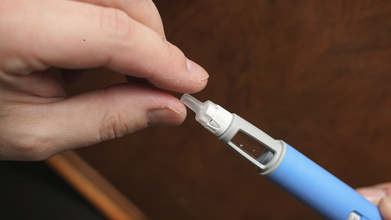
Indian drugmaker Dr Reddy's Laboratories is now gearing up to launch its generic semglutide injection in the country in March under the brand name Obeda, reported the news wire agency Reuters. Patent protection for semglutide expires in India in March 2025. This has triggered a rush among Indian drugmakers to come up with lower-cost versions.
Semaglutide is the active ingredient in Danish drugmaker Novo Nordisk's Ozempic and Wegovy, popularly known as the weight loss drugs, but also effective for diabetes and used primarily for that.
Also Read: Scientists Develop First Antibodies To Block Epstein Barr Virus
Indian Drugmakers Rush For Generic Weight Loss Drugs
Hyderabad-based Dr Reddy's already applied for trademark with the brand name Obeda and a logo, reported Reuters, based on a government filing. In an email response to Reuters, Dr Reddy's spokesperson said, "As semaglutide is yet to be officially launched, it would not be appropriate to refer to or publish any name as the brand name at this stage."
Other companies like Sun Pharma, Zydus Lifesciences, and Nacto Pharma too are entering the rat race of launching multiple generic versions to make the treatment more affordable for patients with obesity and weight-related health risks.
Sun Pharma also announced the plans for "day-one" launches of generic prefilled pens.
Will Launching Generic Weight Loss Drugs Make It Cheaper To Buy?
Until the patent is expired, the semaglutide therapies are owned by the original company. In India, semaglutide injections like Ozempic and Wegovy are soled at a high cost that has limited accessibility to many patients.
Industry analysts, as reported by NDTV, expect that one generic semaglutide enters the market from March 21, 2026, prices could be cut roughly by 50 per cent as compared to the prices it started with. This means Wegovy which was previously sold for around Rs. 10,000 per month could fall somewhere between Rs 3,500 to Rs. 4,000 per month for starter doses.
Dr Reddy's Laboratories have positioned their generic brands competitively, and could potentially offer discounts of up to 50 to 60 per cent in early competition.
How Does Semaglutide Work?
Semaglutide works as a GLP-1 receptor agonist that mimics the GLP-1 hormone to regulate appetite and blood sugar. It slows gastric emptying and makes you feel fuller longer. It also signals the brain to reduce hunger and cravings, and triggers the pancreas to release insulin when blood sugar is high.
Read: Wegovy And Ozempic Will Cost Less In 2027, Novo Nordisk Slashes Weight Loss Drugs Prices By Half
They work by increasing insulin release in a glucose-dependent manner, decreasing the liver's production of glucagon, and slowing down the emptying of the stomach, which helps lower blood sugar levels after a meal. They also act on the brain to suppress appetite and increase feelings of fullness, leading to reduced calorie intake.
In people with type 2 diabetes, notes Harvard Health, the body's cells are resistant to the effects of insulin and body does not produce enough insulin, or both. This is when GLP-1 agonists stimulate pancreas to release insulin and suppress the release of another hormone called glucagon.
These drugs also act in the brain to reduce hunger and act on the stomach to delay emptying, so you feel full for a longer time. These effects can lead to weight loss, which can be an important part of managing diabetes.
- Follow Us :


© 2024 Bennett, Coleman & Company Limited