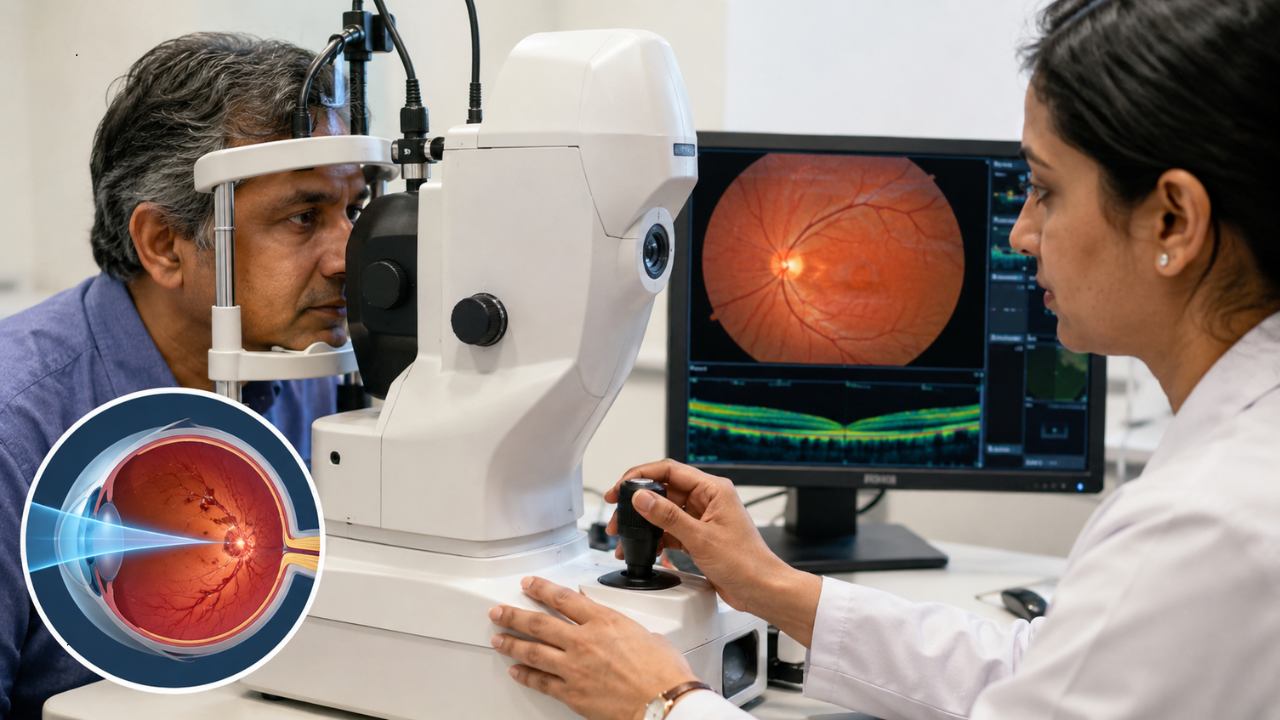
Retinal disorders are among the leading causes of irreversible vision loss. Doctors at AIIMS New Delhi said the growing burden of these conditions is being driven in part by diabetes, stressing the need for retinal screening to protect long-term eye health.Speaking to HealthandMe, experts emphasized the importance of starting eye screening from the time of diabetes diagnosis.Retinal diseases affect the retina, the light-sensitive tissue at the back of the eye. One of the most common is diabetic retinopathy.According to the National Institute of Diabetes and Digestive and Kidney Diseases, diabetic eye disease is a group of eye problems that can affect people with diabetes. These include diabetic retinopathy, diabetic macular oedema, cataracts and glaucoma.What Happens In Diabetic Retinopathy?In diabetic retinopathy, high blood sugar levels damage blood vessels in the retina, causing them to swell, leak fluid or bleed.This can lead to blurred vision, dark spots or floaters, difficulty seeing at night and distorted vision. In advanced stages, abnormal blood vessels can develop, potentially causing severe vision loss or blindness due to complications such as macular oedema or retinal detachment.Why Is Retinal Screening A Must?“Every person who is newly diagnosed with diabetes, especially those with type 2 diabetes, should undergo mandatory eye screening at the time of diagnosis,” said Dr. Vinod Kumar, Professor of Ophthalmology at RP Centre, AIIMS.“Type 2 diabetes is often detected at a relatively older age, which means a person may have had diabetes for a long time without knowing it. We do not know how long they have actually had the disease. That is why newly diagnosed type 2 diabetics should undergo mandatory eye screening,” he addedFor young, insulin-dependent diabetics, the expert noted that diagnosis usually occurs when insulin dependence begins, meaning they are detected earlier.“Therefore, they are not required to undergo eye or retinal examination at the time of diagnosis. It is recommended that after five years of their diagnosis, they should undergo eye screening to check whether they have diabetic retinopathy or not,” Dr Vinod said.Are Eye Screening And Retinal Screening The Same?No. A general eye or vision screening is a basic check of how well a person can see, while retinal screening uses specialized digital cameras to take detailed images of the retina at the back of the eye.Are Retinal Diseases Rising In India?As India is the diabetic capital of the world, retinal diseases are very common, the expert said. However, many people may not realize they have vision loss due to diabetic retinopathy because the disease progresses slowly.“Even if you do not have symptoms, you should undergo eye or retinal screening so that diabetic retinopathy can be diagnosed and appropriate steps can be taken to correct the effects of vision loss,” Dr Vinod said.Lack Of Retinal Specialists A Concern In IndiaRetinal disorders are among the leading causes of irreversible vision loss in India. The growing burden of these conditions, along with gaps in the availability of retina specialists and infrastructure, highlights the need to strengthen retinal care.According to the Vitreo-Retina Society of India (VRSI), there are around 1,700 retinologists in the country, which is inadequate to address the burden of retinal diseases.To address the shortage of trained retinal specialists, AIIMS, in collaboration with Roche, launched a customized Retina Training Program at the National Retina Skill Development Centre.Developed with the Roche India Healthcare Institute (RIHI), the program aims to strengthen retinal care through hands-on training, research and innovation.“The need for strengthening retinal care capabilities is underscored by gaps in specialized expertise,” said Dr. Radhika Tandon, Chief and Professor of Ophthalmology, Dr. Rajendra Prasad Centre for Ophthalmic Sciences, AIIMS New Delhi.The program will provide ophthalmologists with structured, hands-on training and advanced infrastructure to improve early diagnosis and appropriate management of retinal diseases.