
- Health Conditions A-Z
- Health & Wellness
- Nutrition
- Fitness
- Health News
- Ayurveda
- Videos
- Medicine A-Z
- Parenting
Doctors Warn Chickenpox Cases Are Rising Exponentially In India

Credit: Canva
Chickenpox cases occur regularly in India, with outbreaks common, especially among children aged from one to nine years old. However, pediatricians across Pune are warning against the exponential rise in cases this winter.
Dr Shirish Kankariya, head of paediatrics at Apollo Hospital Swargate, said he had seen around 15 chickenpox patients in Jan alone, and the current season has brought a visible uptick in cases.
"Chickenpox cases have risen. We are also seeing infections in older children and adult family members, who never had the disease earlier," he told Times of India.
Dr Prateek Kataria, consultant pediatrician and neonatologist at Sahyadri Hospital also noted that out-patient departments (OPDs) have recently seen a large increase confirmed chickenpox cases this year.
He also told the publication: "We are seeing many children with chickenpox in the OPD even among those who have taken both doses of the vaccine. This is expected because the vaccine does not guarantee 100% protection, but vaccinated children usually develop milder illness and do not need hospitalization."
This comes months after reports emerged that cases were rising in Kerala's Kollam district. In October 2025, health authorities confirmed over 100 new cases, with numbers continuing to climb.
What Is Chickenpox And How Does It Spread?
Chickenpox, caused by the varicella-zoster virus, is extremely contagious and spreads through respiratory droplets or direct contact with someone who is infected. In children, it often starts as a mild rash accompanied by fever, but it can spread quickly in crowded areas.
The virus can also be transmitted through coughing or sneezing, and it is most infectious a day or two before the rash appears and in the early days of the rash. In individuals with weak immunity, the dormant virus may reactivate later in life, causing shingles (herpes zoster).
READ MORE: NHS Chickenpox Vaccine Explained: Eligibility Rules And Timeline For Children
How To Detect Chickenpox Symptoms Early?
Spotting chickenpox early means looking for general warning signs like fever, fatigue, headache, and loss of appetite, which usually appear one to two days before the rash. The rash itself starts as tiny red spots that later form fluid-filled blisters and eventually scab over. Paying attention to these early symptoms, especially after known exposure, can help identify the infection sooner.How To Spot A Chickenpox Rash
The first rash usually shows up as small red bumps on the face, chest, or back. These bumps quickly turn into blisters filled with fluid, which are contagious. Over a few days, the blisters break and crust over, forming scabs. It’s common to see spots, blisters, and scabs all at the same time, according to the CDC.
Stages Of Chickenpox
The Mayo Clinic explains that chickenpox progresses in three main stages:
- Incubation Stage (10–21 days): After exposure, the virus remains inactive. Infected individuals typically show no symptoms during this period.
- Prodromal Stage (1–2 days): Early signs include fever, tiredness, headache, loss of appetite, and body aches. This is also when the virus can start spreading to others.
- Rash Stage (5–10 days): Red, itchy spots appear first on the face and chest, spreading across the body. These spots develop into fluid-filled blisters that scab over within a few days. Mild fever, itching, and discomfort are common during this stage.
According to the Cleveland Clinic, complications are uncommon but can include pneumonia, brain inflammation (encephalitis), and bacterial skin infections. Vulnerable groups, such as infants, pregnant women, older adults, and people with weakened immunity are at higher risk of severe illness.
Mayor Zohran Mamdani Confirms Deadly Cold Has Killed Nearly 20
Credit: Canva
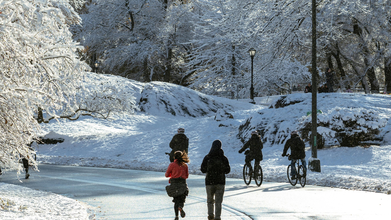
Extreme frigid temperatures have led to the death of 18 people across New York, Mayor Zohran Mamdani has confirmed.
Since late January, the city has been gripped in a cold snap, including 13 days of temperatures of 0C (32F) or below, one of the longest stretches of sub-zero weather New York has seen in six decades since a major snowstorm.
According to Mamdani, certain days in New York have been colder than the continent of Antarctica.
"Since Friday's press conference, one additional New Yorker lost their life on the streets of our city as a result of this cold snap. The total lives lost is now 18. Each life lost is a tragedy, and we will continue to hold their families in our thoughts," he said.
He also urged those experiencing homelessness to head to a shelter one of the 1,400 placements that have been made into shelters and safe havens. Apart from this, 33 New Yorkers have also been involuntarily transported for their safety in these conditions.
"Until temperatures warm up, I ask all of you in this room and outside of it to please continue to take additional precautions. Stay safe, stay indoors, and please, New York, let's keep looking out for one another," the mayor said.
The newly minted Mayor also said that across this past Friday and Saturday nights, 560 New Yorkers used Health + Hospitals warming centers and nearly 300 New Yorkers used a Department of Social Services warming vehicle.
READ MORE: US Cardiologist Reveals When You Are More Prone To Heart Attacks
On 27 January, Mamdani noted that at least 10 of the people who had died were found outdoors. The cause behind the other deaths remain known.
"We have been working hard to keep New Yorkers safe, and we will continue to do so. Because it is not forecast to be above 32 degrees [Fahrenheit] until tomorrow, and 35 degrees is hardly balmy weather," he said.
Experts Recommend Drinking More Water During Winters
Winter is usually associated with hot drinks, cozy layers and fewer reminders to sip water. According to Dr. Swadesh Kumar, Cluster Head – Emergency and Trauma Care & Casualty, Gurugram, this mindset is exactly where the problem begins.
“People assume that because they’re not sweating or feeling thirsty, their body doesn’t need as much water. That’s a misconception,” he told Healthandme.
During cold spells, thirst signals are naturally suppressed. At the same time, the body continues to lose fluids through dry air, indoor heating and even breathing. “The loss is gradual and silent, which makes winter dehydration harder to spot,” Dr Kumar added.
Low fluid intake doesn’t just cause weakness, it can aggravate underlying health problems. When the body is dehydrated, blood becomes thicker, increasing the risk of clot formation. This is particularly dangerous for older adults and people with heart disease.
Kidneys are also affected. Reduced hydration puts extra strain on them, sometimes leading to acute kidney injury. “We see patients with palpitations, fainting spells and extreme weakness, only to later realize dehydration is the root cause,” Dr Kumar notes.
Winter illnesses further complicate the situation. Fever, rapid breathing and certain medications increase fluid loss. Yet many people intentionally avoid drinking water to reduce bathroom visits in the cold.
“This combination is especially risky for children and the elderly,” Dr. Kumar says. Children depend on caregivers for hydration reminders, while older adults naturally feel less thirsty. Both groups can slip into dehydration quickly during winter infections.
Simple Habits Can Prevent Serious Risk
Doctors advise treating hydration as a routine, not a response to thirst. Warm water, soups, stews and herbal drinks are practical winter options. Fruits with high water content also help, even when appetite is low.
“Monitor urine color, limit excess caffeine and be extra careful if you have a chronic condition,” Dr Kumar advises.
The cold wave is a reminder that dehydration isn’t just a summer problem. Even in winter, the body needs adequate water to function, and ignoring that need can quietly turn into a medical emergency.
Obesity Raises Risk of Death by 70 Percent, Study Warns

Credit: Canva
People suffering from obesity are 70 percent more likely to be hospitalised or die from an infectious disease, including flu, COVID-19 and pneumonia, according to a Lancet journal study.
Researchers from the UK and Finland, who analyzed over 500,000 people, found that those with a BMI of 30 or higher were at a significantly higher risk compared with people with a healthy BMI between 18.5 and 24.9. The risk escalated as body weight increased.
Dr Solja Nyberg, of the University of Helsinki and the study's first author, noted the problem could worsen and said: “As obesity rates are expected to rise globally, so will the number of deaths and hospitalizations from infectious diseases linked to obesity.
“To reduce the risk of severe infections, as well as other health issues linked with obesity, there is an urgent need for policies that help people stay healthy and support weight-loss, such as access to affordable healthy food and opportunities for physical activity.”
In the meantime, she added, it was “especially important” for those living with obesity to keep up to date with their vaccinations.
According to the World Health Organisation, obesity has been linked to 3.7 million deaths globally in 2024. If strong action is not taken, the number of people living with obesity is expected to double by 2030. Recently, the WHO released its first-ever guideline on the use of Glucagon-Like Peptide-1, or GLP-1, therapies for managing obesity as a chronic and relapsing condition.
“Obesity is a major global health challenge that WHO is committed to addressing by supporting countries and people worldwide to control it effectively and equitably. Our new guidance recognises that obesity is a chronic disease that can be treated with comprehensive and lifelong care,” said WHO Director-General Dr Tedros Adhanom Ghebreyesus.
Is Global Obesity On The Rise?
In 2022, nearly one in eight people worldwide were living with obesity. This is a number that has doubled more in adults and quadrupled among adolescents in the past three decades. Obesity also increases risk of many chronic illnesses and diseases, including diabetes, cardiovascular disease, and also certain cancers.While industrialized societies see soaring obesity rates, traditional and farming communities experience much lower levels of obesity, a contrast often attributed to more physically demanding lifestyles.
This is where this recent study plays a big role. The study found that this assumption does not fully hold true. Even though physical activity across population, or the energy expenditure, that is the total calories burned daily is not significantly lower in industrialized population, their body size is larger. So, if not the energy output, then what is the reason? The answer lies in the diet.
READ MORE: Diet, Not Lack Of Exercise Is The Real Reason For Rise In Obesity, According To Study
Childhood Obesity: The Silent Crisis
Childhood obesity is a long-term health condition that develops when a child’s weight is above the healthy range for their age, height, and sex.According to Mayo Clinic, doctors define it as having a body mass index (BMI) at or above the 95th percentile for children 2 years and older. In recent times, India has begun seeing a worrying rise in childhood obesity cases, especially in cities where lifestyle changes, unhealthy diets, and less physical activity are driving the trend.
In the United States, CDC data from 2017–2020 showed that about 19.7% of children and adolescents between ages 2 and 19 had obesity, roughly 14.7 million young people. Among them, 12.7% were between ages 2–5, 20.7% were 6–11, and 22.2% were 12–19.
Dr Vivek Jain, Senior Director & Unit Head, Paediatrics, Fortis Hospital explains that in recent years, obesity among children has risen sharply due to many factors. Kids are spending more time in front of screens, getting less outdoor play, and attending online classes, all of which cut down their activity levels. At the same time, fast food, sugary drinks, and packaged snacks have become a regular part of diets.
Modern lifestyles also encourage frequent dining out, reliance on processed meals, and irregular eating. Add limited access to safe play areas, heavy academic schedules, and family history of obesity, and the risks become even higher.
Without intervention, obesity in childhood often continues into adulthood, increasing chances of diabetes, high blood pressure, heart problems, and even some cancers.
How To Prevent Childhood Obesity
Prevention needs a joint effort from families, schools, communities, and policymakers. Parents play the most important role, as they shape habits from an early age. Dr. Vivek suggests:
- Balanced nutrition: Encourage home-cooked meals with fruits, vegetables, whole grains, and lean proteins. Limit fried foods, sugary drinks, and packaged snacks.
- Physical activity: Aim for at least 60 minutes of active play or exercise daily, such as sports, cycling, or outdoor games.
- Reduced screen time: Limit television, mobile, and gaming time to help children stay active and sleep better.
- Family involvement: Lead by example—eat meals together, exercise as a family, and make health a priority.
- School initiatives: Schools should provide nutritious meals, promote physical education, and teach healthy habits.
Vasai MBBS Student Saved A Fellow Passenger's Life On Goa-Mumbai Flight
Credits: Canva
A Vasai final-year MBBS student saved a fellow passenger in Goa-Mumbai Flight. As per a report by Lokmat Times, the incident took place on February 3 when a passenger on an Indigo flight that department from Dabolim Airport in goa at 3.50 pm started experiencing breathing difficulty. His condition worsened and he collapsed in the aircraft. This caused panic.
The cabin crew made an announcement asking if there were any doctors on board. Aryan Lolayekar, a final-year medical student from Mumbai's Vasai responded to the call. He was travelling on the same flight.
Lolayekar found that man's blood sugar levels had dropped significantly and that his heart rate had also slowed down. This caused him dizziness and led to loss of consciousness. Along with all this, the high altitude of the flight also posed a serious risk to his life.
The final-year medical student began administering first aid and used the emergency oxygen cylinder on board. He provided artificial respiration to stabilize the patient. In aa few minutes, the patient's condition improved.
The flight had a duration of 45 minutes. After the aircraft landed safely in Mumbai, IndiGo staff shifted the passenger to a hospital for further treatment.
Lolayekar's prompt actions earned him applauds and praises. Speaking on the incident, he said that he initially felt anxious when he saw the passenger's condition. However, he relied on his medical training to act quickly. He said that the timely use of oxygen proved to be crucial during the time.
How Does CPR Help In Emergency Cases?
Lack of CPR training is a significant barrier for most. While many know that CPR can save lives, not many are trained in doing that. One must be trained to carry out CPR safely.
A study found that only 18% of people had received CPR training within the last two years, which is crucial for skill retention. Although many people have received CPR training at some point in their lives, the skills may be outdated or forgotten.
To address this, some US states have made CPR training mandatory for high school graduation, and countries like Denmark and Norway have implemented similar requirements. In the U.S., CPR courses are widely available online and in-person, and many take just a few hours to complete. These courses teach individuals the basics of CPR, which involves performing chest compressions at a rate of 100 to 120 per minute and a depth of at least two inches.
Also Read: Know What to Do: CPR and AED Basics for Everyone
What IS CPR?
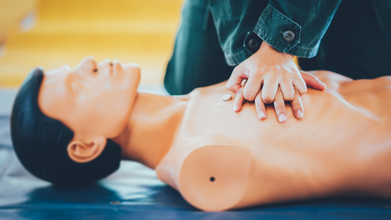
Cardiopulmonary resuscitation (CPR) is an emergency treatment that's done when someone's breathing or heartbeat has stopped.
The American Heart Association (AHA) recommends starting CPR by pushing hard and fast on the chest. The pushes are called compressions. This hands-only CPR recommendation is for both people without training and first responders notes AHA.
Position the person:
- Lay the person flat on their back on a firm, level surface.
Start chest compressions (hard and fast):
- Place the heel of one hand in the centre of the chest, between the nipples. Put your other hand on top and interlock your fingers. Keep your elbows straight and position your shoulders directly above your hands. Push straight down at least 2 inches (5 cm) at a steady rate of 100–120 compressions per minute—about the beat of “Stayin’ Alive.” Allow the chest to fully rise between compressions.
Give rescue breaths (if trained):
- After 30 compressions, tilt the head back and lift the chin to open the airway. Pinch the nose shut, seal your mouth over theirs, and give two breaths, watching for the chest to rise. If it doesn’t, reposition the head and try again.
Continue CPR:
- Keep alternating 30 chest compressions with 2 rescue breaths until emergency help arrives, an AED is ready to use, or the person shows signs of movement.
- Follow Us :


© 2024 Bennett, Coleman & Company Limited