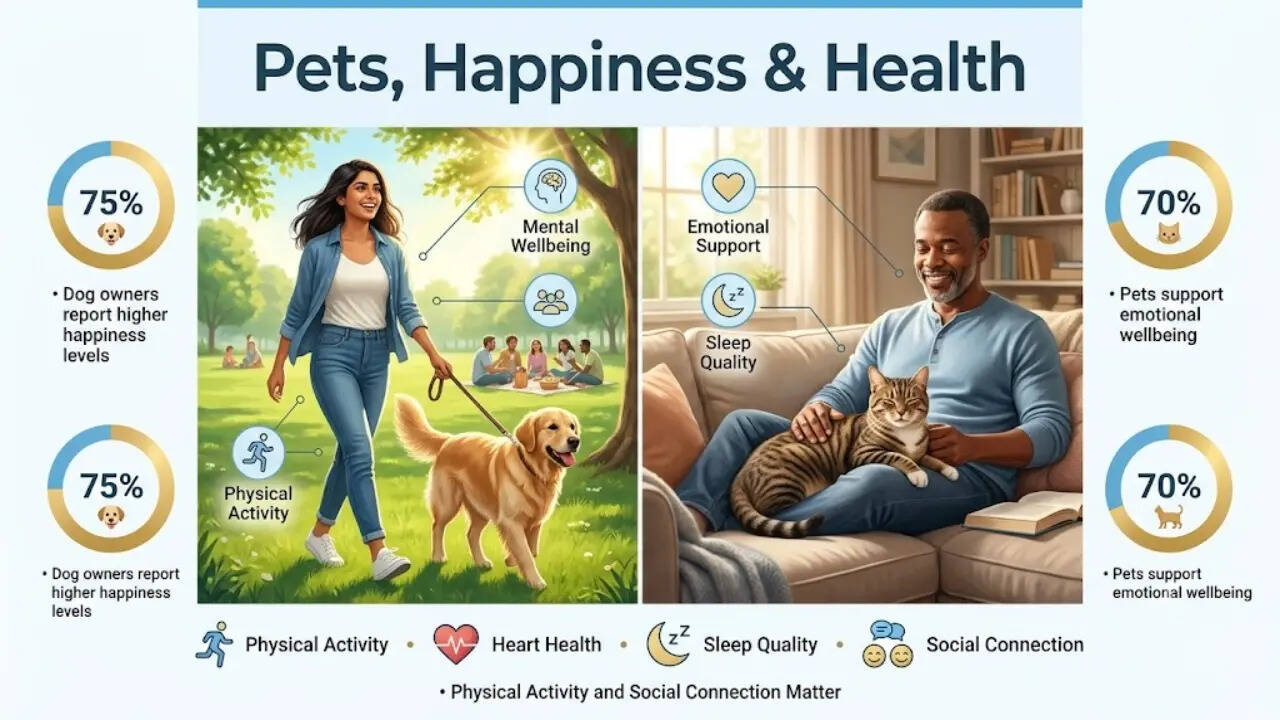
In 2018, the General Social Survey (GSS)—a measure of American social and lifestyle trends—added a new subject to its agenda: pet ownership. The questions initially seemed light-hearted at first glance, but the findings noted that the relationship between health, pets, and overall well-being is noteworthy. The survey also found that approximately six in 10 American homes own pets, and this led researchers to explore how pet ownership affects social connection, lifestyle, happiness, and mental and physical health.How does dog ownership affect mental health? On a broader level, it was found that pet owners and non-pet owners report similar levels of happiness. More than 30 per cent of both groups described themselves as very happy, while a smaller group reported not being too happy. A closer look at the specific types of pet ownership showed a striking difference, however. Dog owners are twice as likely to be happy as cat owners. People who owned both dogs and cats were somewhere in the middle. Dog owners appeared to be happier than people with no pets, while cat owners, on the other hand, reported lower levels of happiness on average.The survey revealed that the gap is noteworthy. The difference in happiness levels between cat and dog owners was larger than the gap between people who identified as middle class and upper class and nearly as large as the difference between people reporting fair health and those who described their health as good or excellent. The findings, however, did not prove that owning a dog can directly cause greater happiness.Read more: Power Of Pets: Expert Explains The Science Behind Why Pets Make Us HappyWhy are dog owners likely to be happier?The findings, however, do not prove that owning a dog leads to happiness. Researchers noted that other factors could also be responsible for this. For example, dog owners are more likely to be married and also homeowners—factors linked to emotional well-being and higher life satisfaction. Furthermore, evidence found that dogs contribute to a healthier lifestyle that supports mental and physical health.Another significant benefit is physical activity. According to a 2013 study, dog owners are more likely to spend time outdoors and engage in regular exercise because daily walks and pet-related activities can improve sleep quality and heart health, lower stress levels, and reduce the risk of chronic diseases. These benefits can enhance quality of life and mood. Dogs may also encourage stronger social connections, as owners are likely to engage with strangers and neighbours, creating opportunities for conversation and friendship. Social relationships are a predictor of mental well-being and are linked with a lower risk of depression, loneliness, and anxiety.The emotional bond between pets and people is another key factor for consideration. The GSS found that dog owners were more likely to play with their pets and seek comfort from them during difficult times. These interactions reduce feelings of isolation and help people cope with stress.Read more: Pets Can Affect Your Mental Health As Much As Your Partners, Study FindsThe impact of cat ownership on healthResearch on cat ownership found that cats can help reduce negative emotions and offer companionship, especially for quieter people with more independent relationships with pets. However, these benefits do not always translate into higher reported levels of happiness. Personality differences can also play a role here. Studies have found that dog owners are more socially engaging and extroverted, as opposed to cat owners, who are more introspective and independent.ConclusionThe relationship between health and pets is intricate. Happiness and mental well-being can be influenced by several factors, including financial stability, physical health, relationships, and personality traits. However, evidence suggests that pets such as dogs can promote healthier behaviours and more fulfilling lives.