
- Health Conditions A-Z
- Health & Wellness
- Nutrition
- Fitness
- Health News
- Ayurveda
- Videos
- Medicine A-Z
- Parenting
FDA Approves Wegovy Pill For Weight Loss; What Difference Does It Make?

Credits: iStock
Wegovy pill is now approved by the US Food and Drug Administration (FDA). On Monday, the FDA approved a daily pill version of Novo Nordisk's weight loss drug Wegovy, which is now introducing a new option for patients, that is said to revolutionize weight loss medicine and obesity treatment.
The weight loss pill uses the same active ingredient. semaglutide. The same active ingredient powers the original Wegovy and sister drug for diabetes, Ozempic. Rival company Eli Lilly is also in the process of getting its weight loss drug approved, which will be out in the market by 2026, the CEO had said. Eli Lilly is known for drugs like Zepbound and Mounjaro. In the US, notes health policy research group KFF, at least 1 in 8 Americans are currently taking one of these medicines.
Also Read: Adenovirus: Why This Mysterious Virus May Spread Faster Than Covid-19 And Flu
Wegovy Pill's Benefits And When Can People Buy It?
The Wegovy pill showed similar weight loss results as well as the side effects as in the Wegovy shot. The drug will be available by prescription in the US by January, said Novo Nordisk. Dr Jason Brett, who is the principal US medical head for Novo Nordisk told CNN in an interview, "We believe it will expand access and options for patients. We know there are some patients who just won’t take an injectable medication.”
The starting dose of the weight loss Wegovy pill will cost $149 for patients who will be paying out of the pocket. This is under the November agreement announced by the Trump administration. The drug will become pricier via self-pay as doses increase, though Novo Nordisk has not disclosed its prices yet. Patients whose insurance covers the medicines will be paying a lower copay.
The Wegovy weight loss pill is one of the two GLP-1 pill which will hit the market, along with Eli Lilly's orforglipron.
Whose Weight Loss Pill Is More Effective?
While the pills have not been compared head to head in an clinical trial, there have been separate studies done on them. The Wegovy pill showed an average weight loss of 14% over 64 weeks, when compared for a placebo, which showed 2% weight loss. Whereas, orforglipron showed 11% weight loss over 72 weeks on its highest dose, as compared to 2% with placebo.
Wegovy injection on the other hand showed a weight loss of 15%, whereas, Zepbound showed 21% on his highest dose. Placebo remained at 2% and 3%, respectively in comparison with both the drugs.
What Changes And What Remains The Same On Weight Loss Drug?
Side effects, including gastrointestinal issues like nausea and vomiting remain the most common ones with GLP-1 drugs, which was also seen in the studies of the pill as well. The clinical studies showed that 7% of participants on Wegovy pill stopped the treatment because of side effects, verss 6% on placebo. In orforglipron's study, up to 10% of patients stopped treatment, as compared with 3% on placebo.
The key difference with the pill is that it must be taken on an empty stomach with a small amount of water, and patients are not directed to eat, drink, or take any other medicines for the next 30 minutes after taking it.
Doctors have pointed out that a pill version of semgalutide approved for diabetes called Rybelus has not been used as widely as Ozempic in part because of these restrictions. Eli Lilly however says that in clinical trials, orforglipron was taken once a day at any time, without restrictions on food or water.
South Africa Receives 1st Batch Of HIV Prevention Medicine Lenacapavir
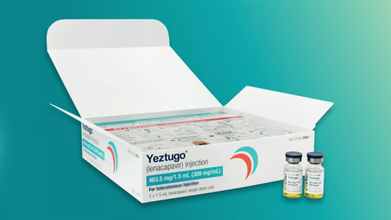
Credit: Gilead Sciences
South Africa's National Department of Health has announced that it has received a first consignment of 37,920 doses of the groundbreaking, six-monthly HIV prevention injection, Lenacapavir.
Lenacapavir is the first twice-yearly injectable pre-exposure prophylaxis (PrEP) product that can help tackle the burden of HIV worldwide.
South Africa has the world's largest HIV-positive population of approximately 8 million people, with over 6 million currently on antiretroviral treatment.
“The department will, in the next few weeks, announce the official launch of this game changer where the phased implementation plan will be outlined,” said department spokesperson Foster Mohale, in a statement.
"Lenacapavir is preventive medicine, not a vaccine, considered one of the most exciting HIV prevention advances in years," Mohale said.
The Department noted that the medicine is expected to be sustain nearly half a million people in South Africa over the next two years, the statement said, adding that is will be officially rolled out in May.
Notably, the initial phase will target high-incidence districts and vulnerable groups.
What Is Lenacapavir?
Lenacapavir is a critical tool for reaching the Global AIDS Strategy goal of ending AIDS as a public health threat by 2030.
Lenacapavir injection as an additional PrEP option offers a highly effective, long-acting alternative to daily oral pills and other shorter-acting options.
With just two doses per year, lenacapavir is a transformative step forward in protecting people at risk of HIV -- particularly those who face challenges with daily adherence, stigma, or access to health care.
Marketed under the brand name Yeztugo, lenacapavir, developed by global pharma major Gilead Sciences, costs $28,218 per person per year.
However, it is being provided to South Africa through a $29-million USD grant from the Global Fund.
The shot was tested in two major studies involving high-risk groups: one with young women and teenage girls in South Africa and Uganda, and another with gay men and gender-diverse individuals in several countries. In both cases, the results were striking.
The women who received the shot had zero new HIV infections, compared to around 2% in those on daily pills. In the second study, the twice-yearly shot proved just as effective for men and gender non-conforming individuals.
“This really has the possibility of ending HIV transmission,” said Greg Millett of amfAR, The Foundation for AIDS Research.
Lenacapavir: How Does It Work?
Yeztugo is administered as two small injections in the abdomen, forming a medication "depot" that slowly releases the drug into the body over six months.
However, people must test negative for HIV before receiving it, as it doesn’t treat existing infections or prevent other sexually transmitted diseases.
Lenacapavir: Why Access Is A Challenge?
Despite its potential, concerns remain over who will actually benefit from lenacapavir.
In the US, only about 400,000 people currently use any form of PrEP — a small fraction of those who could benefit. And structural issues like cuts to public health funding, limited insurance access, and stigma pose significant barriers.
Globally, the challenge is even greater. While Gilead has struck deals with six generic drug makers, including four Indian, to provide low-cost versions of the shot for 120 low-income countries, critics argue that middle-income nations have been left out.
UNAIDS Executive Director Winnie Byanyima noted that at current prices, the shot “will change nothing” for many who need it.
Deadly Rotavirus Detected In Northern California; Young Children at High Risk
Credit: iStock
Rotavirus has been increasingly detected in wastewater in several California cities, sparking concerns about the risk of the deadly and highly contagious virus in young children.
The virus is highly contagious and known for causing fever, vomiting, and severe watery diarrhea among small children. Older children and adults with weakened immune systems also are vulnerable, according to the US Centers for Disease Control and Prevention (CDC).
As per data from WastewaterSCAN, “high concentrations” of rotavirus have been found in Marin, Redwood City, San Jose, and Santa Cruz, while moderate concentrations have been found in Sacramento, Davis, San Francisco, Sunnyvale, Fremont, Vallejo, and Novato, The Sacramento Bee reported.
"It's extremely contagious," Dr. Monica Gandhi, an infectious disease specialist at UC San Francisco, told SFGATE Thursday, explaining that rotavirus is one of the lesser-known gastrointestinal illnesses.
According to UCSF, approximately 50,000 children in the US are hospitalized with it each year.
What Is Rotavirus?
Rotaviruses are the most common cause of severe diarrheal disease in infants and young children worldwide.
The virus, a member of the reovirus family, affects the vast majority of children worldwide before the age of 3 years, and in most developing countries before the first birthday.
The virus causing the infection was discovered in 1973, according to the National Institutes of Health. It causes severe diarrhea, often leading to dehydration, which can be severe, requiring hospitalization.
It is transmitted by
- the fecal-oral route
- directly from person to person,
- indirectly through contaminated objects.
- transient loose stools
- severe diarrhea
- vomiting,
- dehydration,
- electrolyte disturbances,
- shock,
- death if rehydration is not provided.
Is Rotavirus Preventable By Vaccine?
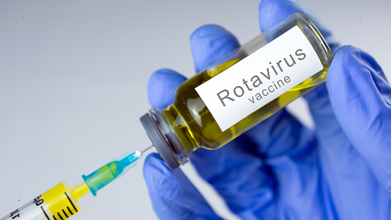
The CDC suggests administering the rotavirus vaccine among children because hand-washing alone isn't enough to curb the illness from spreading. The regulator recommends that "most infants" receive it to protect them from the "potentially serious disease."WHO-prequalified rotavirus vaccines have been available since 2008, and there are currently four vaccines available. They are all live, oral vaccines.
RotaTeq, Rotavac, and ROTASIIL should be administered in a 3-dose schedule, while a 2-dose schedule should be used for Rotarix. A minimum interval of 4 weeks should be maintained between doses, the WHO said.
In addition, key measures to prevent diarrhea include the following:
- access to safe drinking water
- use of improved sanitation
- hand washing with soap
- exclusive breastfeeding for the first six months of life
- good personal and food hygiene
- health education about how infections spread.
UK Doctors Begin 6-day Strike: All You Need To Know
Credit: BBC/EPA
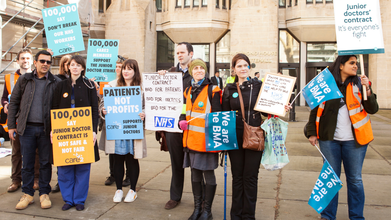
Resident doctors in the UK have launched a six-day strike in a dispute with the government over pay.
Tens of thousands of medics have walked out of the National Health Service (NHS) in England on Tuesday, in the 15th strike since March 2023. Their demand: “full pay restoration”.
The six-day walkout comes as the doctors’ group rejected an offer made by the government in March.
According to the British Medical Association (BMA), the government’s proposal failed to reverse years of pay erosion and staffing pressures.
The BMA represents about 55,000 of the resident doctors - formerly known as junior doctors - who make up nearly half of the medical workforce.
The strike is due to run until the morning of April 13, after a 48-hour ultimatum from Prime Minister Keir Starmer passed without agreement.
Doctors Strike: What Is The Reason?
The BMA argues that doctors are still being paid a fifth less than they were in 2008, once inflation is taken into account. This is despite receiving pay rises worth 33 percent over the past four years.
Dr Jack Fletcher, chair of the BMA's resident doctor committee, told BBC Radio 4's Today program he was "genuinely very sorry" to patients who had care postponed due to the strike, but noted that such delays also occurred "without strike action" because of a lack of specialists and GPs.
"The way out of this is to get around the negotiating table, as we were for eight or so weeks, talk constructively to get a deal, to get us out of this.
Dr Emma Runswick, deputy chair of the BMA Council, told BBC Breakfast they had been close to reaching a deal but "the government decided to move the goalposts quite last minute to reduce the level of investment they were prepared to make".
The 15th NHS Doctors' Strike: How Patients Will Be Affected
The strike began at 07:00 BST on Tuesday and promises to cause significant disruption to services.
Dr Melissa Ryan, 45, a pediatric registrar, said she was frustrated that the government was cutting training places and some children were waiting years for assessments, the BBC reported.
The pediatrician who joined dozens of resident doctors in the six-day strike over jobs and pay has said the NHS may "end up without doctors" if the long-running dispute continues.
However, senior medics have being called in to provide cover in emergency settings, still some pre-planned treatments and appointments may get cancelled.
Meanwhile, the NHS has urged patients not to put off seeking help if needed, saying those with emergency and urgent needs should use 999 and 111 as normal, the BBC reported.
While GP services are largely unaffected, the NHS advised patients with prior appointments and treatments scheduled to attend unless told otherwise.
Strikes Costing The NHS £50 Million Daily
Health Secretary Wes Streeting told BBC Breakfast that 95 percent of appointments were still in place. He also apologized to people affected by cancellations, saying they "deserve better".
He criticized the BMA for not accepting the government’s latest offer and said the government had negotiated with the BMA "in good faith".
According to the British government, the strikes were costing the NHS £50m a day, meaning the health service had lost around £3bn since industrial action started in March 2023. However, a detailed breakdown of costs has not been set out.
Speaking on Times Radio on Tuesday, Streeting said resident doctors had secured the largest pay uplift of any public sector group under the Labour government, but had rejected the offer without putting forward a counter proposal.
- Follow Us :


© 2024 Bennett, Coleman & Company Limited