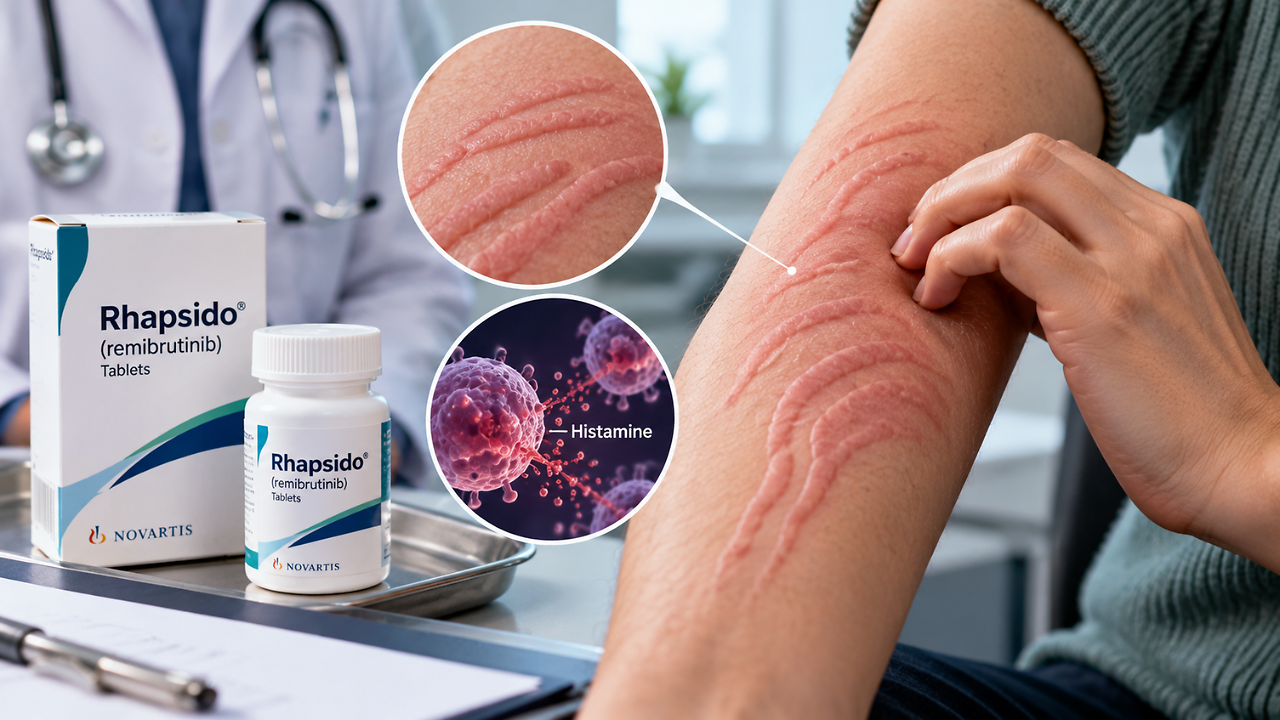
Novartis’ drug remibrutinib can now also be used for adults with symptomatic dermographism, according to the US Food and Drug Administration (FDA). Marketed as Rhapsido, it is the first FDA-approved treatment specifically for symptomatic dermographism in adults whose symptoms do not sufficiently respond to H1 antihistamines. Symptomatic dermographism is a condition is a form of chronic hives in which even minor scratching, rubbing or friction can trigger itchy, raised welts on the skin. This has led Rhapsido to become the only prescription treatment in the US with approved uses for both symptomatic dermographism and chronic spontaneous urticaria when antihistamines alone are insufficient. FDA Approves Remibrutinib For Symptomatic ermographism The move came after symptomatic dermographism cohort of the Phase III RemIND trial, which included adults who remained symptomatic despite treatment with second-generation H1 antihistamines. After 12 weeks, 29.3% of patients taking remibrutinib treated hives completely, compared to 14% of those receiving placebo. Novartis said improvements were seen as early as two weeks. “SD is a chronic, debilitating condition with historically limited treatment options,” said Giselle Mosnaim, MD, MS, lead RemIND trial investigator. “Remibrutinib offers, for the first time, an approach to treatment specifically for SD patients who remain inadequately controlled with H1 antihistamines alone, representing a meaningful step forward for this population.”Also read: HPV Vaccine May Keep Cervical Cancer Risk Lower In Women With HIV For Years: Lancet What Is Symptomatic Dermographism? Dermographism, sometimes called 'skin writing', occurs when the skin develops raised marks or welts after being scratched or pressurised. In symptomatic dermographism, the reaction is accompanied by significant itching and hives. A person may develop welts after scratching an itch, rubbing against clothing, carrying a bag, drying off with a towel after a shower or any other everyday friction. The welts can appear within minutes of the physical trigger, making ordinary contact with the skin unexpectedly uncomfortable. Symptomatic dermographism is classified as a form of chronic inducible urticaria, meaning the hives are triggered by a specific physical stimulus rather than appearing spontaneously.Also read: New Lymphoma Trial: Experimental Drug Combination Cuts Progression Or Death Risk By 51% Why Scratching Cause Hives In Symptomatic Dermographism? The reaction of hives forming after scratching involves mast cells, immune cells found in the skin that can release histamine and other inflammatory substances. When the skin is physically stimulated, these cells activate, triggering the characteristic redness, swelling, and itching. This is also where remibrutinib works differently from conventional antihistamine. Remibrutinib is an oral, highly selective Bruton’s tyrosine kinase (BTK) inhibitor. By blocking the BTK process that is involved in immune-cell signalling and histamine release, the drug aims to reduce the chain of events that produce hives and itching. Living With Symptomatic Dermographism For most people, the condition is primarily a chronic quality-of-life problem rather than a life-threatening disease. However, persistent itching and unpredictable hives can interfere with sleep, clothing choices, work, and everyday activities. The FDA approval does not mean remibrutinib is intended for everyone with dermographism. It is approved for adults whose symptomatic dermographism cannot be controlled by existing H1 antihistamines. The most common adverse events reported with remibrutinib in trials included nasopharyngitis, bleeding, headache, nausea and abdominal pain.