
- Health Conditions A-Z
- Health & Wellness
- Nutrition
- Fitness
- Health News
- Ayurveda
- Videos
- Medicine A-Z
- Parenting
Flu Deaths Rise Across The US As Reported Cases Nearly Double In One Week
Credits: Canva
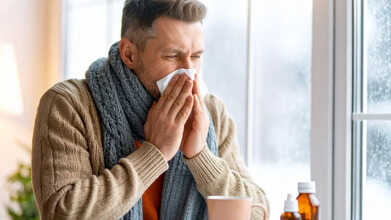
According to the latest estimates from the Centers for Disease Control and Prevention (CDC), this flu season has already seen over seven million cases, resulting in roughly 81,000 hospitalizations and 3,100 deaths.
Flu Hospitalizations Surge Week Over Week
In the week ending December 20, there were 19,053 flu-related hospitalizations reported, more than 9,000 higher than the previous week — while influenza-linked deaths continue to trend upward, as per USA Today.
In addition, five influenza-related pediatric deaths were reported during the second-to-last week of the year, bringing the total number of pediatric deaths for the 2025-2026 season to eight.
The CDC also highlighted that “seasonal influenza activity is elevated and continues to increase across the country.”
Flu: A New Variant Driving Cases
Most of the newly reported infections are caused by a version of Influenza A (H3N2) called “subclade K,” first spotted in Australia over the summer, according to NPR.
Andrew Pekosz, a virologist at Johns Hopkins Bloomberg School of Public Health, told NPR that “a large surge” tends to follow “anywhere we detect this virus.”
“The timing isn’t much different from other flu seasons, but the number of cases and how quickly they’re rising is unusual for this time of year,” he explained.
Common Flu Symptoms
Flu symptoms usually come on quickly and can feel overwhelming. They may differ from one person to another, but there are some typical warning signs to look out for. If several of these symptoms appear together, it’s best to rest, drink plenty of fluids, and stay home to reduce the risk of passing the virus on to others.
The most frequently reported symptoms are:
- Fever or a feverish feeling, often with chills
- Ongoing or worsening cough
- Pain or irritation in the throat
- A blocked or runny nose
- Muscle soreness or body aches
- Headaches
- Severe tiredness or exhaustion
- In some cases, particularly in children, nausea, vomiting, or diarrhea
Uncertainty Around the Surge
“We just don’t know where this upward trend will stop,” Pekosz added, noting that this is “the main concern in most medical communities right now.”
Florian Krammer, a virologist at the Icahn School of Medicine at Mount Sinai, told NPR that while the variant isn’t technically more severe than previous flu strains, people don’t seem to have the same level of immunity as they do against past strains.
Flu Vaccination Remains the Best Protection
Medical experts continue to stress that getting a flu shot is the most effective way to prevent illness this season. Although some worry this year’s vaccine — formulated before the new variant appeared — might be less effective, early data from the U.K. suggests the current shot performs comparably to past years.
Even though the flu vaccine is the best tool for reducing illness and death, CDC data shows that as of Dec. 13, 2025, less than half of Americans — 42.2% — reported receiving it.
But there’s still time. “It’s definitely not too late to get a flu vaccine if you haven’t had one yet,” said Lisa Grohskopf, a medical officer in the CDC’s influenza division, speaking to NPR.
Japanese Study On 778,000 People Links COVID-19 To Higher Allergy Drug Use
Credit: AI
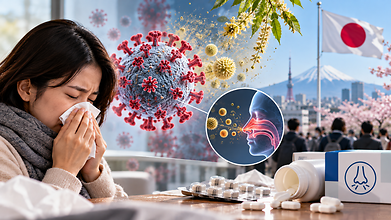
People who have had COVID-19 may be more likely to need allergy medications months after initial infection, according to a large Japanese study.
The study analysed health records of more than 778,000 people, suggesting that the effects of COVID-19 may extend beyond the respiratory illness and could be related to immune function after infection.
The study, published in BMC Public Health, examined whether people diagnosed with COVID-19 were more likely to receive new prescriptions for allergy medications than individuals who had not contracted the infection.
Researchers analysed health insurance records for 778,362 people diagnosed with COVID-19 and compared them to a group of individuals who were not infected.
They tracked new prescriptions for four categories of allergy medications, including antihistamines, leukotriene receptor antagonists, eye drops for allergic conditions and nasal sprays used to treat rhinitis.
Over a median follow-up period of seven months, people who had COVID-19 were 21% more likely to receive a new prescription for allergy medication than those in the comparison group.
The association was stronger among older adults and people with pre-existing health conditions. The researchers also found that elevated prescription rates remained detectable beyond one year after infection in a few high-risk groups.
However, the study merely identifies an association between infection and subsequent use of allergy medications and does not establish a causal link.
How Could COVID-19 Affect Allergy Risk?
Also read: XFG Variant In Spain: COVID-19 Cases Rise Amid Respiratory Infection Surge
Allergies occur when the immune system overreacts to substances that are usually harmless, like pollen, dust mites or certain foods. This response can trigger symptoms including sneezing, itching, a runny nose, skin rashes and watery eyes.
Antihistamines work by blocking the effects of histamine, a chemical that is released during these allergic reactions. Leukotriene receptor antagonists target inflammatory elements involved in conditions like asthma and allergic rhinitis.
Researchers believe that infections caused by respiratory viruses can sometimes alter immune responses, affecting processes involved in allergic inflammation.
COVID-19 has been known to cause changes in immune system that can last beyond the initial illness. Damage to the lining of the respiratory tract and changes in inflammatory response could influence how the body responds to allergens.
However, these mechanisms were not directly established by the Japanese study. The researchers used prescription records rather than laboratory tests to confirm newly developed allergic diseases.
Who Is At Greater Risk?
Also read: Long COVID: Mouth And Lung Bacteria May Offer Clues
The association between COVID-19 and new allergy medication prescriptions was more pronounced among people aged 65 and older.
In this group, the rate of new prescriptions was 33% higher among those who had contracted COVID-19 than among their matched counterparts. Among people with substantial pre-existing illnesses, the rate was 35% higher.
The researchers also found that it lasted more than one year in these groups, although it gradually weakened over time.
These findings suggest that older adults and people managing multiple health conditions may warrant closer attention to new symptoms following COVID-19.
The study's large sample size provides useful evidence about patterns in allergy medication use after COVID-19. But a prescription does not always mean a new allergy diagnosis. Some medications included in the analysis can be prescribed for conditions other than allergies, and people recovering from COVID-19 may have more opportunities to consult doctors or receive prescriptions.
The findings also come from Japan and may not apply equally to populations with different healthcare systems, demographics or patterns of medication use. Further research is needed to determine whether COVID-19 contributes to the development of new allergic conditions.
Pope Leo XIV Resumes Daily Activities After Lung Cancer Surgery: How Recovery Looks Like After Lung Lobe Removal
Credit: X
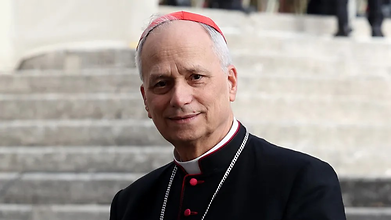
Pope Leo XIV recently underwent lung cancer surgery to have the lower lobe of his right lung removed. According to the Vatican, the 71-year-old pontiff's recovery is on track. But doctors are awaiting further test results to determine whether he needs further treatment. The pope has resumed eating, walking and celebrating Mass but he is not fit to take a trip just yet.
The pope underwent surgery at Rome's Gemelli Hospital on October 13 after doctors identified a suspicious lung nodule. The procedure confirmed lung adenocarcinoma, the most common type of lung cancer, and surgeons removed the lower lobe of his right lung.
In a update on October 14, the pope's personal physician, Dr Luigi Carbone, and thoracic surgeon Professor Stefano Margaritora said, "The Holy Father underwent respiratory physiotherapy and has begun walking in his room. He resumed his regular diet and had breakfast and lunch." They added, "Recovery is proceeding as planned."
Blood tests and a chest X-ray indicated that the pope was recovering normally after the operation. He also celebrated Mass with his secretaries in a private hospital chapel.
However, doctors have not yet disclosed whether the cancer has spread to the lymph nodes or other parts of the body. That will help determine if further treatment is needed.
Talking about who is at the highest risk of developing lung adenocarcinoma, Dr. AVS Suresh - Sr. Consultant, Medical Oncology, American Oncology Institute, Hyderabad, told HealthandMe, "Lung adenocarcinoma is the most common subtype of lung cancer. Smoking remains one of the strongest risk factors, but this cancer can also develop in people who have never smoked."
He added, "People at higher risk include current and former smokers, those exposed to second-hand smoke, people exposed to radon, asbestos or certain workplace pollutants, and individuals with a family history of lung cancer. Risk also generally increases with age. Importantly, not smoking does not eliminate the risk: lung adenocarcinoma is a recognised cause of lung cancer among never-smokers as well."
Surgery For Lung Lobe
The lungs are divided into sections called lobes. The right lung has three lobes, while the left lung has two. When cancer is confined to a particular area, surgeons may remove the affected lobe in an operation called a lobectomy.
The procedure aims to remove the tumour along with surrounding tissue to reduce the likelihood of cancer remaining in the lung. Nearby lymph nodes may also be removed and examined to check whether cancer cells have spread.
Pope Leo underwent surgery assisted by video, a minimally invasive technique that uses a camera and small surgical incisions to operate inside the chest.
Dr PierCarlo Gentile, head of radiation oncology at Rome's San Pietro Fatebenefratelli Hospital, told The Associated Press that this type of surgery typically requires around 15 to 20 days of recovery. He also said that in this case postoperative complications, including infections, is rare.
Recovery After Lung Lobe Removal
After a lobectomy, the remaining lung tissue can help compensate for some of the lost lung capacity. However, recovery varies depending on a person's age, overall health, lung function before surgery and the extent of the operation.
Dr. Suresh explained, "Recovery generally takes several weeks to a few months, depending on the surgical approach, age, overall health and any complications. Patients may initially experience pain, fatigue, coughing or breathlessness. Removing a lung lobe reduces the amount of lung tissue available for breathing, so some reduction in lung function is expected.
The oncologist further explained that it does not necessarily mean a person will have lasting, disabling breathlessness. The remaining lung tissue can adapt, and many patients return to their usual daily activities. The extent of any long-term change depends on their lung function before surgery and how well recovery progresses.
Additionally, in the initial days, patients are encouraged to get out of bed and walk as soon as medically appropriate. Movement after surgery helps reduce the risk of blood clots and other complications linked with bed rest and inactivity.
Respiratory physiotherapy is also a part of recovery. Breathing exercises help patients expand their remaining lung tissue, improve ventilation and clear secretions from the airways. Some patients may also need oxygen support temporarily.
Pain management, proper nutrition and slow and gradual increases in physical activity are important. Breathlessness and fatigue can persist for weeks, and full recovery may take longer than the initial hospital stay.
Also read: Pope Leo XIV’s Lung Cancer Diagnosis: When Should You Worry About Lung Nodules?
Additional Cancer Treatment
The need for additional treatment for Pope Leo will depend on the final results, including the tumour's size and other factors.
Dr. Suresh said, "Lung adenocarcinoma can recur even after surgery has removed the visible tumour. The likelihood depends mainly on the cancer’s stage, tumour size and biological characteristics, whether cancer cells were found in the lymph nodes, and whether the surgical margins are clear."
If the cancer is localised and has been completely removed, surgery may be sufficient in some cases. If tests show that the disease has spread or carries features associated with a higher risk of recurrence, doctors may consider chemotherapy, immunotherapy or targeted therapy, depending on the tumour's characteristics.
The doctor further explained, "For patients whose cancer is detected early and completely removed, the outlook is generally more favourable. If the cancer has spread to lymph nodes or beyond the lung, the risk of recurrence is higher, and additional treatment may be recommended to reduce that risk. No surgery can guarantee that cancer will never return, because microscopic cancer cells may sometimes remain undetected."
Long-term follow-up is therefore important, usually involving scheduled consultations and chest imaging such as CT scans. For Pope Leo, it would be premature to give a reliable individual recurrence percentage without his final stage and pathology findings.
FDA Approves New Treatment Option For Bladder Cancer Unresponsive To Standard Immunotherapy
Credit: AI
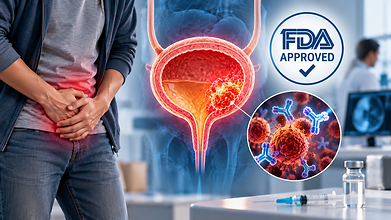
The US Food and Drug Administration (FDA) recently expanded the approval of Anktiva (nogapendekin alfa inbakicept-pmln), a bladder cancer treatment, to include adults with high-grade papillary bladder cancer that has not responded to Bacillus Calmette-Guérin (BCG) therapy.
The decision provides a new treatment option for patients whose cancer persists or returns despite standard immunotherapy.
The approval specifically covers BCG-unresponsive, high-grade papillary-only non-muscle-invasive bladder cancer (NMIBC). Anktiva was already approved in April 2024 for certain patients with BCG-unresponsive NMIBC involving carcinoma in situ, with or without papillary tumours.
The latest development is significant because patients with high-grade papillary-only disease previously had fewer approved bladder-preserving treatment options after BCG failed.
The FDA based its decision on evidence supporting Anktiva's earlier approval, alongside scientific similarities between the two forms of bladder cancer.
“We listen to patients, clinicians, and researchers, and we act when the science supports a new approach,” said R. Angelo de Claro, MD, director of the FDA's Oncology Center of Excellence.
“For Anktiva, our review of the similarities between these cancers allowed us to build on the results in patients with CIS and expand treatment options for people with high-grade papillary tumors alone. This approach may also help guide the development of future treatments.”
What Is BCG-Unresponsive Bladder Cancer?
Also read: Pope Leo XIV’s Lung Cancer Diagnosis: When Should You Worry About Lung Nodules?
BCG is a form of immunotherapy used to treat high-risk non-muscle-invasive bladder cancer. Although the name comes from a bacterium originally used in tuberculosis vaccination, BCG is administered directly into the bladder to initiate an immune response against cancer cells.
NMIBC refers to bladder cancer that has not grown into the muscle layer of the bladder wall. Treatment often involves removing visible tumours through a procedure called transurethral resection of bladder tumour (TURBT), followed by BCG therapy to destroy remaining cancer cells and reduce the risk of recurrence.
However, some cancers return despite treatment. These are described as BCG-unresponsive, and patients may need alternative therapies or surgery to remove the bladder.
More About Anktiva
Also read: Can A Blood Test Predict Childhood Cancer Years Before Diagnosis? Study Gives Clues
Anktiva is an interleukin-15 receptor agonist, a type of immunotherapy designed to strengthen the body's immune response against cancer.
It activates and expands immune cells, including natural killer cells and T cells, which help recognise and attack abnormal cells. When administered with BCG, Anktiva provides an additional immune stimulus to help the body fight cancer within the bladder.
The medicine is delivered directly into the bladder through a catheter, a procedure known as intravesical instillation. This allows treatment to act locally rather than being administered through an intravenous infusion.
Treatment begins with weekly doses for six weeks. Depending on the patient's response, additional induction and maintenance treatment may be given, with the overall treatment period extending up to 37 months.
FDA's Approval For Anktiva
The FDA's original approval was supported by the QUILT-3.032 clinical trial, which included 77 adults with BCG-unresponsive, high-risk NMIBC involving CIS, with or without papillary tumours.
The study found a complete response rate of 62%. This means that no high-grade cancer was detected during the relevant assessments. Among patients who achieved a complete response, 58% maintained it for at least 12 months, while 40% maintained it for at least 24 months.
For the expanded approval, the FDA considered these findings alongside laboratory evidence indicating that CIS and high-grade papillary-only tumours share key biological features. Both can recur or progress when BCG treatment fails.
The agency concluded that the earlier evidence of effectiveness could be applied to patients with high-grade papillary-only disease.
- Follow Us :


© $2026 Times Horizon Private Limited