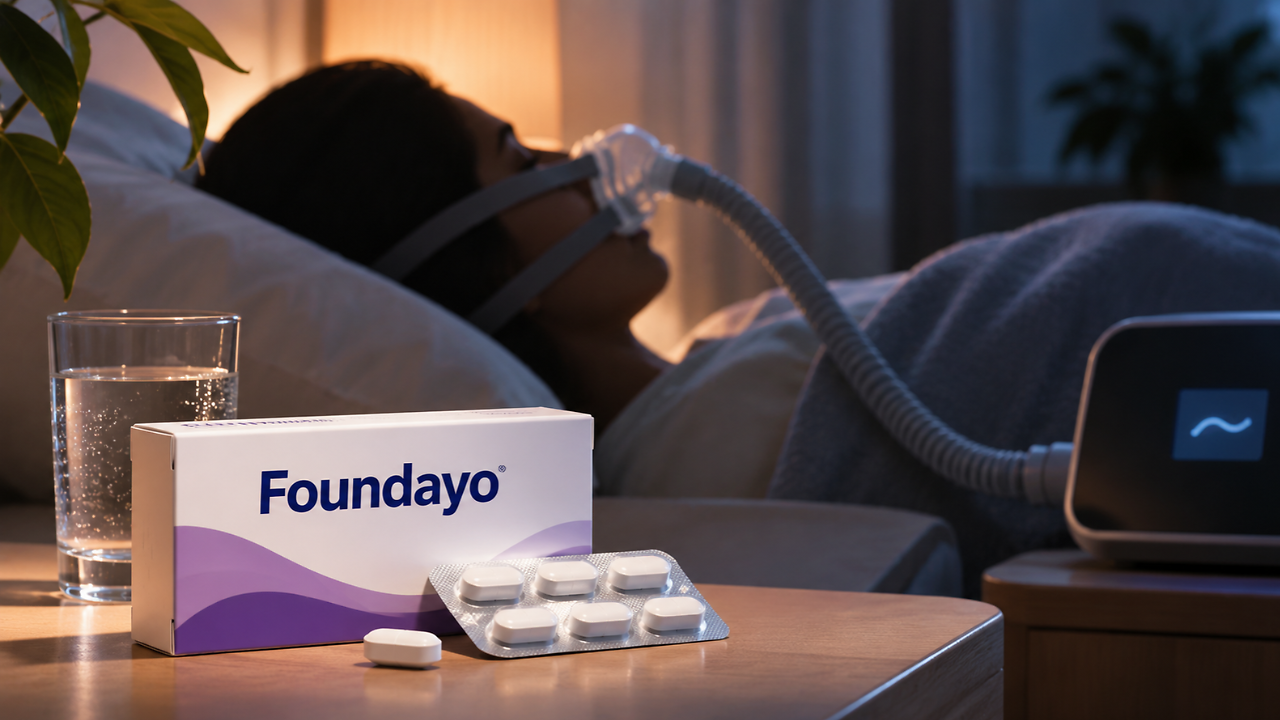
Eli Lilly's oral weight-loss drug Foundayo, that received FDA approval in April 2026, has shown promise in reducing the severity of obstructive sleep apnoea (OSA) in a recent trial. OSA is a condition in which breathing repeatedly gets interrupted during sleep. In a late-stage clinical trial, the medicine reduced the repeated starting and stopping of breathing by up to 44% over 52 weeks in adults with moderate-to-severe sleep apnoea and overweight or obesity.The findings from the phase 3 ATTAIN-OSA clinical programme were presented at the American Heart Association's Scientific Sessions 2026 on November 9 and published simultaneously in JAMA. The study included 712 participants, divided into two groups based on whether they were using positive airway pressure (PAP) therapy.Eli Lilly plans to submit the findings to the US Food and Drug Administration (FDA) by the end of 2026 to seek approval for Foundayo as a treatment for moderate-to-severe obstructive sleep apnoea in adults with overweight or obesity.Foundayo Reduces Sleep Apnoea Episodes Also read: Lancet Study Says Obesity Drug Mazdutide Shows 18% Weight Loss In 32 Weeks: How Does It Compare To Wegovy?The trial evaluated Foundayo, also known by its generic name orforglipron, in two separate studies. One involved 363 adults who were not using PAP therapy, while the other included 349 participants who continued using it.After 52 weeks, the drug reduced the number of breathing interruptions per hour, measured using the apnoea-hypopnoea index (AHI).The findings included:Participants not using PAP therapy: Breathing interruptions fell by 43.8% compared to a 6.3% reduction in the placebo group.Participants using PAP therapy: Breathing interruptions fell by 27.5% compared to a 3% reduction in the placebo group.Better oxygen levels: Sleep apnoea-related oxygen deprivation, measured through hypoxic burden, fell by 55.9% in the group not using PAP and 45.8% in the group using PAP.The drug also helped some participants reach remission or mild disease. According to Lilly's reported efficacy analysis, this included 31.5% of participants not using PAP therapy and 19.6% of those using it.Can Foundayo Replace CPAP Therapy?Also read: Ozempic, Mounjaro Users Report Burning Skin Sensation: What Is Allodynia?Continuous positive airway pressure (CPAP), a form of PAP therapy, remains a standard treatment for obstructive sleep apnoea. It uses a machine to deliver a steady flow of air through a mask, keeping the airway open during sleep.The ATTAIN-OSA programme included participants who were not using PAP therapy as well as those who continued using it. The results suggest that Foundayo could benefit both groups, but they do not establish that patients can stop using CPAP.Vaishnavi Kundel, the study's presenting author and Associate Professor of Medicine at the Icahn School of Medicine at Mount Sinai, said, “If approved to treat obstructive sleep apnea, orforglipron could be a promising oral pharmacologic option for people with overweight or obesity and this condition. A convenient daily pill may help expand access to treatment for sleep apnea, and it could potentially be used with CPAP or other therapies to better meet individual patient’s needs.”More About FoundayoAlso read: Ozempic, Zepbound: US FDA Orders New Warning Over Rare Eye RiskFoundayo is an oral glucagon-like peptide-1 (GLP-1) receptor agonist. It is taken once daily and works by mimicking the GLP-1 hormone, which helps regulate appetite, calorie intake and blood glucose levels.By reducing appetite and supporting weight loss, the drug may help address one of the important risk factors of obstructive sleep apnoea.Excess weight, especially around the neck and upper airway, can increase the likelihood of airway narrowing or collapse during sleep. When the airway repeatedly becomes blocked, breathing interruptions occur and blood oxygen levels can fall.Participants taking Foundayo lost an average of 11.5% of their body weight in the study group not using PAP therapy and 11.2% in the group using it.Why Is Obstructive Sleep Apnoea A Concern? Obstructive sleep apnoea is a breathing disorder related to sleep in which the muscles and soft tissues of the upper airway relax during sleep, causing the airway to narrow or become temporarily blocked.This results in repeated pauses in breathing or episodes of shallow breathing, disrupting sleep and reducing oxygen levels. Common symptoms include:Loud and constant snoringEpisodes of gasping or choking during sleepWaking up frequently during the nightMorning headachesExcessive daytime sleepinessDifficulty concentrating and irritabilityUntreated OSA is associated with an increased risk of high blood pressure, heart disease, stroke and other cardiovascular complications.