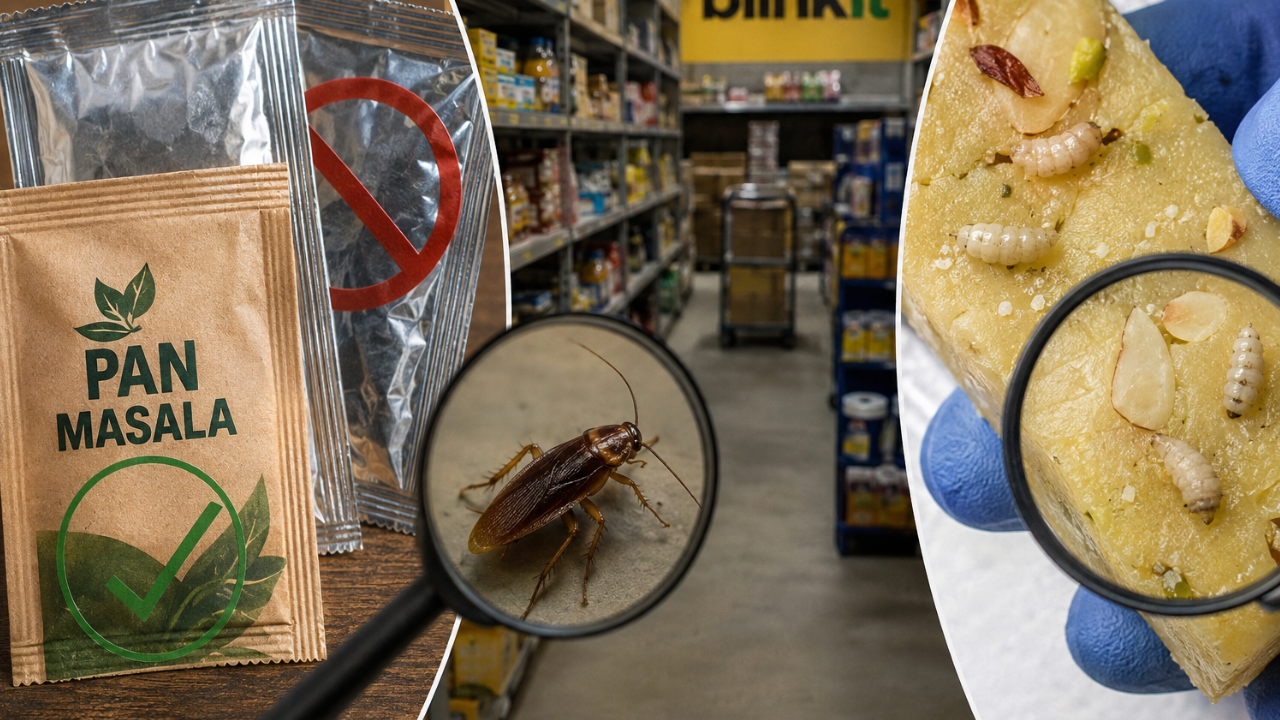
India’s food safety regulators have stepped up scrutiny on multiple fronts this week. The Food Safety and Standards Authority of India (FSSAI) has tightening packaging rules for pan masala and Maharashtra’s Food and Drug Administration (FDA) taking action against retail outlets over alleged hygiene violations. From what goes into packaged products to how food is stored and handled before it reaches consumers, these developments come at a time when food safety in India is under tight scrutiny. FSSAI Bans Plastic And Aluminium Foil In Pan Masala Packaging Under the new Food Safety and Standards (Packaging) Amendment Regulations, 2026, notified on August 10, pan masala packaging can no longer use plastic-based materials, plastic laminates, aluminium foil or metallised layers. Pan masala can now be packaged in materials made of paper, paperboard, cellulose and other naturally derived materials, provided they are completely free from plastic and synthetic polymers. Tin and glass containers are also allowed. The decision follows an earlier draft notification issued by FSSAI in April, which proposed adding specific packaging materials for pan masala to the food packaging regulations. Also read: Why FSSAI Seized 18,000 Boxes Of Diageo Whisky, Vodka BottlesWhy FSSAI Is Targeting Pan Masala's Packaging? Pan masala sachets have traditionally relied heavily on plastic and foil materials as they are lightweight, inexpensive and the contents are shielded from moisture. However, such multilayer plastic packaging is difficult to recycle and contributes to persistent plastic waste. The new rules push manufacturers towards packaging made of paper and other naturally derived materials that won't harm the environment. This does not mean that pan masala itself safer to consume. Pan masala, particularly those containing tobacco or areca nut, continues to be harmful. The regulation is primarily about packaging standards and waste. Also read: From Liquor to Dabur to VKC Nuts, FSSAI Crackdown Puts Food Safety in Focus: Why It MattersMaharashtra FDA Cracks Down On Retail Food Safety On the other hand, Maharashtra FDA suspended the food license of a Blinkit facility in Malad West after it reportedly found cockroach infestation, improper storage and other hygiene violations that posed health safety dangers. Officials also flagged expired and damaged products, inadequate pest control, poor waste management and improper food storage practices. The license was suspended under Section 32(3) of the Food Safety and Standards Act, 2006.The incident highlights why storage conditions matter even when food has already passed manufacturing and packaging checks.Also read: Why Indian Doctors Are Seeking A Ban On Junk Food Ads And Mandatory Warning Labels On Packaging?Reliance Retail Outlet Under Investigation Over Kaju Katli Complaint In a separate case in Buldhana, Maharashtra FDA flagged a Reliance Retail outlet after a consumer complaint alleging fungal growth and live larvae in packaged kaju katli. Officials inspected the outlet on August 8 and seized 54 kaju katli boxes reportedly. The specific batch mentioned in the complaint was no longer available, while another batch of the same product was found in stock. These incidents underscore an important point: food safety does not end when a product leaves the factory. Packaging, transportation, storage, pest control, temperature management, expiry checks and hygiene at retail outlets all form part of the food-safety chain. For consumers, checking the product's packaging, expiry dates, storage instructions and signs of contamination remains important. If a packaged food looks, smells or tastes abnormal, it is safer not to consume it and to report it to the food-safety authority.