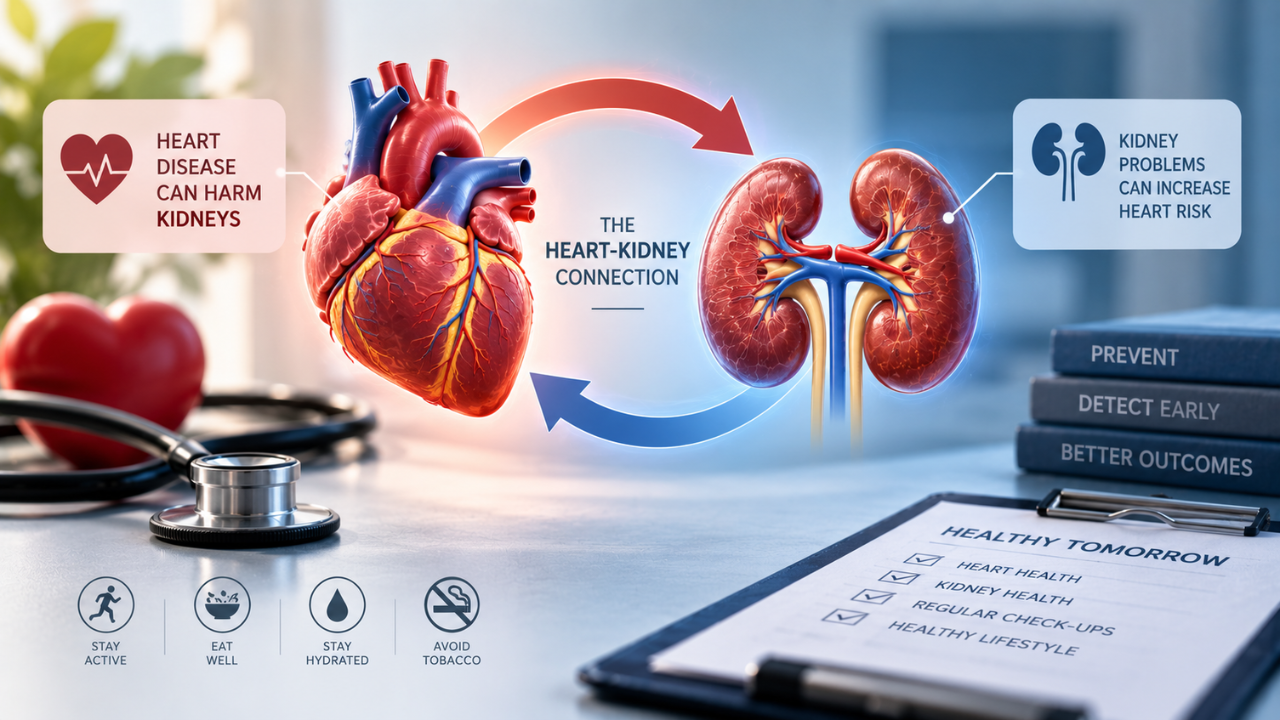
A problem in the heart may not just be confined to the heart. According to new guidelines, heart and kidney health may be more closely linked to each other than we realise. Heart disease can increase the strain on the kidney, creating a cycle that may raise the risk of serious complications. New guidelines from the European Society of Cardiology (ESC), developed in collaboration with the European Renal Association (ERA), are emphasising upon monitoring kidney health in people with cardiovascular disease more closely. The recommendations, published in the European Heart Journal, are the ESC's first dedicated guidelines covering cardiovascular disease and chronic kidney disease together. How Are The Heart And Kidneys Connected? The heart pumps blood throughout the body, while the kidneys filter waste and excess fluid from the blood. Because the two organs are closely linked through blood flow, fluid balance and blood pressure, dysfunction in one can place additional stress on the other. According to the ESC, chronic kidney disease can accelerate cardiovascular disease, while cardiovascular disease can also worsen kidney problems. This can contribute to complications including heart failure, stroke, abnormal heart rhythms, and progression to kidney failure requiring dialysis. The European Society of Cardiology estimates that around 100 million people in Europe have chronic kidney disease, which itself substantially increases the risk of cardiovascular disease. Associate Professor Kevin Damman of University Medical Centre Groningen, who chaired the guideline task force, said, "The disability and lifetime lost to each disease are profound, but CKD can accelerate CVD and vice versa, resulting in cardiovascular events and the need for dialysis much earlier in life." He added, "The good news is that there have been major advances over the last few years, which mean there are now several simple treatments that can substantially lower the risk of both cardiovascular and kidney complications."Also read: Obesity Should Not Be Defined Solely By BMI: AIIMS Director Explains Fat Distribution & Metabolic Health New Guidelines Recommend Two Kidney Tests One of the biggest changes is an emphasis on earlier kidney screening in people with cardiovascular disease. The guidelines recommend assessing kidney health using two tests: eGFR, calculated from a blood creatinine test, which estimates how well the kidneys are filtering blood. Urine albumin-to-creatinine ratio (UACR), which checks albumin leaking into the urine, a sign of kidney damage. The ESC recommends active screening, risk assessment and treatment of CKD among people with cardiovascular disease. This is crucial as kidney disease can go unnoticed for years, especially when symptoms are absent. Detecting it earlier can help doctors identify people at higher cardiovascular risk and adjust treatment accordingly.Also read: From Pickles to Papad: Which Everyday Indian Foods Could Be Worth Rethinking for Cancer Prevention? Treating One Condition Can Help The Other The new guidelines also stress that the presence of kidney disease should not unnecessarily delay appropriate cardiovascular treatment. Instead, doctors may need to modify treatment and monitor patients more closely due to the additional kidney-related risks. The guideline framework is summarised by STAMP: Screen, Triage and Address CKD Risk, Modify CVD management, and Plan health services. The recommendations cover a wide range of cardiovascular conditions, including coronary disease, heart failure, arrhythmias, stroke, and peripheral arterial disease.