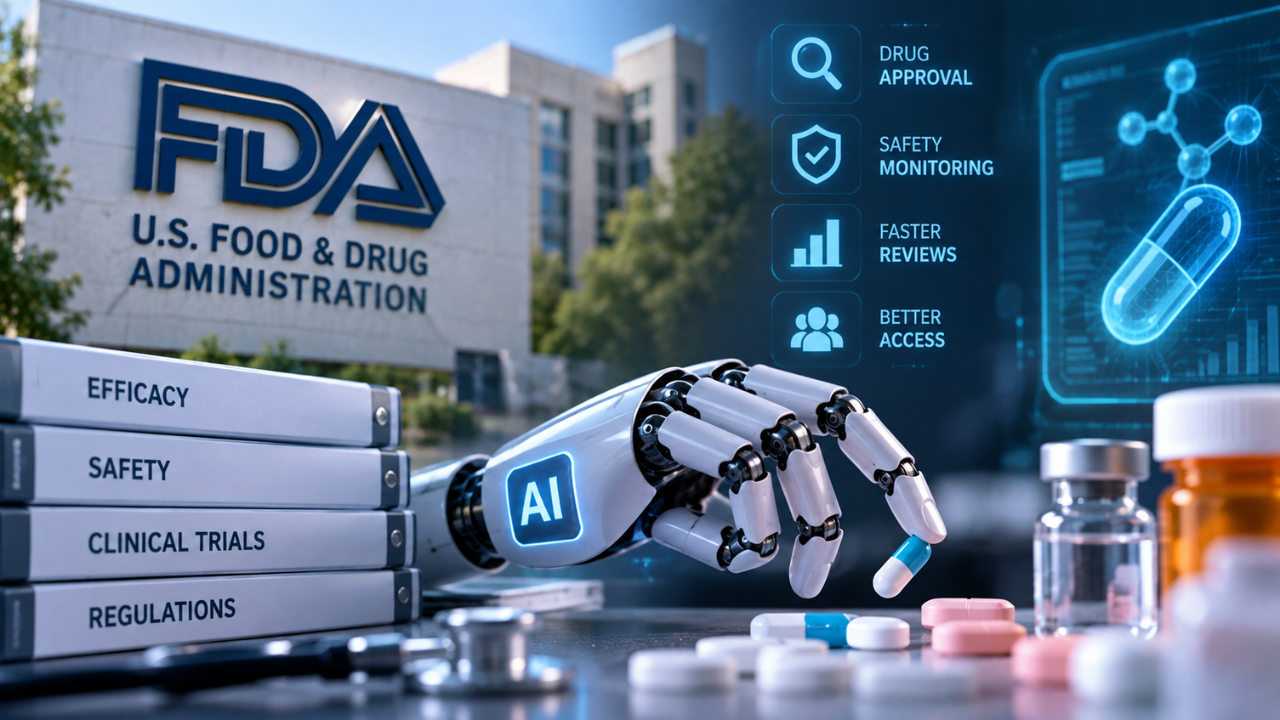
Creating a new senior position to focus entirely on technology and artificial intelligence, the US Food and Drug Administration (FDA) has just got its first AI chief. The move could change how the agency evaluates medicines, pharmaceutical products and new technologies in the healthcare sector.On September 8, the US Department of Health and Human Services (HHS) announced that Jared Seehafer, M.S. will be FDA’s first Deputy Commissioner for Technology and Artificial Intelligence. The newly formed role puts AI and technology directly into the agency’s senior leadership structure.Seehafer has around two decades of experience working at the intersection of software, AI and FDA-regulated medical technology. As deputy commissioner, he will be the FDA’s senior leader for technology, software and AI and will help establish an agency-wide strategy for their use.Why Does The US FDA Need An AI Chief?From identifying potential drug candidates to analysing clinical-trial data and developing medical devices, the use of AI is increasing rapidly across pharmaceutical and healthcare industries.But, for regulators, AI presents a different challenge. The FDA must determine whether AI-generated or AI-assisted evidence is reliable enough to support decisions about the safety and effectiveness of a product.The agency has already begun moving in this direction. In May 2026, the FDA issued draft guidance on the use of artificial intelligence to generate information or data intended to support regulatory decision-making for drugs and biological products.The FDA has also been exploring AI and cloud-based approaches to make clinical trials more efficient, including a pilot focused on early-phase trials.Also read: HHS Cancels Maternal & Infant Health Grants To Focus On Sperm Testing And ED: Here's WhyAI May Make Drug Approvals FasterOne of the biggest opportunities is using artificial intelligence to process large volumes of information that regulators already receive during drug development and review.AI could eventually help regulators identify patterns in clinical-trial data, analyse safety aspects, review large regulatory submissions and support more efficient assessment of complex datasets in health and pharmaceutical sector.But does faster automatically mean better? AI systems may produce incorrect outputs. So regulators need to understand how an algorithm reached a particular conclusion before relying on it for decisions that affect patients. That makes validation, transparency, data quality and human supervision critical in this area.Also read: Another Child Dies From Measles In US Amid Vaccine Concerns: Why The Virus Is More Than A Fever And RashThe Future Of Drug Regulation The appointment comes alongside several other leadership changes at the FDA. HHS also named Michael Davis as permanent director of the Center for Drug Evaluation and Research, Karim Mikhail as director of the Center for Biologics Evaluation and Research, and Bret Koplow as director of the Center for Tobacco Products.The broader message from HHS is that the FDA wants to modernise its regulatory infrastructure while accelerating innovation.“We are building an FDA that moves faster, demands excellence, and delivers results for the American people,” HHS Secretary Robert F. Kennedy Jr. said. “These leaders will drive the reforms needed to confront our nation’s most serious health challenges and strengthen American leadership in medical innovation.”FDA Acting Commissioner Kyle Diamantas said the appointments were intended to help build the workforce and infrastructure needed to “accelerate innovative” work across the agency.