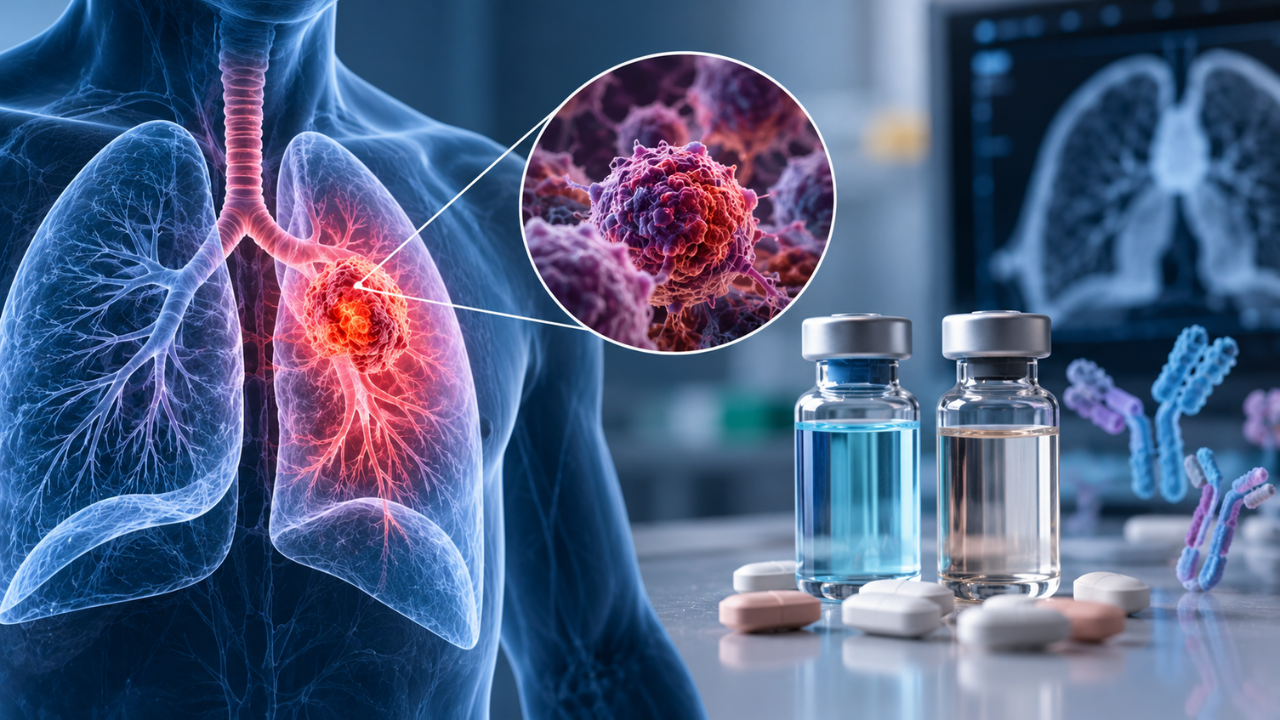
Small-cell lung cancer (SCLC) is one of the most aggressive forms of lung cancer. It tends to grow rapidly, spread early and often returns even after initially responding well to treatment.A new drug combination from Amgen and AstraZeneca has shown a significant overall survival benefit in patients with extensive-stage small-cell lung cancer (ES-SCLC), offering a new way to delay the disease's return and progression.On September 8, the companies said that the Phase III DeLLphi-305 trial found that combining Amgen's tarlatamab, marketed as Imdelltra, with AstraZeneca's durvalumab, marketed as Imfinzi, significantly improved overall survival compared with Imfinzi alone.Small-Cell Lung Cancer Is Difficult To TreatSCLC accounts for a small percentage of lung cancers but it is particularly aggressive. The cancer cells can multiply quickly and spread to other organs, including the brain and liver.The cancer can initially respond well to chemotherapy, but that response often does not last for a long time. Many tumours become resistant to treatment, allowing the disease to return and become harder to treat. Research has described recurrent SCLC as frequently resistant to further therapy.This is particularly challenging disease goes in extensive stage, where the cancer has already spread beyond the lung. Even with current treatments, the median overall survival for ES-SCLC remains around one year.Also read: 25 Years After 9/11: What New Records Reveal About Toxic Air In New YorkHow Does The New Drug Combination Work?The two medicines attack the cancer through different mechanisms. Durvalumab is an immune checkpoint inhibitor. It blocks PD-L1, a protein cancers can use to evade the immune system, helping immune cells recognise and attack cancer cells.Tarlatamab is a bispecific T-cell engager. It is designed to attach to DLL3 on small-cell lung cancer cells and CD3 on T cells, effectively bringing immune cells into contact with the cancer cells so they can destroy them. DLL3 is found on the surface of SCLC cells in about 85%-96% of patients but is minimally expressed on healthy cells.In the trial, 563 patients whose disease had not progressed after initial treatment with Imfinzi plus platinum chemotherapy and etoposide were randomly assigned to receive either the combination or Imfinzi alone as maintenance treatment. The combination improved overall survival, progression-free survival and response rate. No new safety concerns were identified.Also read: Exclusive With Leading HIV Expert: What's Driving Rising HIV Cases Among India's Youth And How To Prevent ItHope For Patients With SCLC The significance of the findings lies in effectively controlling the cancer after initial treatment, when the disease is at the highest risk of returning.Jacob Sands, MD, Associate Chief of the Lowe Center for Thoracic Oncology at Dana-Farber Cancer Institute, said: “Given the aggressive nature of small cell lung cancer, many patients quickly relapse on current therapy and never reach second-line treatment.” He added that the results suggest the potential to reshape the natural history of the disease.Susan Galbraith, AstraZeneca's Executive Vice President of Oncology Haematology R&D, said the results showed an “unprecedented improvement in overall survival” for patients with this highly aggressive cancer.The full trial data are yet to be presented at a medical meeting and will be submitted to regulatory authorities.