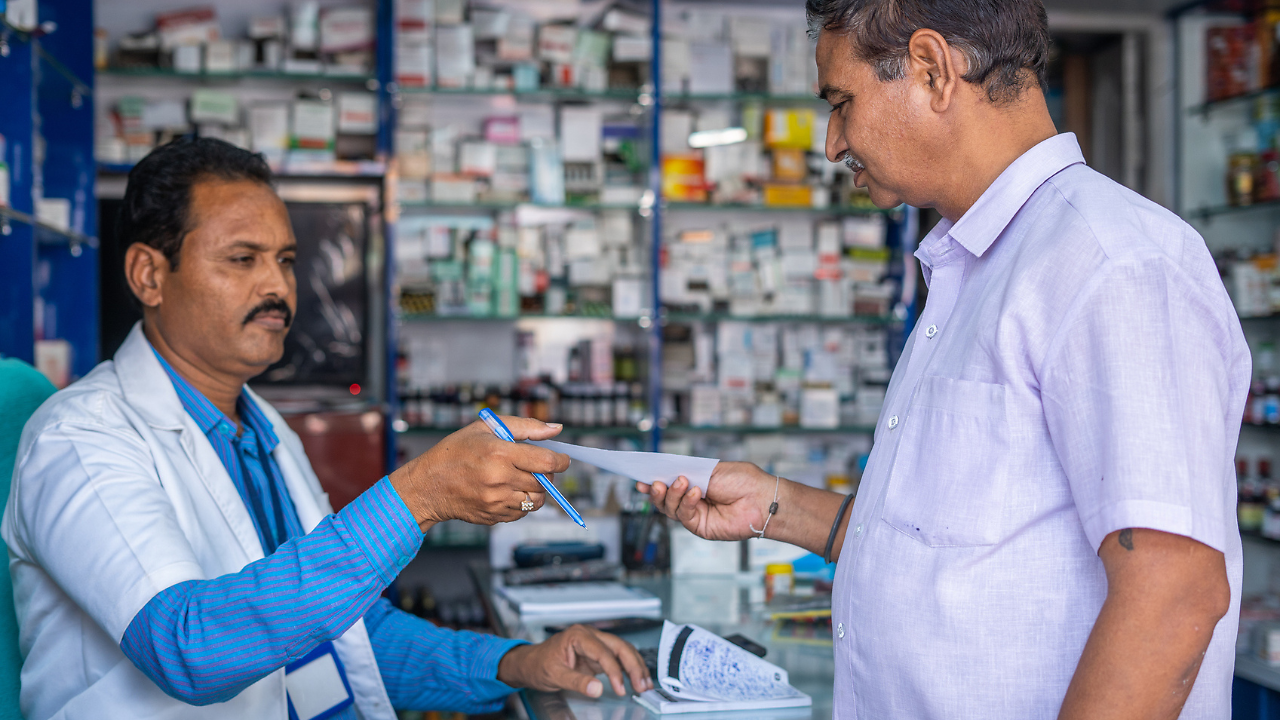
The Union Ministry of Health and Family Welfare has proposed mandatory CCTV surveillance at medical stores as an additional regulatory safeguard for prescription drugs.The move, proposed under amendments to the Drugs Rules, 1945, through Draft Gazette Notification G.S.R. 791 (E), aims to strengthen regulatory oversight of Schedule H, H1 and X drugs.Once implemented, it will help strengthen monitoring of the sale and distribution of these drugs and curb their unauthorized access and sale without valid prescriptions.The proposed CCTV surveillance mechanism will also enhance transparency and accountability across the pharmaceutical supply chain, strengthening safeguards for public health. The draft proposal is now open to public objections and suggestions before it is finalized.What Are Schedule H, H1 And X Drugs?Schedule H: Prescription-only medicines, including many blood pressure, diabetes and anti-infective drugs. They must carry the Rx symbol and cannot be sold without a prescription.Schedule H1: A stricter category covering certain antibiotics, anti-tuberculosis drugs and sedatives. These medicines carry a red-boxed Rx warning and require medical advice.Schedule X: The strictest category, covering certain high-risk narcotic and psychotropic drugs such as morphine, amphetamines and strong barbiturates. Their sale requires a specific government licence in addition to a standard retail drug licence.Why Is CCTV Surveillance Being Proposed At Pharmacies?India is seeing concerns over spurious and fake drugs, with chemists being the major point of contact for medicines for a majority of people.A recent nationwide survey by LocalCircles, a community social media platform, showed that 64% of consumers said chemists never or rarely ask for a doctor's prescription, while only 31% mostly got a qualified pharmacist at their chemist.Only 15% of those surveyed said the chemist mostly or always refused to sell medicines without a prescription.The survey also found:13% said someone at the chemist assisted them who was not a qualified pharmacist.15% said medicines were found to be fake or counterfeit.Another 15% said they received completely ineffective medicines.26% said they were not provided a GST bill.Counterfeit Medicines Seized In BengaluruIn a recent shocking case, investigators in Bengaluru seized large counterfeit cancer medicines, life-saving drugs and injections used in intensive care units (ICUs) that were being supplied to hospitals, clinics and medical stores.According to investigators, the medicines may have been supplied to more than 90 hospitals and clinics in Bengaluru.A public interest litigation (PIL) has also been filed in the Supreme Court seeking a comprehensive national framework to check the manufacture and sale of counterfeit and adulterated medicines, including vaccines and cough syrups.Drug Testing Data Shows Continued Quality ConcernsData placed before Parliament shows that 1,41,322 drug samples were tested in 2025-26, the highest in five years. Of these, 3,012 were found to be Not of Standard Quality (NSQ) and 283 were found to be spurious or adulterated. A total of 779 prosecution cases were filed during the year, while 3,599 cases were filed over five years.The Central Drugs Standard Control Organisation (CDSCO) has also continued issuing monthly drug alerts through 2026, flagging 240 NSQ samples in January, 194 in February along with four spurious drugs, 168 in March, 157 in May and 159 in June.