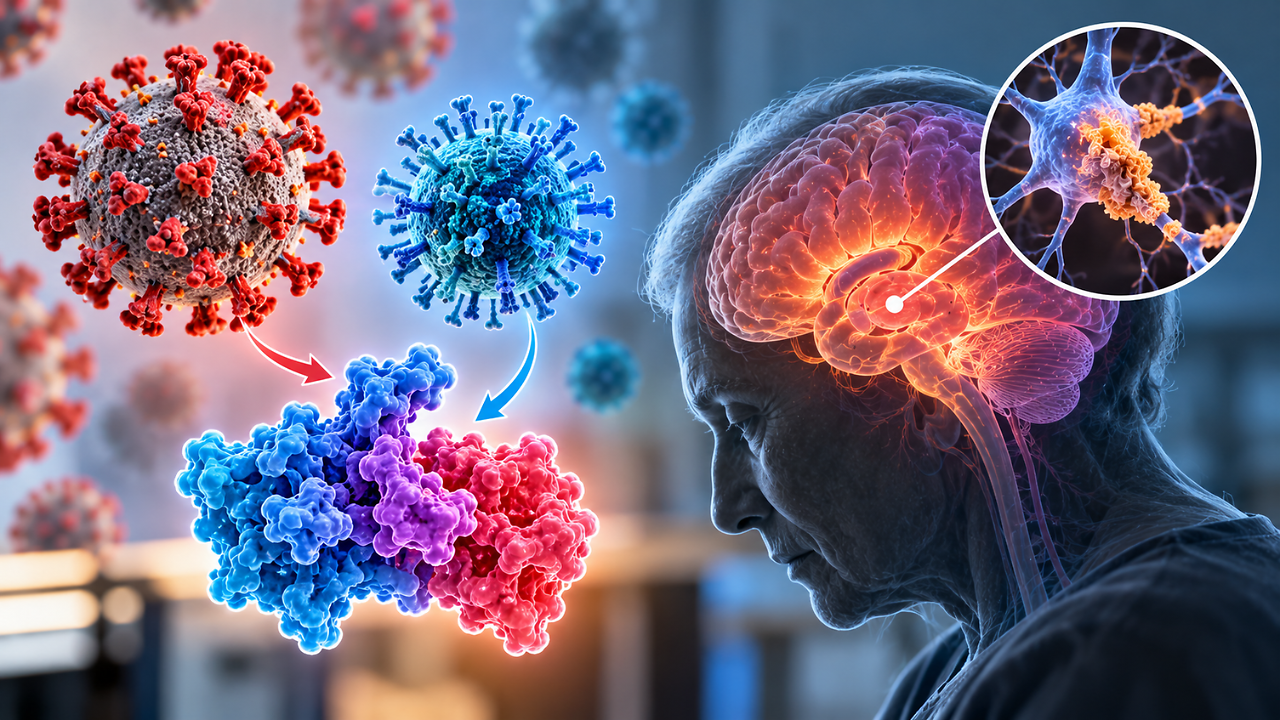
Repeated viral infections may play a key role in shaping Parkinson’s disease risk. A new study by researchers at CSIR-Centre for Cellular and Molecular Biology (CCMB), Hyderabad, has found that RNA viruses like influenza and even SARS-CoV-2 can interact with a protein called alpha-synuclein, accelerating the formation of abnormal protein clumps associated with Parkinson’s. Published in Cell Reports, the study, which was led by Dr Swasti Raychaudhuri’s laboratory at CCMB, also identified a cellular protein that appears to act as a defense against this process. What Is Alpha-Synuclein? Alpha-synuclein is a protein that is naturally found in nerve cells. In Parkinson’s disease, the protein can accumulate into abnormal clumps called amyloid aggregates. These aggregates are a characteristic feature of Parkinson’s and can interfere with the normal functioning of neurons. The new study looked at what happens to alpha-synuclein when a cell is infected by an RNA virus.Also read: Flu 2026: Symptoms To Watch For As New Season Begins How Could Flu And COVID Affect Alpha-Synuclein? Flu and COVID viruses contain RNA, which is their genetic material. The researchers found that parts of this viral RNA can fold into unusual shapes called RNA G-quadruplexes (rG4s).These RNA structures can interact with a protein called alpha-synuclein. Alpha-synuclein normally exists in brain cells, but in Parkinson’s disease it can clump together and form abnormal deposits.The researchers found that viral RNA structures may encourage alpha-synuclein to clump together more easily.Also read: WHO Sets 2027 Flu Vaccine Strains; US States Can Now Order Free COVID Shots For KidsBody Has Its Own Defense Mechanism The researchers also identified a protein called DDX39A, which counters both viral multiplication and alpha-synuclein aggregation. Normally found inside the cell nucleus, DDX39A moves into the cytoplasm during an RNA viral infection. There, it can interact with both viral RNA structures and alpha-synuclein. DDX39A acts as an RNA “unwinding” protein. It breaks apart the rG4 structures in viral RNA, making it harder for the virus to replicate. At the same time, this process appears to slow the formation of alpha-synuclein amyloids. Study first author Aanchal said, “The virus fails to replicate with its RNA structures dismantled, and thus, the viral load in the cells decreases. At the same time, the unwinding of viral RNA’s secondary structure effectively slows down α-Synuclein amyloid formation.” Viral Infections Do Not Cause Parkinson’s: Researchers The researchers caution against making that conclusion. Not every viral infection will increase amyloid formation, and not everyone who gets influenza or COVID-19 will develop Parkinson’s. The study suggests that the outcome depends on a complex balance between the virus, viral RNA, alpha-synuclein, and the cell’s defence mechanisms. There have been previous studies reporting an association between certain viral infections and an increased risk of neurodegenerative diseases. But the biological mechanism behind such associations has remained unclear. The CCMB researchers are now investigating what happens to these molecular interactions over longer periods. The concern is that repeated exposure to viral infections could alter the balance between protective cellular mechanisms and protein aggregation. However, this remains an area of investigation and cannot currently be used to predict an individual's Parkinson’s risk.