
- Health Conditions A-Z
- Health & Wellness
- Nutrition
- Fitness
- Health News
- Ayurveda
- Videos
- Medicine A-Z
- Parenting
Jesy Nelson’s Fiancé Writes A Heartbreaking Poem As A Tribute After Twins’ SMA Diagnosis

Credits: Instagram
Jesy Nelson, former Little Mix singer, 34, and her fiancé, Zion Foster welcomed their twins, Ocean Jade and Story Monroe Nelson-Foster were devastated when the doctors broke the news that "they are probably never going to be able to walk, they probably will never regain their neck strength, so they will be disabled". Both the twins were diagnosed with SMA-1, a rare disease, known as the spinal muscular atrophy type 1.
Zion, 27, shared a poem for his eight-month-old warrior little girls. The Sun reported, he said: "They said it’s unlikely you’ll walk, you may not be able to talk, probably won’t be able to hold your head up, that’s what me and Jesy heard – SMA Type 1.
And it became so clear, doctors only go near what they can measure, so what’s certain?
I watch your smiles like sunsets, not promised, but real. I listen to you babble the sweetest melodies, in the moment it makes me wonder, if I keep telling you who I want you to be, what I want you to do, what I expect from you, am I loving you, or am I loving my fear?
If I take you for how God knitted you, just as you are, nothing removed, am I loving you? Am I accepting you?
Story, is your heart okay? Ocean, how’s your mind? I hear strength in your lungs every time you cry, two little warrior girls who already know how to fight.
Honestly, my worry isn’t the milestones, isn’t forcing life to live a different way. My worry is quieter than that, deeper. It’s about accepting you, loving you for who you are right now, without conditions.
No matter what tomorrow brings, and no matter what yesterday was."
What Treatment Jesy Nelson's Daughter Are Undergoing?
Jesy said, "They have had their treatment, thank God. A one-off infusion. That puts the gene back in their body that they don't have. It stops the muscles still working from dying. Any that have gone you can't regain them back."
While she does not reveal the name of the treatment, it is a single dose gene treatment, where patients receive an intravenous adeno-associated virus stereotype 9 carrying SMN complementary DNA encoding the missing SMN protein, as mentions a 2017 study published in The New England Journal of Medicine, or the Zolgensma, a prescribed gene therapy used to treat children less than 2 years old with SMA.
“Now it’s down to constant physio. We’ve been told they’ll probably never walk or regain their neck strength. They’ll probably be in wheelchairs.”
Jesy Nelson Twins: What Is SMA-1?
SMA-1. a rare disease, known as the spinal muscular atrophy type 1 or the Werdnig-Hoffmann disease is when the muscle weakness appears at birth or within the first six months. This rare condition prevents infants from sitting unassisted and causing severe breathing, swallowing, and sucking difficulties, leading to a poor prognosis without aggressive support. This condition has impacted the twin babies of the former Little Mix singer Jesy Nelson. Her twin babies may never be able to walk. However, she said that her babies will "fight all the odds" after they were being diagnosed with such a rare genetic condition.
Nelson said that there could be some common signs to look out for, which includes floppiness, inability to hold yourself up without support, a "frog-like" positioning of the legs without much movement, and rapid breathing in the tummy.
"If anyone is watching this video and they think they see these signs in their child, then please, please take your child to the doctor, to the hospital, because time is of the essence, and your child will need treatment. And the quicker you get this, the better their life will be," she added.
Chile Becomes The First Country In Americas To Eliminate Leprosy, Says WHO
Credits: Canva
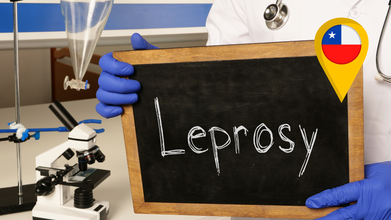
Chile became the first country in the Americas to be verified by the World Health Organization (WHO) for the elimination of leprosy. WHO with Pan American Health Organization (PAHO), congratulated Chile for becoming the first country in the Americas and second globally to eliminate leprosy.
Leprosy (Hansen disease) was historically recorded in Chile at the end of the 19th century on Rapa Nui (Easter Island). The disease was limited in mainland Chile, with sporadic introductions, contained through isolation and treatment measures in the Island, where the last secondary cases were managed by the late 1990s.
Since then, Chile did not report locally acquired case of leprosy in more than 30 years. The last locally acquired case was detected in 1993. However, the disease was never removed from public health agenda and remained a notifiable condition and monitored through mandatory reporting, surveillance and continuous clinical readiness.
Chile Makes History In Health Care
Dr Tedros Adhanom Ghebreyesus, WHO Director-General said, “This landmark public health achievement is a powerful testament to what leadership, science, and solidarity can accomplish. Chile’s elimination of leprosy sends a clear message to the world: with sustained commitment, inclusive health services, integrated public health strategies, early detection and universal access to care, we can consign ancient diseases to history.”
PAHO Director Dr Jarbas Barbosa said, "Chile’s achievement demonstrates that eliminating leprosy is achievable and requires building strong systems that can detect, respond to, and provide comprehensive care for people affected by the disease, including those living with chronic disabilities. Being the first country in the Americas to be confirmed as eliminating leprosy sends a powerful message to the Region – that diseases strongly linked to groups living in vulnerable conditions can be eliminated, contributing to interrupt the vicious circle between disease and poverty.”
How Did Chile Achieve Elimination of Leprosy?
As per WHO between 2012 and 2023, Chile reported 47 cases nationwide, none of which were locally acquired.
WHO notes that Chile's integrated model ensures early detection and comprehensive care: primary care centers serve as the entry point for suspected cases, with timely referrals to specialized dermatology services for diagnosis, treatment, and follow-up. Clinicians receive training aligned with WHO's Towards zero leprosy strategy. The system prioritizes early intervention, disability prevention, and holistic care, including physiotherapy and rehabilitation services, ensuring that anyone affected by leprosy receives continuous support for both acute and long-term health needs to promote full recovery and social inclusion.
What Is Leprosy?
Leprosy is also known as Hansen disease. It is a chronic infectious disease that is caused by bacterium Mycobacterium leprae. It affects the skin, peripheral nerves, upper respiratory tract mucosa and eyes.
If it is not treated timely, it could lead to permanent nerve damage, disabilities and social stigma. However, the condition is fully curable with multidrug therapy and early detection could prevent further complications.
Warning Issued In Plymouth Over Drug Overdose; NAP Shares Antidote That Could Save Lives

Representational Image (Canva)
Warning has been issued in Plymouth due to an increase in drug overdose which have been linked to substances like heroin or pregabalin. Naloxone Advocates Plymouth, also known as NAP issued the warning for people to take "extra care". NAP is a community interest company or a CIC, which is made of volunteers who work to reduce drug-related deaths in Plymouth.
Warning On Drug Overdose: What Is It?
On March 2, NAP shared a Facebook post, where the NAP spokesperson said: "A quick heads up for people in Plymouth/ We have recently seen more overdoses than usual linked to substances that slow breathing (such as heroin or pregabalin). We want people to be aware so they can take extra care."
Signs Of Someone Who Is Overdosing
- Being unconscious
- Slow breathing or not breathing
- Loud snoring
- Choking or gurgling sounds
- Blue lips
NAP also said if someone becomes unwell, one must immediately call 999, and place the person in the recovery position if they are breathing.
What To Do If Someone Has Overdosed On Drugs?
NAP also noted emergency antidote, as reported by Plymouth Herald too, in the event of an overdose of heroin or other opiated or opioids. NAP noted that even if you are unaware of what the unwell person has takes, the antidote "will not harm them, and sometimes drugs contain opioids even when they are not sold as such". NAP said one can administer naloxone as an antidote.
NAP also asked the person to stay with the unwell person for 20 minutes or until help arrives as the person could go back into overdose once naloxone wears off.
If the person is not breathing, one should immediately call 999 and start CPR, noted NAP.
What Is Naloxone? The Antidote That Works On Drug Overdose
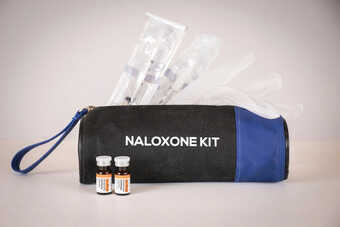
As per the National Institute on Drug Abuse, NIH, US, naloxone is a medicine that rapidly reverses an opioid overdose. It is an opioid antagonist. This means that it attaches to opioid receptors and reverses and blocks the effects of other opioids. Naloxone can quickly restore normal breathing to a person if their breathing has slowed or stopped because of an opioid overdose. But, naloxone has no effect on someone who does not have opioids in their system, and it is not a treatment for opioid use disorder.
It should be given to any person who shows signs of an opioid overdose or when an overdose is suspected. It could be administered through nasal spray or injected through the muscle, under the skin or into the veins.
The National Institute on Drug Abuse notes that families and loved ones could carry naloxone with them if they know someone in their family struggles with drug abuse. However, they can ask pharmacists or health care provider on how to administer the antidote.
However one must not that it works in the body for only 30 to 90 minutes, whereas some opioids could stay longer than that. This is why it is important to call for help. Furthermore, people given naloxone must be observed and monitored even after the last dose of naloxone to make sure their breathing do not slow down.
Unvaccinated Traveler Triggers Measles Outbreak in US, 17 Infected: CDC
Credit: Canva
The US Centers for Disease Control and Prevention (CDC) has stated that an unvaccinated person who traveled to the US from Europe spread measles to 17 others in the country last year.
In a paper published in The Journal of Infectious Diseases, the CDC highlighted the case of an unvaccinated traveler who arrived at the Denver International Airport in Colorado in May 2025.
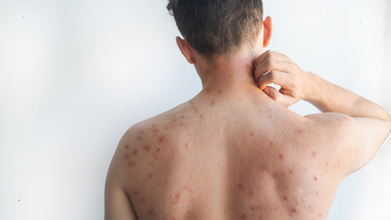
The person traveled with a fever, persistent cough, cold-like symptoms, and conjunctivitis (“pink eye”). He stayed overnight in a hotel and then boarded another flight to North Dakota. A day later, the person developed a rash.
“The index case was in an unvaccinated adult. Aircraft contact investigations identified 135 exposed domestic travelers. Fifteen secondary cases were identified among people exposed during the international (5) and domestic (3) flights, and at the airport (7),” the CDC said in the paper.
“Two tertiary case-patients were also identified. Five of the secondary case-patients had at least one documented prior measles vaccination,” it added.
The 2025 US Measles Outbreak
While measles was declared eliminated in the US in 2000, and sporadic outbreaks were controlled quickly, falling vaccination rates, especially during the COVID-19 pandemic, raise the risk of larger, harder-to-contain outbreaks.
This was further compounded by the anti-vaccine stance of President Donald Trump and his Health Secretary Robert F Kennedy Jr.
As per the CDC, a total of 2,281 confirmed measles cases were reported in the US in 2025. In 2026, the agency reported 10 new outbreaks, with more than 1,000 measles cases confirmed to date. More than 90 percent cases each year occurred in the unvaccinated.
Air Travel Increases Measles Spread
Recently, two passengers from India infected with measles landed in Auckland, New Zealand, via Singapore Airlines.
The Straits Times quoted Associate Professor Lim Poh Lian, group director of the Communicable Disease Agency’s (CDA) Communicable Disease Program, who noted that the individuals developed symptoms only while onboard the flight from Singapore to Auckland.
“Measles transmission may occur during travel. Travelers with fever and other overt signs of transmissible illness, such as coughing or malaise, should be strongly encouraged to delay travel while symptomatic,” the US CDC said.
Vaccination Key To Tackling Measles
Measles is a highly infectious disease characterized by the three Cs:
- Cough
- Coryza or runny nose
- Conjunctivitis or red and watery eyes
It easily spreads from one infected person to another through breaths, coughs, or sneezes and could cause severe disease, complications, and even death.
Even though a safe and cost-effective vaccine is available, in 2024, there were an estimated 95,000 measles deaths globally, mostly among unvaccinated or under-vaccinated children under the age of 5 years, according to the World Health Organization (WHO).
The CDC recommends that all travelers aged 6 months or older get vaccinated before international travel.
- Follow Us :


© 2024 Bennett, Coleman & Company Limited