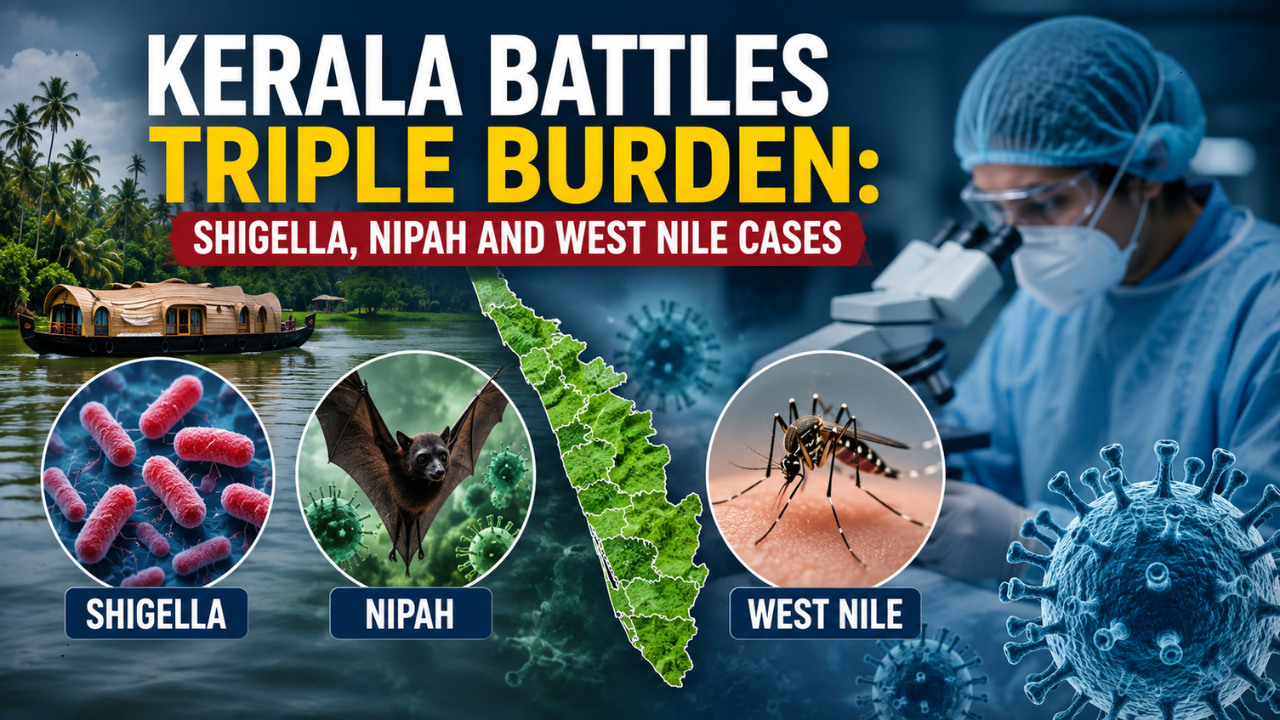
Kerala is grappling with a triple public health challenge as cases of Shigella infection, West Nile fever, and Nipah virus disease are being reported across the state.While Kerala has faced outbreaks of all three diseases in the past, their simultaneous occurrence has put health authorities on high alert, prompting intensified surveillance, contact tracing, and disease-control measures. The officials have urged people to remain cautious while avoiding unnecessary fear.Shigella Cases Rise To 16Seven more students recently tested positive for shigellosis in the northern district of Wayanad, taking the total number of confirmed cases to 16.According to District Medical Officer K.T. Rekha, symptoms have been identified in more than 500 people, most of them children. Around 45 patients are currently undergoing treatment, while 174 people have been admitted to hospitals since the outbreak began.Health authorities have intensified surveillance, visited more than 2,200 households, chlorinated over 1,300 wells, and distributed ORS packets across the district.Common symptoms include:Loose stools or diarrheaStomach pain and crampsFeverNauseaBlood in stoolsNipah Patient Critical; 77 Contacts IdentifiedThe National Institute of Virology (NIV), Pune, has confirmed Nipah virus infection in a 43-year-old man from Ramanattukara in Kozhikode district.The patient remains in critical condition on ventilator support at a dedicated Nipah isolation facility in Kozhikode Government Medical College Hospital.Health officials have identified 77 contacts through tracing efforts:15 priority contacts2 highest-risk contacts13 high-risk contacts58 healthcare workersThe patient's immediate family members have been placed under quarantine, while samples from primary contacts have been sent for testing.Early symptoms often resemble common viral illnesses and may include:FeverHeadacheBody achesFatigueWeaknessWest Nile Fever Claims Two LivesKerala has also reported two deaths linked to West Nile fever in Ernakulam district within a week.Health officials said the mosquito-borne disease is caused by a flavivirus commonly found in migratory birds and transmitted to humans through infected mosquitoes. The disease does not spread from person to person.Symptoms can include fever, neck stiffness, confusion, behavioral changes, in severe cases, encephalitis or meningitis.The elderly, pregnant women, children, immunocompromised individuals, and people with underlying health conditions are considered at higher risk.Why Kerala Remains VulnerableResearchers have suggested that environmental changes, habitat disruption, and increasing interaction between humans and wildlife may be contributing to the repeated emergence of zoonotic diseases in Kerala.A recent study titled "Two Geographies, One Virus: What Recurrent Nipah Spillover in India Reveals" found that deforestation, habitat loss, and increased human activity in biodiversity-rich regions could create more opportunities for viruses to spill over from animals to humans.How to Stay SafeHealth experts recommend:Washing hands thoroughly with soap and waterDrinking safe, treated waterConsuming freshly prepared foodKeeping food coveredUsing mosquito repellents and protective clothingSeeking medical attention promptly if symptoms developThe monsoon season creates favorable conditions for waterborne, foodborne, and mosquito-borne diseases, making vigilance essential for both health authorities and the public.