
- Health Conditions A-Z
- Health & Wellness
- Nutrition
- Fitness
- Health News
- Ayurveda
- Videos
- Medicine A-Z
- Parenting
Malaria Fatalities Reach A New High Amid Growing Drug Resistance, Says World Health Organization
Credits: Canva
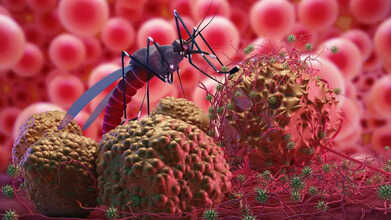
Malaria infected an estimated 282 million people and caused about 6,10,000 deaths worldwide in 2024, according to the World Health Organization’s (WHO) latest World Malaria Report. The report placed strong emphasis on drug resistance, warning that it remains one of the biggest threats to global elimination goals. WHO-recommended vaccines helped prevent roughly 170 million cases and one million deaths last year, which is about nine million more than the year before. Around 95 per cent of malaria deaths occurred in the African Region, with children under five forming the largest share.
Within the WHO South-East Asia Region, India represented 73.3 per cent of all malaria cases and 88.7 per cent of all malaria-related deaths. The report also underscored that the world is nowhere close to meeting the targets set under the Global Technical Strategy for malaria 2016–2030. Drug resistance has now been confirmed or suspected in at least eight African nations, and early signals point to falling effectiveness of partner drugs used with artemisinin. Other emerging challenges include rising cases of malaria parasites with pfhrp2 gene deletions, which weaken the reliability of rapid diagnostic tests, and widespread pyrethroid resistance across 48 countries, diminishing the protective value of insecticide-treated nets.
Also Read: Shingles Vaccine Linked To Slower Dementia Progression, Study Finds
Malaria Deaths Increase Amid Growing Drug Resistance
The WHO warned of a global rise in malaria cases and deaths over the past year, driven by shrinking budgets and increasing drug resistance. An estimated 282 million cases and 610,000 malaria deaths were recorded in 2024, marking an increase of about nine million cases and 12,000 deaths compared to the previous year. Eleven countries in Africa accounted for nearly two-thirds of the global burden. The WHO said that efforts to reduce deaths remain “far off track.” Gareth Jenkins, managing director of the nonprofit Malaria No More UK, noted that the rise is alarming as current numbers do not yet reflect the impact of ongoing funding cuts.
What Are Anopheles Stephensi Mosquitoes?
Anopheles stephensi is a malaria-transmitting mosquito originally found in South Asia. Unlike many other malaria vectors, it thrives in cities and breeds in man-made water sources such as storage tanks, containers, and discarded tyres. It can carry both Plasmodium falciparum and P. vivax parasites.
In recent years, this mosquito has spread into several African countries, where it adapts easily and shows resistance to multiple insecticides. This expansion has increased the threat of urban malaria outbreaks, as highlighted by the World Health Organization.
At present, Anopheles stephensi has been detected in nine African countries and is proving difficult to control due to widespread insecticide resistance.
Malaria Vaccines
The report noted that WHO approved the world’s first malaria vaccines in 2021, and 24 countries have now added them to their regular immunisation schedules. Dr Tedros Adhanom Ghebreyesus, WHO Director-General, said that new preventive tools provide reason for optimism, but many obstacles remain. He pointed out the rise in cases and deaths, the pressure from drug resistance, and the impact of reduced funding. These factors could undermine the progress achieved over the last twenty years.
The report also identified other risks, including extreme weather events that alter temperature and rainfall patterns, fuelling outbreaks; and conflict and unrest preventing communities from accessing treatment. Global funding for malaria control has largely remained stagnant over the past decade, limiting how far life-saving tools can reach.
Still, Dr Tedros stressed that the obstacles are manageable. With committed leadership in high-burden countries and well-directed investment, a malaria-free world remains an achievable goal.
How Is Malaria Becoming Drug Resistant?
Drug-resistant malaria develops when malaria parasites adapt and no longer respond well to antimalarial medicines, making treatment less effective. Factors such as improper use of medicines, incomplete treatment courses, and the parasite’s ability to mutate contribute to this resistance. Once it emerges, it can spread quickly. Addressing the problem requires strong surveillance systems, responsible drug use, and continued reliance on artemisinin-based combination therapies (ACTs).
Despite the setbacks, there have been encouraging developments. So far, 47 countries and one territory have received malaria-free certification from WHO. Cabo Verde and Egypt were declared malaria-free in 2024, followed by Georgia, Suriname, and Timor-Leste in 2025.
Ashley Dalton Diagnosed With Incurable Breast Cancer Stands Down From Her Position
Credits: PA Media
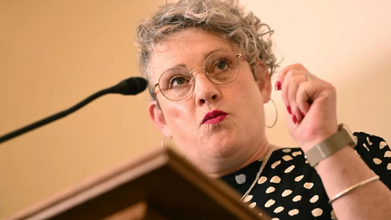
A health minister is standing down at the age of 53 from her role in government after she was diagnosed with incurable breast cancer. Ashley Dalton, has been diagnosed with incurable metastatic breast cancer and wants to continue her role as the MP for West Lancashire because her work is "central" to her identity. However, she would stand down from her role as a health minister because she is concerned that she will become too sick to fulfil "any of the roles I love" if she is to continue to serve the designation.
Also Read: 3 US Hospitals Rank in the Top 10 List of World's Best Hospitals
Writing in The Times, she said, "I have to consider what reasonable adjustments I might make. Before being made a government minister, I was elected by the people of West Lancashire to represent them as their MP. My priority has to be to do that job. But to continue to serve my constituents as they deserve, whilst adequately managing the side effects of chemo as well as caring for my elderly mum, I must make reasonable adjustments to my workload. The alternative would likely be more regular trips to Liverpool Aintree, making myself sick and unable to fulfil any of the roles I love.”
Ashley Dalton Health Update
She writes that she is currently undergoing chemotherapy treatment. She also writes that cancer is different for every patient and that this is not a "homogenous disease".
She also writes that while anyone who hears of chemotherapy thinks of the absolute worse, with IV drip hanging in their arm, in hospital and bald. However, she clarifies that this is not the case with her. "But, for now at least, my treatment is not like that. You likely wouldn’t be able to guess I am undergoing major medical intervention as I stand in front of you. I take five tablets twice a day for two weeks, with a week of rest as part of a three-week cycle," she writes.
Also Read: Giant 99th Percentile Baby Of 5.9Kg Born In New York Has Taken The Internet By Storm
She also says that her disease is stable and she is also well aware that she will never beat the cancer. When people ask her when will she know that she has beaten her cancer, she says, "when I have died of something else."
When Dalton was diagnosed with metastatic — stage 4 — breast cancer, she was told, gently but firmly, that support was available. That she could step back. That she could give up work.
“But the biggest mistake anyone could make about me and my cancer is to write me off,” she has said.
For some, stepping away from work is the right and necessary choice. “But just as cancer is not homogeneous,” Dalton writes, “neither are we people living with cancer.” Her diagnosis did not mark the end of her public life. Instead, it sharpened her sense of purpose — particularly in shaping how government responds to serious illness.
A Cancer Patient At The Head Of The Cancer Plan
As a health minister in the UK government, Dalton led the development of the National Cancer Plan — a sweeping strategy aimed not only at improving survival rates but transforming life after diagnosis.
Beyond what she describes as “the fastest rate of improvement in health outcomes for cancer patients in a century,” the plan is designed to save 320,000 lives over its course. But the statistic she seems most proud of is less numerical and more human.
“What I’m so proud of is the support the plan gives to people living with cancer not just to survive, but to live, and to live well. To work, to have a family, to thrive. To exist beyond the diagnosis.”
It is policy shaped by lived experience. Dalton has insisted that cancer patients remain central to decision-making — “because there was a cancer patient at the head of the plan.”
The National Cancer Plan places stronger emphasis on early diagnosis, faster treatment pathways, and equitable access to care. But it also pushes for something often overlooked: reasonable adjustments in workplaces, better psychosocial support, and a recognition that patients are not defined solely by their illness.
Beyond Cancer: A Broader Health Agenda
In just 12 months, Dalton led work on three major national strategies:
- The HIV Action Plan
- The Men’s Health Strategy
- The National Cancer Plan
“These aren’t just words on paper,” she wrote. “They will make real and positive differences to the lives of people in our communities.”
The HIV Action Plan builds on efforts to reduce new transmissions and tackle stigma, while improving access to testing and treatment. The Men’s Health Strategy addresses disparities in life expectancy, mental health support, and late diagnosis of conditions like prostate cancer. Together, they reflect a broader push toward preventive, inclusive healthcare.
Dalton’s approach has consistently centred lived realities — from men reluctant to seek help, to people navigating long-term treatment, to families balancing work and care.
World Cancer Day; And A Personal Reckoning
Launching the Cancer Plan on World Cancer Day was a professional milestone. It was also deeply personal.
“Advocating for reasonable adjustments to allow cancer patients to thrive meant that to continue thriving myself, I have to consider what reasonable adjustments I might make.”
Before becoming a minister, Dalton was elected to represent West Lancashire as a Member of Parliament. That responsibility, she says, remains her priority. But chemotherapy side effects and caring for her elderly mother forced her to confront limits.
“The alternative would likely be more regular trips to Liverpool Aintree, making myself sick and unable to fulfil any of the roles I love.”
In a difficult decision, she chose to step down from her ministerial role and return to the back benches — not as a retreat, but as a recalibration.
“For that reason, I have taken the difficult — but I think correct — decision to return to the back benches.”
Service, Redefined
Dalton is clear: she is not leaving politics. She is not relinquishing her voice.
“I’m not stepping away from public life, the government, or my work as a politician,” she has said. “I’m taking the steps necessary to continue to represent the people of West Lancashire… and I will continue to use my voice to fight for the rights of cancer patients to live as well as they are able for as long as possible.”
3 US Hospitals Rank in the Top 10 List of World's Best Hospitals

Credits: Canva
A list by Newsweek features World's Best Hospital list in 2026. The list analyzed hospitals across 32 countries, including Australia, Austria, Belgium, Brazil, Canada, Chile, Colombia, Denmark, Finland, France, Germany, India, Israel, Italy, Japan, Malaysia, Mexico, the Netherlands, Norway, the Philippines, Saudi Arabia, Singapore, South Korea, Spain, Sweden, Switzerland, Taiwan, Thailand, Turkey, the United Arab Emirates, the United Kingdom and the United States of America.
Also Read: Ashley Dalton Diagnosed With Incurable Breast Cancer Stands Down From Her Position
These countries were also selected using multiple comparability criteria, which also included:
- Population size
- Life expectancy
- Standard of living
- Hospital density
- Availability of reliable data
Out of the 250 hospitals listed by Newsweek, using data from Statista, the hospitals in the United States hold four ranks in the top 10 list.
How Have The Hospitals Been Reviewed?
Each hospital was assessed and scored using four key data sources: recommendations from medical professionals—including doctors, hospital administrators and other healthcare experts—hospital quality metrics, existing patient experience data, and Statista’s Patient-Reported Outcome Measures (PROMs) Implementation Survey. PROMs are standardized, validated questionnaires completed by patients to evaluate their own functional well-being and overall quality of life.
The 2026 methodology builds on previous editions of the ranking, with Philippines and Turkey included for the first time. This year’s evaluation places greater emphasis on hospital quality metrics, integrates newly available accreditation, safety, quality and patient experience data from multiple countries, and further strengthens the importance of PROMs through increased weighting and an updated Implementation Survey.
More than 2,500 hospitals were evaluated globally, with special distinction awarded to the top 250 institutions. The five highest-ranked hospitals are: Mayo Clinic-Rochester (Rochester, Minnesota); Toronto General-University Health Network (Toronto); Cleveland Clinic (Cleveland); Karolinska Universitetssjukhuset (Stockholm); and Massachusetts General Hospital (Boston).
Access to reliable and transparent data can play a crucial role in guiding healthcare decisions. This ranking aims to serve as a practical reference for patients, families and healthcare leaders seeking trusted insight into some of the world’s most respected medical institutions.
| Rank | Hospitals | Countries |
| 1 | Mayo Clinic - Rochester | United States |
| 2 | University Health Network - Toronto General Hospital | Canada |
| 3 | Cleveland Clinic | United States |
| 4 | Karolinska Universitetssjukhuset | Sweden |
| 5 | Massachusetts General Hospital | United States |
| 6 | The Johns Hopkins Hospital | United States |
| 7 | Sheba Medical Center | Israel |
| 8 | Charité - Universitätsmedizin Berlin | Germany |
| 9 | Universitätsspital Zürich | Switzerland |
| 10 | Singapore General Hospital (SGH) | Singapore |
Where Do Indian Hospitals Rank In The List?
Of the 250 list of hospitals, India made it to the list with four hospitals. Medanta - The Medicity ranked at 110, All India Institute of Medical Sciences - Delhi ranked at 115, PGIMER - Postgraduate Institute of Medical Education and Research ranked at 214 and CMC Vellore - Town Campus at 245.
FSSAI Seized Fake 1,400 Kg of Khoya, 400 Kg of Ghee And Paneer Ahead Of Holi
Credits: FSSAI
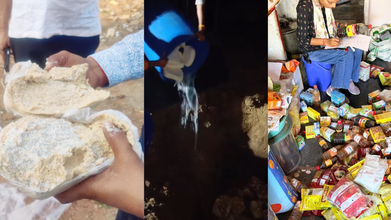
Just ahead of Holi, the Food Safety and Standards Authority of India (FSSAI) seized fake paneer near Noida, along with 1,400 kg of fake khoya in Jhansi, and 400kg of expired ghee. The FSSAI started a series of raids in the Indian state of Uttar Pradesh and Rajasthan ahead of the festivities, when the demands of these food items are increased. Health and Me previously reported on the FSSAI raids in Kanpur where oil, rotten dates, and sweets were found to be adulterated.
Paneer Seized Near Noida At Yamuna Express Way
FSSAI on 27 February posted a video where officials could be seen disposing of a large quantity of adulterated paneer at a landfill site. FSSAI noted that the consignment was intercepted late at night at Jewar Toll Plaza on the Yamuna Expressway. The sample was seized and sent for laboratory testing, while rest of the stock was destroyed immediately.
From time and again news of adulterated paneer have made headline. Fake paneer is an adulterated, non-dairy, or low-quality substitute made using starch, hydrogenated oil (vanaspati), urea, detergent, or ammonium sulphate to mimic real milk cheese. It is found in street foods and local markets, and feels rubbery.
How to test fake paneer? The easy way to test is to use iodine on it, and if it turns blue or black, it means it is fake.
1,400 kg Of Adulterated Khoya In Jhansi
In another series of raid by FSSAI in Jhansi, officials confiscated nearly 1,400kg of adulterated khoya. This too happened as a part of a late night operation.
A mobile laboratory unit detected starch adulteration and fungal contamination in the product. The khoya confiscated was worth 3.5 lakh and was destroyed on the spot after inspectors determined that they were unsafe for consumption.
In the images shared by FSSAI, it could be clearly seen that mould-infested khoya had been dumped and discarded.
Expired Food Seized In Rajasthan
FSSAI on March 1 raided in Salumbar district of the Indian state of Rajasthan, where authorities confiscated nearly 400 kg of expired and contaminated food items. This included ghee, cooking oil, tea leaves and spices. Samples from several shops were collected and sent for tests.
Cases Of Contaminated Food In India
Not too long ago, Health and Me reported food contamination from Indore's Bhagirathpura, the same place which was the epicentre of water contamination that took many lives. Health and me also reported the news of Horlicks adulteration in Odisha.
In another news, bacteria were found in Amul milk packages, along with Mother Dairy and Country Delight. Eggoz too landed in a controversy, when a YouTube video went viral claiming that the sample tested positive for Nitrofuran.
MicrobioTx, a Bengaluru-based gut health startup tested samples from urban populations across 9 Indian states and 14 cities and found that people are significantly exposed to pesticides, insecticides, antibiotics, steroidal growth regulators, and forever chemicals.
The independent study found:
- 78% were exposed to pesticide residues, with 36% exposed to three or more pesticides, indicating cumulative exposure that may pose serious health risks.
- 54% showed presence of antibiotics, linked to antimicrobial resistance, harder-to-treat infections, and disruption of the gut microbiome that may contribute to metabolic disorders.
- 39% were exposed to steroids, compounds that may cause endocrine disruption and increased carcinogenic risk.
- 38% tested positive for forever chemicals, persistent toxins that may cause cancer risk, reduced fertility, thyroid disease, hormone suppression, high cholesterol, liver damage, and ulcerative colitis.
- 17% of the samples had 10 or more toxins in their blood across 3 categories, indicating hidden chronic exposure.
- Follow Us :


© 2024 Bennett, Coleman & Company Limited