
- Health Conditions A-Z
- Health & Wellness
- Nutrition
- Fitness
- Health News
- Ayurveda
- Videos
- Medicine A-Z
- Parenting
Measles Outbreak Confirmed In Two South Carolina College
Credits: Canva/iStock
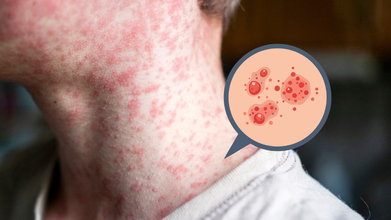
Measles reached two South Carolina colleges, Anderson University and Clemson University. On Monday, Anderson University confirmed that one of the studies was diagnosed with measles and may have exposed others with the same. The student is no longer on campus. Authorities have asked anyone who think are exposed to stay home and not show up in class, work, or in public areas. The students are also asked to call Thrive Wellness Center at 864-622-6978 before visiting in person to avoid spread as measles is highly contagious.
Clemson University whereas, over the weekend, announced the South Carolina Department of Public Health of the case. The person infected is in quarantine.
As per the data from the Student Health Services, nearly 98% of campus students have provided proof of immunity, said the university.
What Is Measles?
Measles, also known as rubeola, is a highly contagious viral illness that typically causes fever, cough, a runny nose, red and watery eyes, and a distinctive red, blotchy rash that usually begins on the face and spreads downward. The virus spreads through the air when an infected person coughs or sneezes and can lead to serious complications such as pneumonia or brain inflammation. Despite its severity, measles is preventable through a safe and effective vaccine, as per the Mayo Clinic.
Read: Kentucky Reports First Positive Measles Case of 2026: Confirmed Health Officials
How Contagious Is Measles?
Measles is among the most contagious diseases in the world. The virus spreads through airborne droplets that can linger in the air or on surfaces for hours. Up to 90% of unvaccinated people who are exposed to measles will become infected. A single infected person can pass the virus to an estimated 12 to 18 others through close contact or shared spaces. People can transmit the virus days before symptoms become obvious and continue spreading it after the rash appears, according to the World Health Organization.
How Long Is Someone Contagious With Measles?
Someone infected with measles can spread the virus from four days before the rash develops to four days after it appears. The virus spreads so efficiently that about 90% of people who are unvaccinated or have never had measles will become infected after being exposed.
In November, Canada lost its measles elimination status following a significant outbreak, according to the Pan American Health Organization, which works closely with the World Health Organization.
“It’s important to say that all the other 34 countries in the region, they keep their certification as measles-free,” said PAHO/WHO Director Dr. Jarbas Barbosa at the time, as per NPR News.
U.S. health officials have also warned that genetic links between outbreaks in different states suggest continued spread.
“The trajectory that we’re looking at now is that we do anticipate more cases well into January,” Bell said. “What that means for us nationally in terms of how they are defining our designation in this country as having eliminated measles is unclear.”
Also Read: Measles Symptoms Explained: Can The Infection Be Deadly?
Measles Symptoms Develop In Three Stages
According to the Mayo Clinic, measles symptoms usually appear in three distinct stages.
Stage 1: Incubation period (10 to 14 days)
During this phase, there are typically no noticeable or warning symptoms.
Stage 2: Early symptoms begin
Symptoms at this stage may include a dry cough, fever, red and inflamed eyes known as conjunctivitis, a runny nose, and a sore throat.
Stage 3: Acute illness and rash
“In the third stage, a rash begins to develop, usually starting on the face. Small white spots called Koplik spots may appear inside the mouth two to three days after symptoms first appear,” the Mayo Clinic explains. “The measles rash typically shows up three to five days after the initial symptoms.
“Over the following days, the rash spreads to the arms, torso, and legs. Alongside the rash, fever often rises rapidly and can exceed 105 degrees Fahrenheit,” the guidance continues. “Eventually, the fever subsides, and the rash fades from the body starting at the head and moving downward.”
Is Measles Deadly?
Yes, measles can be deadly and carries a significant risk of death, according to the Centers for Disease Control and Prevention.
“Measles can lead to serious health complications, including pneumonia, inflammation of the brain known as encephalitis, and death,” the CDC states. “Between one and three out of every 1,000 people infected with measles will die. Around one in five people with measles will require hospital care, and one in every 20 children with measles develops pneumonia, which is the leading cause of measles-related deaths in young children.
“One in every 1,000 people with measles will experience brain swelling, which can result in permanent brain damage.”
Health Minister JP Nadda Announces Cervical Cancer Screenings At Ayushman Arogya Mandirs
Credit: PIB
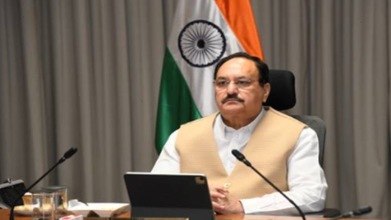
Union Health Minister JP Nadda has announced the launch of cervical cancer screenings using Visual Inspection with Acetic Acid (VIA) are now available at Ayushman Arogya Mandirs and other health facilities for women between 30 and 65 years of age.
"Screening for cervical cancer is now available at 1,81,000 Ayushman Arogya Mandirs, also known as Health and Wellness Centers, across the country as a part of population based screening for early detection and treatment," said Nadda, while addressing a press briefing at the World Health Organization virtually.
Using VIA, a low-cost, point-of-care method, trained health workers will screen women for cervical cancer. Those who test positive will then be referred to higher centers for diagnostic confirmation and further evaluation.
Nadda also shared that the cervical cancer screening in the country has been expanded as part of comprehensive primary healthcare under the National Program for Prevention and Control of Non-Communicable Diseases (NP-NCD).
"Over 86 million women have already been screened for cervical cancer under the program, reflecting India’s sustained commitment to early detection and prevention," Nadda informed.
Despite being highly preventable as well as treatable, cervical cancer is a public health concern in India.
The country loses one women every eight minutes to cervical cancer.
As per the World Health Organization (WHO) Director-General Tedros Adhanom Ghebreyesus, about 42,000 new cases of cervical cancer is reported annually in India. This underscores the need for preventive measures such as vaccination and early screening.
The WHO Global Strategy to eliminate cervical cancer includes the 90-70-90 targets by 2030 -- vaccinating 90 per cent of girls against HPV, screening 70 percent of women, and ensuring treatment for 90 percent of those diagnosed with cervical disease.
In line with the global strategy to fight cervical cancer, Prime Minister Narendra Modi recently also launched a free HPV vaccination drive that will target health and well being of adolescent girls in the country.
What Is Cervical Cancer?
Cervical cancer develops in a women's cervix (uterus opening) due to abnormal cell growth, primarily caused by persistent HPV infection, a common infection that's passed through sexual contact.
When exposed to HPV, the body's immune system typically prevents the virus from causing damage however, in a small percentage of people, the virus can survive for years and pave the way for some cervical cells to become cancerous.
Treatment involves surgery, radiation, and chemotherapy, with early detection significantly improving outcomes, though it remains a major cancer in low-income countries Cervical cancer can also be prevented through vaccination and regular screening (Pap/HPV tests).
Symptoms Of Cervical Cancer
Cervical cancer has no symptoms in the early days and therefore, is hard to detect until it has spread. However, the early-stage symptoms include:
- Vaginal bleeding after sex
- Vaginal bleeding post-menopause
- Vaginal bleeding between periods or unusually heavy/long periods
- Watery vaginal discharge with a strong odour or containing blood
- Pelvic pain or pain during intercourse
- Advanced Cervical Cancer Symptoms (when cancer has spread beyond the cervix)
- Painful or difficult bowel movements or rectal bleeding
- Painful or difficult urination or blood in the urine
- Persistent dull backache
- Swelling of the legs
- Pain in the pelvis or lower abdomen
How Can Cervical Cancer Be Prevented?
Cervical cancer is largely preventable and, when detected early, it is highly treatable. The WHO recommends HPV vaccination for girls aged 9 to 14, before they become sexually active, along with regular cervical screening from age 30, or 25 for women living with HIV.
Despite this, unequal access to vaccination, screening and treatment continues to drive higher rates of illness and deaths in regions such as sub-Saharan Africa, Central America and Southeast Asia.
Japan Confirms New Highly Pathogenic Bird Flu Outbreak: Report
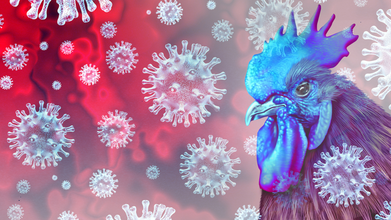
Japan has confirmed an outbreak of HPAI (Highly Pathogenic Avian Influenza) at a poultry farm, media reports said.
The avian flu, confirmed in Hokkaido in the northern prefecture, marks the fourth case and the country's 21st outbreak this season, Xinhua news agency reported.
The Ministry of Agriculture, Forestry and Fisheries, in a statement, said that the affected farm is located in the town of Abira, and keeps about 190,000 chickens.
The farm notified local health officials earlier this week, who rapidly followed up with a rapid avian influenza test.
The positive result was confirmed by genetic testing the following day.
“All chickens at the farm will be culled, incinerated, and buried to prevent further spread of the virus,” the authorities said.
Previously, the HPAI outbreak at a poultry farm in Iwate prefecture was reported in February.
Jiji Press reported that the outbreak in the town of Kanegasaki led to the culling of about 560,000 egg-laying hens at the affected farm.
The bird flu season in Japan typically runs from autumn until the following spring.
What Is HPAI? Global HPAI situation
HPAI is a classification for bird-flu viruses that cause severe disease and high mortality in poultry, and also spreads rapidly.
The influenza A H5N1 virus is one of the most common viruses that cause HPAI.
Others include
- Influenza A H5N8 virus
- Influenza A H5N6 virus
- Influenza A H7N9 virus
Outbreaks of HPAI, especially H5N1, continue in wild birds and poultry worldwide, with active disease zones being reported.
- India
While authorities are culling birds, no human cases have been reported.
- South Korea
- United States
Recent detections include the first confirmed HPAI infections in marine mammals (northern elephant seals) in California -- the first such reported cases in 2026.
- Other regions
Suspected HPAI cases have triggered poultry culls and control measures in the UK and Northern Ireland.
Europe reported multiple outbreaks on commercial poultry farms.
Human Cases
According to the World Health Organization, there have been about 994 confirmed human infections reported worldwide since 2003.
This virus does not appear to transmit easily from person to person, and sustained human-to-human transmission has not been reported.
Karnataka Government To Ban Social Media For Teens Under-16
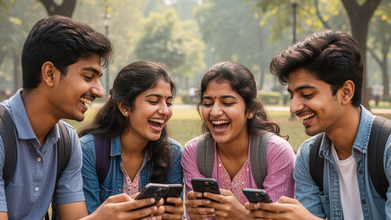
Karnataka, which is home to the tech hub of Bengaluru, has officially become the first Indian state to implement a wide ban on teenagers using social media.
CM Siddaramaiah announced the move while presenting the annual state Budget today and noted that the ban is aimed at preventing adverse effects of increasing mobile usage on children.
He told officials: "With the objective of preventing adverse effects of increasing mobile usage on children, usage of social media will be banned for children under the age of 16."
Last month, Siddaramaiah had discussed this issue in the meeting of Vice-Chancellors (VC) conclave held in Bengaluru and sought opinions of VCs. During the discussion, he raised concerns about the impact of social on academics.
The move is being supported by multiple state officials including State IT and Biotechnology Minister Priyank Kharge as well as Health Minister Dinesh Gundu Rao.
Is Any Other State Considering a Ban?
Andhra Pradesh may soon follow Karnataka's steps and ban social media for teenagers under the age of 16 in the state.
Nara Lokesh, Information Technology, Electronics and Communications, Real Time Governance and Human Resources Development Minister for Andhra Pradesh, told Bloomberg at the World Economic Forum 2026 Annual Meeting in Davos, Switzerland: "As a state, we are studying Australia’s under-16 law, and yes, I believe we need to create a strong legal enactment.
"Youngsters below a certain age should not be on such platforms, as they do not fully understand the content they are exposed to. Thus, a strong legal framework may be required."
TDP national spokesperson Deepak Reddy supported Lokesh's claim and stated: "Children below a certain age are not emotionally mature enough to comprehend the negative and harmful content that is freely available online. That is why the Andhra government is studying global best practices and examining Australia's under-16 social media law."
If implemented successfully, Andhra Pradesh would be the first Indian state to issue the ban and could pave the way for other states to consider such policies. State officials are yet to clarify when the rule will be implemented and if any fines will be attached to it.
How Does Social Media Affect Teenagers?
Scientists have found that kids' social media use might be slowing down their brain power. A new study says that spending time on these apps could be hurting how well a tween's mind develops. This research shows that the more time kids spend on platforms like Instagram or TikTok, the worse they might do on school-related tasks later on.The researchers found that children aged 9 to 13 who used social media more often did worse on tests that measured skills like reading, memory, and language. They were tested on these abilities two years after the study began. The results were published in a major medical journal called the Journal of the American Medical Association.
The children's brain power was measured using special tests created by the National Institutes of Health, which tested things like how well they remember information and understand language. The study found a clear, but small, drop in the test scores for kids who used social media.
- Kids who used social media for just one extra hour a day scored about 1 to 2 points lower on their memory and reading tests.
- Kids who used social media for up to three extra hours a day saw a bigger drop, scoring as much as 4 points lower.
- Follow Us :


© 2024 Bennett, Coleman & Company Limited