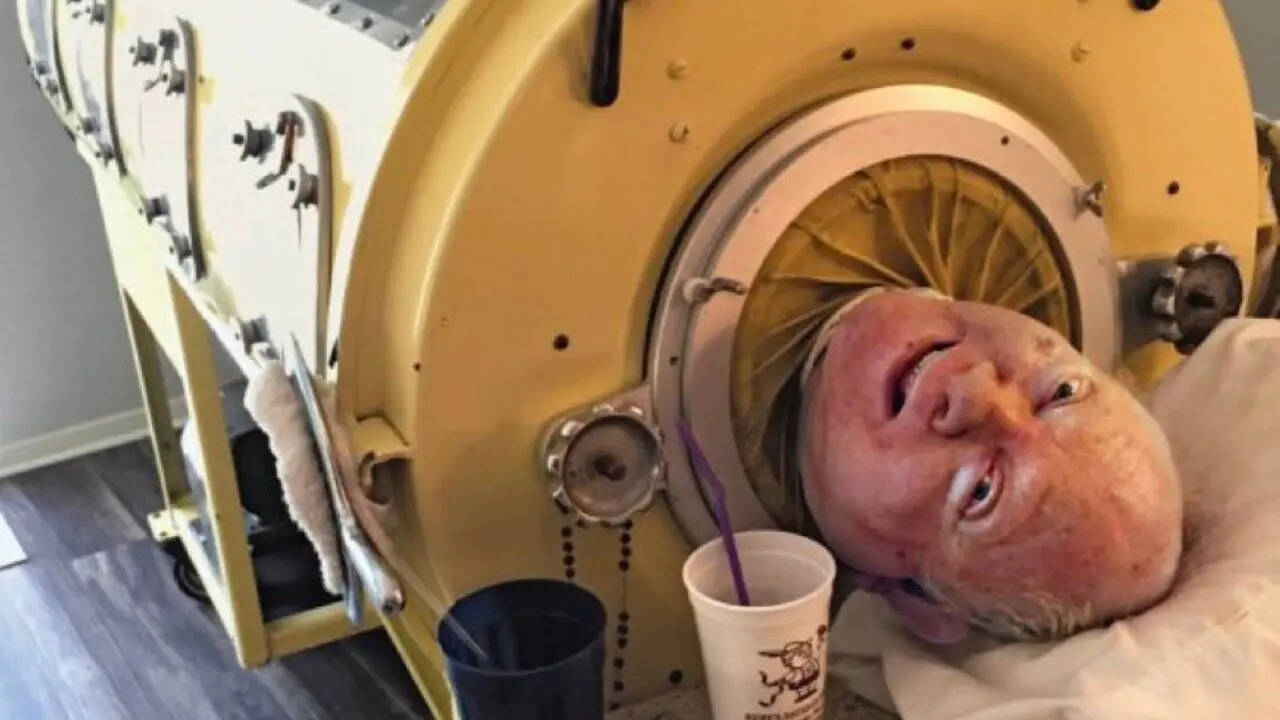
Paul Alexander woke up inside a 600-pound giant metal tube and never left until he died. Paul depended on an iron lung for every breath, a machine that had largely disappeared from modern medicine. Known as "the man in the iron lung," Alexander spent more than seven decades living inside the metal cylinder after contracting polio as a child. Paul became a symbol of resilience, determination, and the life-saving power of vaccines. His remarkable story is recalled even after his death in March 2024 at the age of 78. Who Was Paul Alexander? Paul Richard Alexander, born in Texas in 1946, developed polio at the age of six when the country was battling one of the worst polio epidemics in history. After poliovirus attacked his nervous system, he was left unable to breathe on his own. The doctors placed him inside an iron lung, a mechanical ventilator that kept him alive by helping his lungs expand and contract. Although everyone initially believed he might not survive, Alexander defied expectations. He went on to graduate from college, earn a law degree, become a practicing attorney, publish a memoir, and inspire millions through interviews and social media.Also read: Who Was Martha Lillard? Last U.S. Polio Survivor To Depend On An Iron Lung Who Breathed Her Last At 78 Life Beyond The Iron Lung Paul Alexander refused to let the machine define him. Doctors taught him a technique called "frog breathing" or glossopharyngeal breathing. By using the muscles of his mouth and throat, he learned to gulp air into his lungs in small amounts. This helped him to leave the iron lung for short durations, attend school, pursue higher education, and eventually work as a lawyer. Still, he depended on the iron lung for most of his life, especially while sleeping. Despite his conditions, Alexander earned a bachelor's degree, graduated from law school, practiced as a lawyer in Texas, and wrote his memoir - Three Minutes for a Dog: My Life in an Iron Lung. His determination challenged and defied assumptions about disability and demonstrated that severe physical limitations need not prevent education, work, or meaningful relationships.Also read: Even Light Exercise Could Help People With COPD Live Longer, Study Finds Iron Lung Is An Obsolete Technology In MedicineAn iron lung, also called a negative-pressure ventilator, is a large cylindrical machine that helps people breathe when the muscles controlling respiration become paralyzed. Unlike today's ventilators, which push air directly into the lungs through a tube or mask using positive pressure, an iron lung works by changing air pressure around the patient's body. The patient lies inside an airtight metal chamber with only the head remaining outside. The machine then repeatedly lowers the air pressure inside the chamber. This causes the chest to expand naturally, drawing air into the lungs. The pressure then returns to normal. The chest relaxes, allowing air to flow back out. This cycle mimics normal breathing and can continue around the clock. Iron lungs became obsolete eventually after polio vaccines and modern ventilators were developed. The introduction of effective polio vaccines in the 1950s and 1960s dramatically reduced cases of paralytic polio worldwide. The positive-pressure ventilators we use today are smaller, more portable, and better suited to intensive care. They deliver oxygen directly into the lungs, replacing bulky iron lungs. Paul Alexander's life is more than a remarkable survival story. It serves as a reminder of the devastating impact infectious diseases once had before vaccines transformed public health.