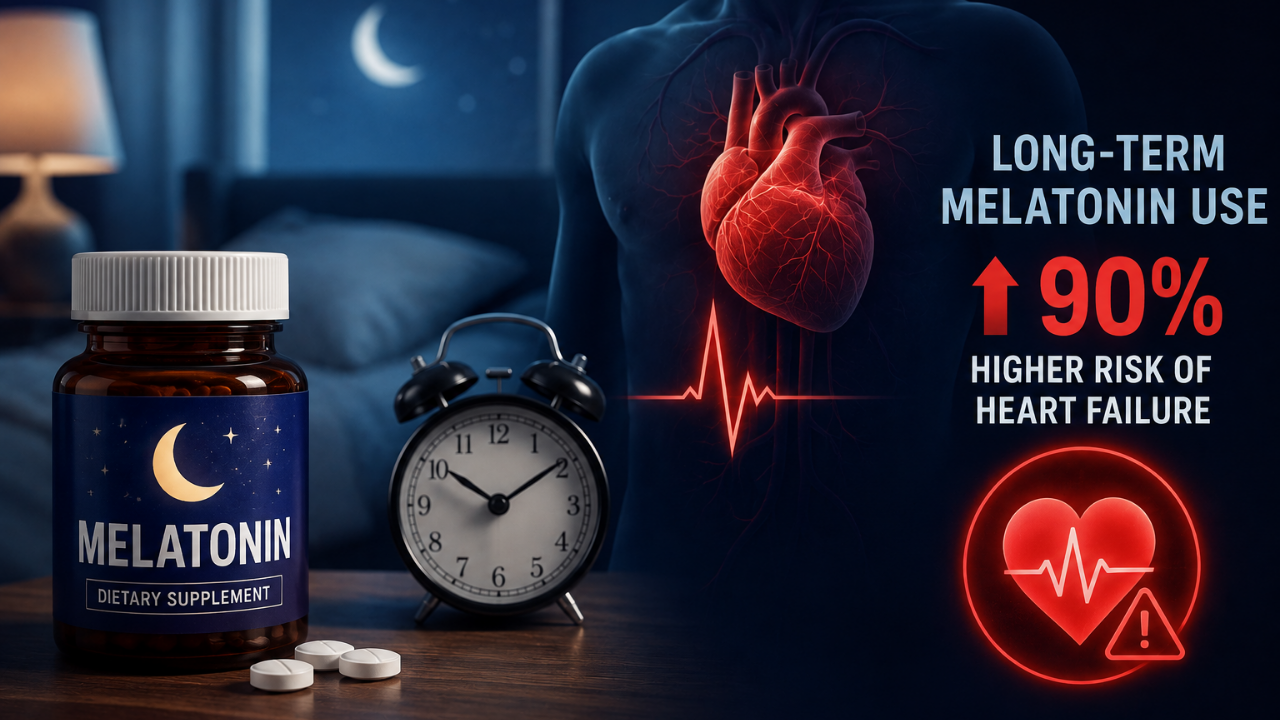
Melatonin is often opted to treat a bad night's sleep. But new research is raising an important question about what happens when the sleep supplement becomes a long-term habit. A large preliminary study found that people with chronic insomnia who used melatonin for at least 12 months had a roughly 90% higher risk of developing heart failure over five years compared with similar people who did not use it. The findings were presented at the American Heart Association's Scientific Sessions and are based on health-record data. Researchers have stressed that the study does not conclusively prove that melatonin causes heart failure. About The Study The researchers observed adults with insomnia and compared those who used melatonin for 12 months or more with those who didn't. Over a period of five years, 4.6% of long-term melatonin users developed heart failure, compared to 2.7% of non-users. That translated into approximately a 90% higher risk. Researchers found a similar association when they used a stricter definition of long-term use, looking at people who had filled at least two melatonin prescriptions at least 90 days apart. In that analysis, the risk was 82% higher. So, it does not mean that 90 out of 100 people taking melatonin will develop heart failure. It means the relative risk was about 90% higher in the long-term melatonin group than in the comparison group.Also read: French Court Links Flight Attendant’s Breast Cancer To Workplace Radiation; How Does Flying Increase Cancer Risk? How Does Melatonin Help Sleep Better? Melatonin is a hormone naturally produced by the body, mainly in response to darkness. It helps regulate the sleep-wake cycle, essentially telling the body that night time has arrived. Melatonin supplements are therefore used to help with sleep problems. But chronic insomnia itself is not harmless. Poor sleep can be associated with high blood pressure, obesity, diabetes, and cardiovascular disease. And that creates a major problem in interpreting this study.Also read: How To Read Your Blood Test Results: A Simple Guide To What Your Numbers Mean Melatonin Or Insomnia: What Is Causing Heart Risk? People taking melatonin long term may have more severe or persistent insomnia than people who do not take it. That underlying sleep disorder could itself contribute to cardiovascular problems. There may also be other differences between the two groups that a medical-record study cannot completely account for. This is why the researchers have described the findings as preliminary and say more research is needed to understand whether melatonin itself has a harmful cardiovascular effect.Talking about heart failure, it simply does not mean that the heart suddenly stops working. It means the heart has become unable to pump blood efficiently enough to meet the body's needs. People may develop symptoms like:Breathlessness, particularly when lying down or exercisingPersistent tirednessSwelling of the legs, ankles or feetRapid weight gain from fluid retentionA persistent cough or congestionReduced ability to exerciseHeart failure usually develops gradually and has many causes, including coronary artery disease, high blood pressure, heart attack and diseases of the heart muscle. Does This Mean You Should Stop Taking Melatonin? The research is merely observational, so it cannot establish cause and effect. It also does not show that short-term melatonin use causes heart failure. The American Heart Association described the findings as raising “new questions about the safety of taking melatonin for extended periods.” If someone has been taking melatonin every night for months or years, particularly because of persistent insomnia, it may be worth discussing the underlying sleep problem with a doctor rather than simply continuing the supplement indefinitely.