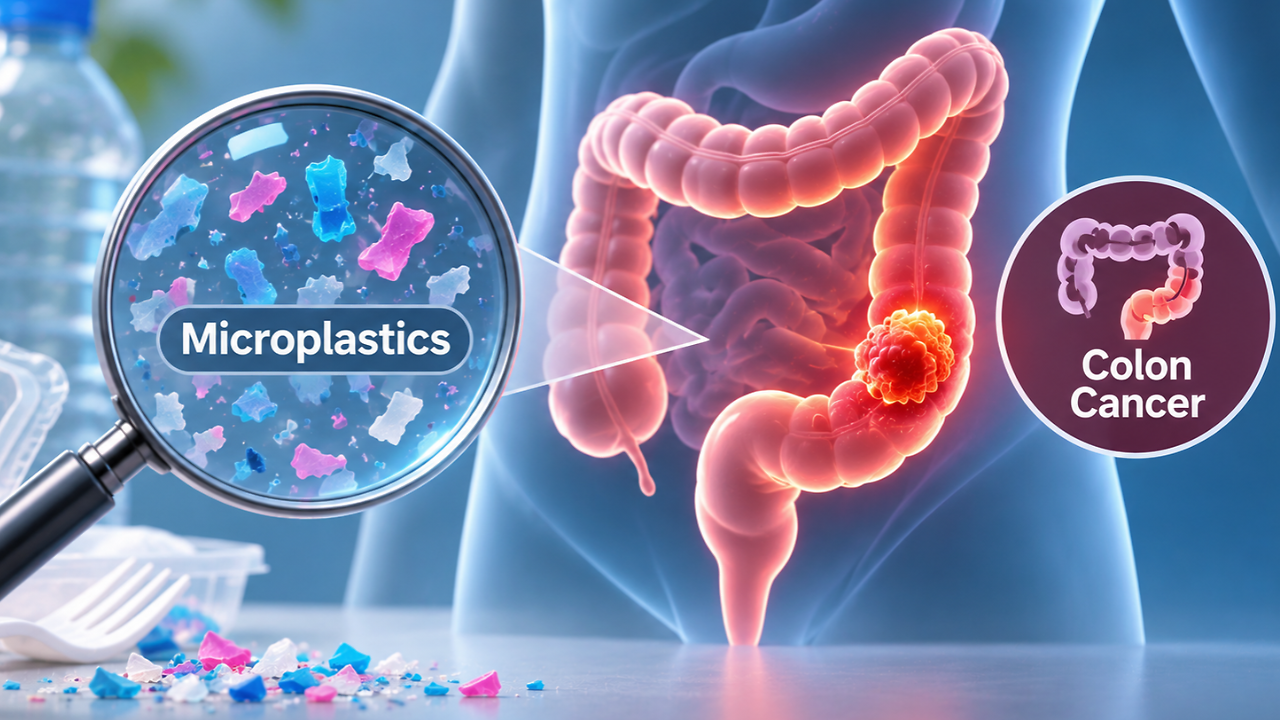
The tiny particles of plastic found in food packaging, takeaway containers and almost everywhere in the environment may be quietly contributing to cancer risk. A new study has found that long-term exposure to microplastics could promote colorectal cancer, one of the deadliest forms of cancer. The study published in Molecular Cancer recently found that exposure to polystyrene nanoplastics promoted tumour development in mice that were genetically at risk of colorectal cancer. Researchers also observed growth of more tumours and more severe disease in animals exposed to microplastics than in those that were not exposed.The findings offer a possible biological link between plastic pollution and cancer. However, the research has a limitation that it was conducted in animals, which means it did not conclusively prove that microplastics cause colon cancer. Effects Of Microplastics On The ColonAlso read: Ivonescimab: Why Did US FDA Reject China's Promising Lung Cancer Drug?Microplastics are plastic particles smaller than five millimetres, while nanoplastics are even tinier particles that are generally measured at the nanometre scale. They can enter the human body through food, drinking water and inhalation.The latest research, conducted by scientists at Central South University in China, focused on polystyrene nanoplastics. Polystyrene is commonly used in disposable food containers, packaging materials and foam cups.Researchers found that these particles accumulated predominantly in the colon of mice following long-term oral exposure. They also caused structural damage to the tiny, finger-like projections called microvilli that line the intestinal cells and help with nutrient absorption.The exposure to microplastics not only disrupted the balance of gut bacteria but also affected the immune system's ability to fight tumour growth.The researchers identified a mechanism that involved the gut microbiome, bacterial metabolites and immune cells. Exposure reduced levels of a beneficial bacterium called Faecalibaculum rodentium, which helped lower production of propionic acid, a short-chain fatty acid.This reduction affected the activity of Th17 immune cells and the production of IL-17A, weakening an immune response involved in controlling tumour growth. Do Microplastics Increase Tumour Growth?Also read: Russia's mRNA Cancer Vaccine: First Patient With Melanoma Completes Treatment, Shows No New TumoursThe researchers exposed the mice to a chemical treatment that causes colorectal cancer, which helped them investigate whether long-term exposure to nanoplastic exposure fueled tumour growth.Animals exposed to polystyrene nanoplastics developed more tumours, with greater tumour severity, than those that were not exposed.The findings suggest that nanoplastics may affect several processes involved in cancer development, including damage to the intestinal lining, changes in gut bacteria and changes in immune activity.Microplastics Have Been Found In Human Cancer TissuesAlso read: Microplastics Accumulation In Dementia Patients More Than Others, Study FindsThe researchers also examined human samples and detected different types of microplastics found in colorectal cancer tissues and blood.This adds to earlier research investigating the presence of plastic particles in human tumours. A 2025 study reported higher concentrations of microplastics in colorectal tumour tissue than in nearby healthy tissue.However, detecting microplastics in cancer tissue does not establish whether the particles contributed to tumour development. More human research is needed to understand this relationship. Rising Colorectal Cancer Cases Among Younger AdultsThe findings come amid growing concern about early-onset colorectal cancer, which refers to diagnoses in people younger than 50.According to The Washington Post, colorectal cancer rates among adults aged 20 to 49 in the US increased by approximately 3% annually between 2013 and 2022.Researchers have been investigating several possible reasons, including dietary patterns, sedentary behaviour, environmental exposures and changes in the gut microbiome.However, microplastics remain one of several possible environmental contributors under investigation. There is currently insufficient evidence to attribute the rise in early-onset colorectal cancer to plastic exposure. How To Reduce Exposure To Microplastics?Completely avoiding microplastics can be challenging because they are widespread in the environment. However, some precautions can help reduce exposure.Avoid heating food or beverages in plastic containers as heat can increase the release of plastic particles.Use glass or stainless-steel containers for storing and reheating food when possible.Avoid using disposable plastic food containers.