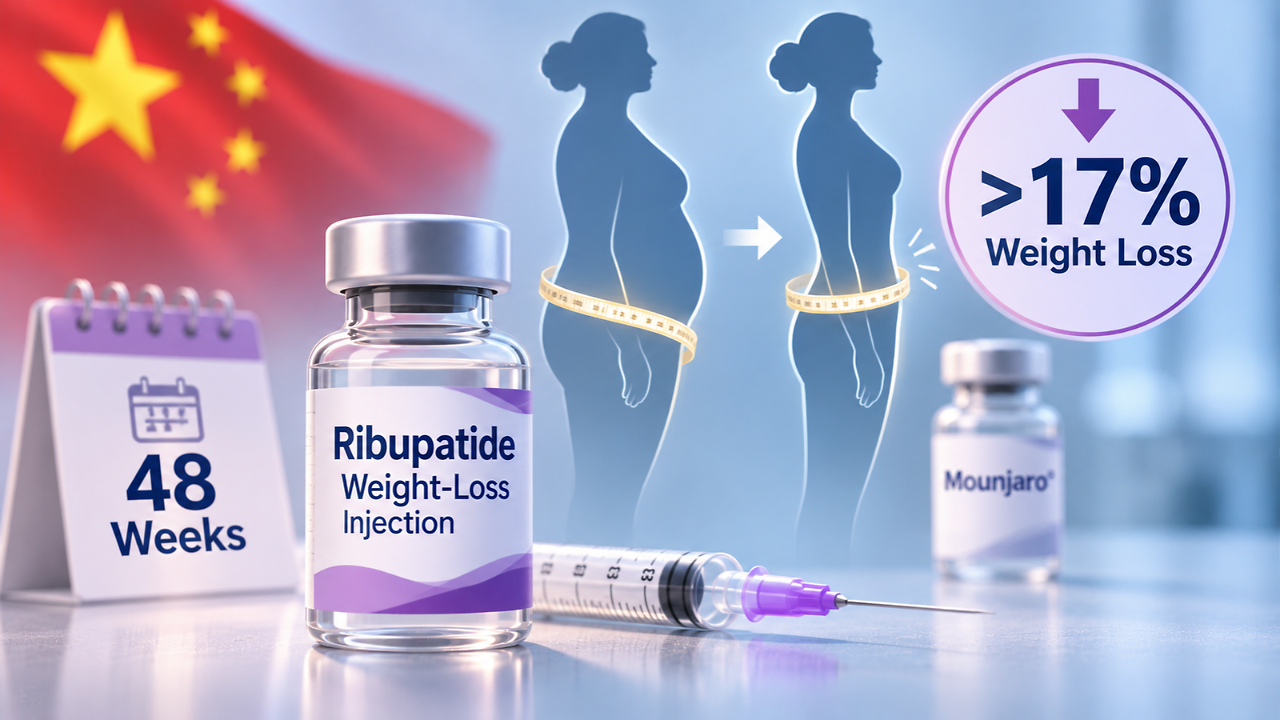
An experimental weight loss injection developed in China has produced an average weight reduction of 17.7% over 48 weeks in adults who are overweight or obese, raising the possibility of another contender entering in the rapidly expanding obesity drug market.The drug, called ribupatide, was evaluated in a Phase 3 clinical trial published in JAMA recently. Researchers found that participants receiving the highest dose lost nearly one-fifth of their starting body weight in 11 months. How Much Weight Did Participants Lose?The randomised trial involved 567 adults with overweight or obesity across 55 medical centres in China. Participants did not have diabetes and their average age was 34 years.Researchers randomly assigned them to receive once-weekly injections of ribupatide at doses of 2 mg, 4 mg or 6 mg, or a placebo. All participants also received lifestyle counselling. After 48 weeks, the average weight reduction was:2 mg dose: 10.7%4 mg dose: 16.4%6 mg dose: 17.7%Placebo: 1.4%The researchers also examined how many participants lost at least 5% of their starting weight. This threshold was achieved by 68.1% of those receiving 2 mg, 88% in the 4 mg group and 85.7% in the 6 mg group, compared with 16% of participants receiving placebo.Notably, weight loss had not clearly plateaued in the two higher-dose groups by the end of the study. This suggests that a longer treatment period may reveal further reductions.Also read: Lilly's Obesity Drugs: Foundayo Becomes First GLP-1 Pill Approved In China, Experimental Combo Shows Promise More About Ribupatide Ribupatide, also known as HRS9531, is a dual-acting injectable medication that targets the GLP-1 and GIP hormones. These gut hormones help regulate appetite, digestion and blood glucose levels. By activating their receptors, the drug helps reduce hunger and increase feelings of fullness, helping people consume fewer calories.This is similar to that of tirzepatide, the active ingredient in Eli Lilly's Mounjaro and Zepbound. Both medicines target GLP-1 and GIP receptors.Could Ribupatide Rival Mounjaro?The trial results have drawn comparisons with existing weight loss drugs like Mounjaro and Wegovy. However, the comparisons need to be interpreted carefully.In the SURMOUNT-1 trial, tirzepatide produced average weight loss of up to 20.9% after 72 weeks in adults with obesity or overweight without diabetes. Semaglutide 2.4 mg, marketed as Wegovy, produced an average reduction of 14.9% after 68 weeks in the STEP 1 trial. Ribupatide's highest-dose group recorded 17.7% weight loss after 48 weeks. But these results come from separate clinical trials. A direct comparison would be needed to determine how ribupatide performs against tirzepatide or semaglutide.Also read: World Diabetes Day: Why Some Diabetes Patients May Not Be Suitable For GLP-1 Treatment, Experts Explain Side Effects Of Ribupatide Digestive problems were the most frequently reported side effectsin the ribupatide trial. Gastrointestinal side effects occurred in 47.9% of participants receiving the 2 mg dose, 58.2% in the 4 mg group and 63.1% in the 6 mg group. This compared to 23.1% of those receiving placebo.Reported problems included nausea, vomiting and diarrhoea. Most were mild or moderate according to the findings.The study had its limitations as the participants were relatively young, which means the findings may not apply equally to older adults. Additionally, the 48-week treatment period may not have captured the full effects of the higher doses. The study's smaller body-composition assessment also did not measure muscle strength.Ribupatide is an investigational treatment and is not yet an approved weight-loss medication for routine use.