
- Health Conditions A-Z
- Health & Wellness
- Nutrition
- Fitness
- Health News
- Ayurveda
- Videos
- Medicine A-Z
- Parenting
Mounjaro Becomes India’s Top-Selling Medicine in October; What’s Driving The Surge

Credits: Canva
Eli Lilly’s weight-loss and diabetes injection, Mounjaro, has overtaken GSK’s antibiotic Augmentin (GSK.L) to become India’s highest-selling drug by value in October, as demand for weight-loss treatments continues to surge in the world’s most populated country. According to new data from research firm Pharmarack, the U.S.-based drugmaker’s popular injectable earned ₹1 billion ($11.38 million) in sales last month, compared to Augmentin’s ₹800 million.
While Augmentin still led in overall units sold—5.8 million doses versus 85,000 of Mounjaro—the latter’s premium pricing pushed it ahead in total value, as per Reuters. Analysts say India is rapidly emerging as a major market for obesity treatments, with the global weight-loss drug sector expected to cross $150 billion annually by the end of this decade.
Eli Lilly’s Mounjaro Becomes India’s Top-Selling Medicine in October
Launched in India in March 2025, Mounjaro which helps regulate blood sugar levels and reduces appetite—has seen its sales double within months, surpassing its rival Wegovy by Novo Nordisk, which entered the Indian market in June. Data from Pharmarack shows that Mounjaro has so far generated ₹3.33 billion in total revenue.
“Mounjaro’s consumption in India by volume was nearly ten times higher than Wegovy in October,” said Sheetal Sapale, Vice President (Commercial) at Pharmarack. Eli Lilly sold around 262,000 doses of Mounjaro last month, compared to 26,000 doses of Wegovy. Both drugs belong to the GLP-1 receptor agonist class, designed to treat obesity and type 2 diabetes.
How Does Mounjaro Work?
Mounjaro is a once-weekly injectable medication developed primarily for managing type 2 diabetes. Its key ingredient, tirzepatide, is the first of its kind to act on two gut hormones—GLP-1 (glucagon-like peptide-1) and GIP (glucose-dependent insulinotropic polypeptide). This dual mechanism makes Mounjaro more advanced than older drugs such as Ozempic (semaglutide) or Victoza (liraglutide), which target only GLP-1, which is thus driving a surge in its sale in india.
Although it was originally approved for diabetes management, Mounjaro has attracted global attention for its strong weight-loss effects. Ongoing studies are evaluating its use for non-diabetic individuals struggling with obesity. The drug mimics the action of GIP and GLP-1, which are hormones released naturally after meals to regulate insulin release, lower blood sugar, and suppress appetite.
Mounjaro for Type 2 Diabetes
For people living with type 2 diabetes, keeping blood sugar in check often requires a combination of medicines, diet adjustments, and regular monitoring. Mounjaro offers a more integrated solution by targeting multiple factors that influence glucose levels. Findings from clinical trials, including the SURPASS-1 to SURPASS-5 studies, show that Mounjaro delivers better outcomes than many existing diabetes treatments, particularly in lowering HbA1c levels—a key marker of long-term glucose control.
Patients using Mounjaro have shown:
- Lower fasting and post-meal blood sugar levels
- Reductions in HbA1c by up to 2.5%
- Improved insulin sensitivity
Mounjaro and Weight Loss
Beyond its use for diabetes, Mounjaro has gained global popularity for its significant role in weight reduction. Clinical studies reveal that people taking the drug often lose between 15% and 20% of their body weight over several months of consistent use. This level of weight loss surpasses that seen with many earlier treatments and even some surgical interventions, making Mounjaro one of the most effective options currently available for managing obesity.
Disclaimer: This article is intended for general information and should not replace professional medical guidance. Always consult your doctor for advice or concerns regarding any health condition.
Cicada COVID Variant: Use Masks To Avoid Transmission, Say Experts

Credit: Canva
The emerging COVID variant, BA 3.2, nicknamed “Cicada,” has revived memories of the COVID-19 pandemic that disrupted the world and raised fresh concerns about the possibility of severe illness.
The variant has been given the nickname “Cicada” due to its reappearance after remaining dormant or undetected for a long period, much like cicadas that emerge after years underground.
With the variant already spread to 23 nations, as of February, experts are urging people to use masks to avoid transmission.
What Is The Cicada COVID Variant?
Cicada was first identified in a respiratory sample in South Africa in November 2024.
It is a descendant of the Omicron BA.3 lineage, and is genetically distinct from the previously circulating JN.1 lineages (including LP.8.1 and XFG).
BA.3.2 comprises two major branches, BA.3.2.1 and BA.3.2.2. BA.3.2.2 also has substitutions like: K356T, A575S, R681H, and R1162P.
The World Health Organization (WHO) has designated BA.3.2 as a Variant Under Monitoring (VUM). It means the variant may not be that dangerous yet, but it may have concerning mutations.
As per the US CDC’s latest Morbidity and Mortality Weekly Report, Cicada has “70 to 75 substitutions and deletions in the gene sequence of its spike protein”.
Time To Mask Up
Dr. Sai Balasubramanian, a doctor and healthcare strategy executive, writing in Forbes, stressed the need to follow COVID practices such as masks and hand hygiene.
"Healthcare professionals recommend taking general precautions, similar to those used to prevent most viral transmission: get vaccinations when appropriate, wear masks in crowded areas or indoors where there is a high risk of transmission," he said.
He also urged “avoid individuals who have known illness or infections, wash hands frequently, and continue to stay apprised of local community guidelines and the infection spread”.
Cicada variant “is different from the (Covid-19) viruses we have been dealing with for the last two years," Prof Ravi Gupta, of Cambridge University, who advised the UK government during the pandemic, was quoted as saying by The Mirror.
Will The Cicada Variant Cause Severe Illness?
The SARS-CoV-2 virus has the potential to turn deadly in people, especially among vulnerable populations such as those with a weak immune system.
The Cicada variant is particularly concerning as it provides no immune protection to people with previous infection or even vaccination.
Yet, the World Health Organization and health experts advise that existing COVID vaccinations can help prevent severe illness and hospitalization.
"It would appear that all the protections we have from our experience with the virus and with vaccines probably offer more limited—not zero—but more limited protection against this strain," Dr. William Schaffner, professor of infectious diseases at Vanderbilt University Medical Center, was quoted as saying by Time.
Cicada Variant: Any New Symptoms?
The symptoms of Cicada aren't different from those of previous COVID variants. These include:
- sore throat,
- fever or chills,
- headache,
- cough,
- body aches,
- runny nose
- nausea
- diarrhea.
Tpoxx Should No Longer Be Used For Treating Mpox: European Drug Regulator
Credit: Canva/ US CDC
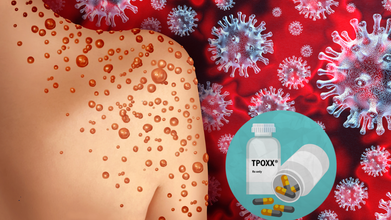
The European Medicines Agency (EMA) has advised patients and physicians not to use the antiviral drug Tecovirimat SIGA (marketed as Tpoxx) to treat mpox disease.
The advisory from the EMA’s Committee for Human Medicines (CHMP) is based on data from four studies carried out in different regions, which showed that compared with placebo treatment with Tpoxx did not
- heal lesions faster
- relieve pain
- help clear the virus from the body faster.
“The animal data demonstrated antiviral activity and a survival benefit when treatment was started early and a reduced efficacy if treatment was initiated later after exposure to the virus,” the EMA said in an official statement.
However, the clade 2 mpox outbreaks, which began in 2022, led the World Health Organization (WHO) to declare mpox a Public Health Emergency of International Concern (PHEIC), giving the drugmaker SIGA Technologies an opportunity to conduct efficacy studies in people.
A second PHEIC was declared in 2024 over clade 1 outbreaks.
Key recommendations by the EMA include:
- Restricting the use of Tpoxx over no benefit.
- Due to lack of safety concerns, patients who initiated treatment with Tpoxx can continue till course ends.
- Tpoxx can still be used as an antiviral to treat other orthopoxvirus infections, including smallpox and cowpox
- There is currently no other drug authorized in the EU for treating mpox infections.
Tpoxx For Mpox: What Does The US CDC Say
The Centers for Disease Control and Prevention also noted that the role of Tpoxx in treating mpox "is investigational".
The federal agency called for "additional clinical trials" to explore the role of Tpoxx in treating mpox infections in patients with severe immunocompromise, including advanced HIV.
"The findings from the clinical trials suggest that most patients with monkeypox who do not have severe disease or risk factors for severe disease (e.g., severe immunocompromise) will recover with supportive care and pain management," the CDC said.
Also read: Missouri Reports 2 Cases Of Deadly Clade I Mpox, US Tally Rises To 3 In 2026
What Is Mpox?
Mpox, earlier known as monkeypox, is a rare viral disease that belongs to the orthopoxvirus genus, the same family as the more well-known smallpox virus.
Though generally less severe, mpox can still lead to serious health complications, especially in immunocompromised individuals, children, and pregnant women.
The virus is transmitted from animals to humans and can spread from person to person through direct contact with infectious sores, scabs, body fluids, respiratory droplets, or contaminated materials.
Also read: Mpox Outbreak: First Case of Severe Strain Reported in New York City
The earliest signs of mpox start within 14 days of being infected. A person may not know they have mpox and can spread the disease.
The common symptoms include:
- fever,
- sweating,
- chills through the body.
- rashes, which start as a distant rash on the face and can continue throughout the body,
- swollen lymph nodes, migraine,
- muscle aches,
- fatigue,
- weakness
- back pain.
Mpox: Current Cases
In February, a total of 1,184 confirmed mpox cases and four deaths were reported from 46 countries, as per the WHO's latest outbreak update.
Of these cases, 58.6 percent were reported in Africa — mainly from Madagascar, the Democratic Republic of the Congo, Kenya, Burundi, and Liberia.
The WHO said all clades continue to circulate, and transmission of the virus continues mostly within sexual networks, followed by household transmission. All age-groups in some historically endemic areas are being affected.
“Unless mpox outbreaks are rapidly contained and human-to-human transmission is interrupted, there is a risk of sustained community transmission in all settings,” the WHO said.
Study Shows Ebola Virus May Persist In Breast Milk For Over 3 Months After Recovery
Credit: Canva
Even after recovery, the deadly Ebola virus (EBOV) can persist for a longer duration — more than three months — in breastmilk, according to a case report.
Ebola virus disease (EVD) is a severe viral illness that has a 25 percent – 90 percent fatality rate.
Ebola in pregnancy raises significant complications ranging from spontaneous abortion to maternal and neonatal death.
In a case report published in the New England Journal of Medicine, a team of researchers from the Republic of Congo and Senegal shared the case history of a 23-year-old woman in whom Ebola was still detectable in breast milk at 14 weeks.
The case reported the rare occurrence of a pregnant woman who survived EVD with no complications, neither to the mother nor the baby. However, the deadly virus was still present in the mothers' breast milk, which cited the potential risk of post-illness transmission to infants.
What Is Ebola Virus Disease?
As per the World Health Organization (WHO), EVD is a rare but severe illness in humans and is often fatal.
People can get infected with the virus if they touch an infected animal when preparing food, or touch body fluids of an infected person such as saliva, urine, feces or semen, or things that have body fluids of an infected person like clothes or sheets.
Ebola enters the body through cuts in the skin or when one is touching their eyes, nose or mouth. Early symptoms include fever, fatigue and headache.
What Was The Case
The woman from the Democratic Republic of the Congo (DRC) contracted EBOV during pregnancy in 2019.
Soon after, she was administered monoclonal antibody therapy and was discharged after three negative reverse-transcriptase–polymerase-chain-reaction blood tests for EBOV.
The woman delivered a healthy baby at 42 weeks of gestation. No evidence of EBOV infection was found in maternal blood, amniotic fluid, vaginal secretions, or the newborn.
Ebola Detectable In Breast Milk At 14 Weeks
Yet surprisingly, the EBOV virus persisted in the placenta and breast milk.
Tests revealed that while the mother’s blood remained negative, viral RNA was still detectable in breast milk at 14 weeks after illness onset. To protect the newborn from transmission, clinicians used the drug bromocriptine to suppress lactation.
As per the World Health Organization (WHO) guidelines, the mother was also isolated from the baby and not breastfed. A prophylactic (preventive) monoclonal antibody was also given to the newborn. During follow-up, the infant exhibited no signs of infection.
Ebola Virus: WHO Guidelines
During the 2018–2020 EVD outbreak in the northeast of DRC, 3,481 confirmed cases were reported. Of these, nearly 60 percent occurred in females, and about 45 percent occurred in children below 18 years of age.
Current WHO guidance recommends that Ebola survivors avoid breastfeeding until viral clearance is confirmed.
The global health body advises women with suspected or confirmed Ebola to immediately stop breastfeeding and be prioritized for diagnostic testing.
Children exposed to Ebola through breast milk
- Must be placed under care,
- Closely monitored for symptoms over 21 days
- Fed with an appropriate breast milk substitute.
- Restarted on breastfeeding after two consecutive negative tests of breast milk.
- Follow Us :


© 2024 Bennett, Coleman & Company Limited