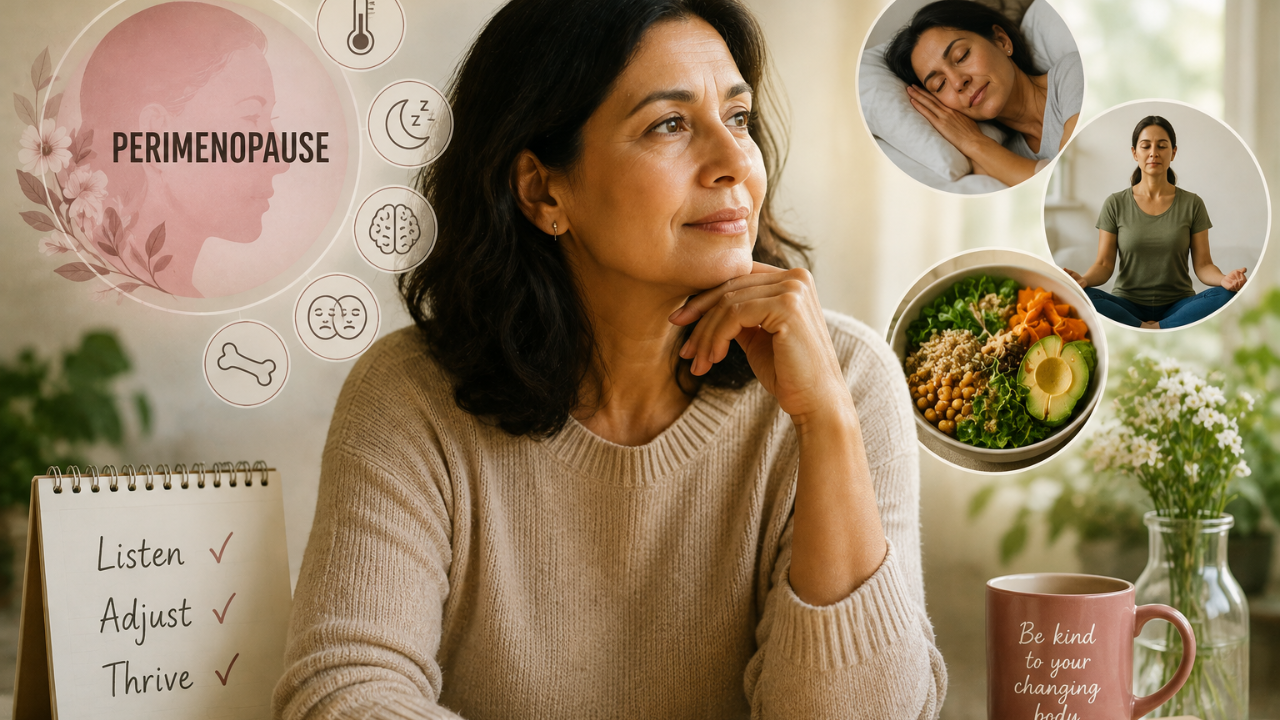
Perimenopause has become a regular conversation and its been high time that people are talking about it. You can see friends discussing it, social media coverage has increased and more importantly women are discussing this with their gynaecologists. For decades, menopause was thought to be a single event - that is the day the periods stopped, but today we understand that the transition lasts for a few years. These changes can affect the quality of a woman’s life and hence I’m glad the conversation has gained more traction.Perimenopause-Related Changes Also read: Yoga Or Strength Training: What Can Help Manage Hot Flashes During Perimenopause?First lets understand what perimenopause is. It literally means “around menopause” Its a transition phase where the ovaries gradually change the production of the hormones, mainly oestrogen and progesterone. It usually begins in the early 40’s but some women may experience it earlier. One of the commonest signs of this is a change in the pattern of your menstrual cycle. Periods can be become longer or shorter, heavier or lighter. Basically the menstrual cycle becomes a bit unpredictable. But periods aren’t the only sign. A woman may start experiencing disturbed sleep cycles. She may wake up randomly at 3am or feel exhausted despite getting 7-8 hours of sleep. Hot flushes and night sweats may also occur. Mood changes, irritability, anxiety and difficulty in concentration can also affect her quality of life. Some women complain of being forgetful or more commonly used term "experience brain fog”. They forget names, lose train of though or struggle to multitask. There can also be a change in libido, vaginal dryness, discomfort during intercourse, headaches, join pain and alterations in skin and hair. Besides this there could possibly a change in the body composition. A woman may notice increasing abdominal fat or find difficulty in maintaining her weight even though her lifestyle hasn’t changed. Why The Current Focus On Wellness Is Important?Also read: Explained: Why Some Women Start Experiencing Joint Pain As They Approach MenopauseThe good part of this increase in awareness is that women are paying more attention to their health early rather than waiting of menopause. This transition phase provides a golden opportunity to reassess exercise, nutrition, sleep and preventative healthcare. Strength training becomes even more valuable as it helps maintain muscle and bone mass. Adequate protein, calcium and Vitamin D intake along with a balanced diet helps long term metabolic and bone health. During this time, its important for a woman to even assess her cardiovascular health. Blood pressure, cholesterol, blood sugar and weight don’t just become numbers on the chart anymore, they become important markers of future health during this time. Not Every Symptom Should Be Blamed On Hormones However every label shouldn’t be blamed on perimenopause. Thyroid disorders, anaemia, vitamin deficiencies, depression and few other medical conditions can produce similar symptoms. Unusually heavy bleeding, bleeding between periods or after intercourse also warrants medical assessment rather than being dismissed as “just hormones”.