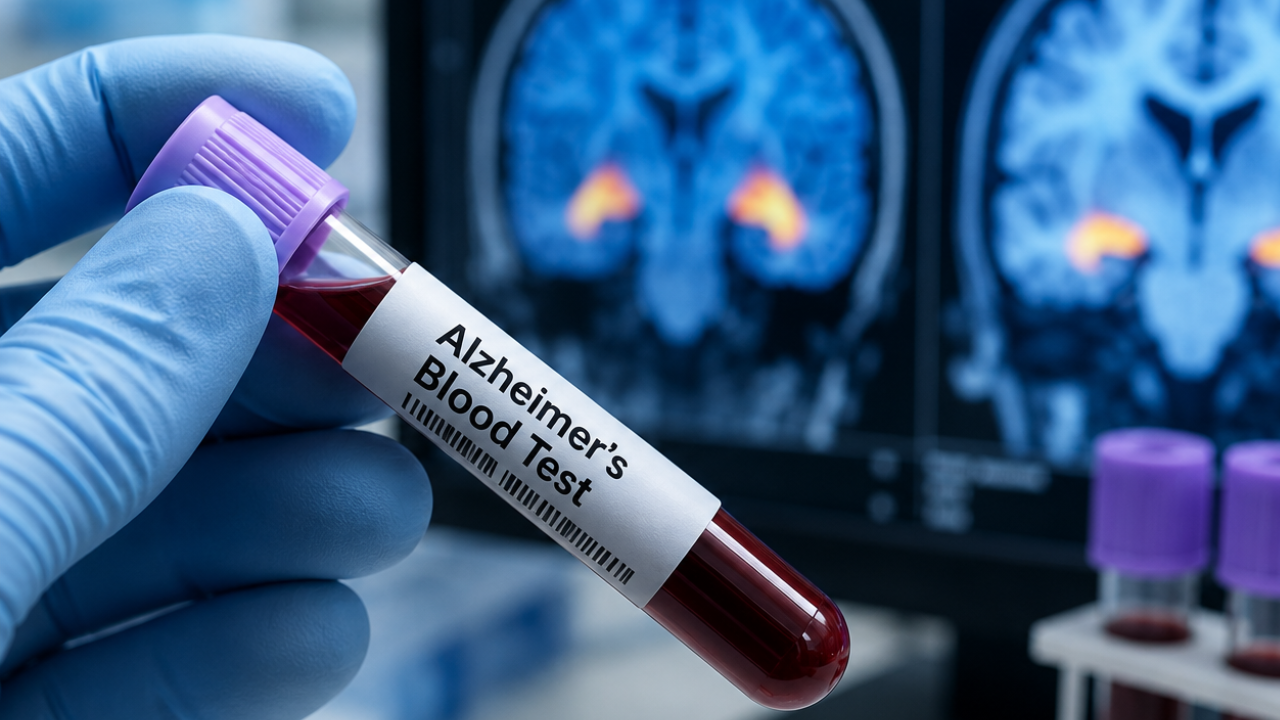
Usually, the most telling symptoms of Alzheimer's disease surface in old age. With no cure and limited ways to detect it early, it is challenging to treat and manage Alzheimer's. However, a recent study says that a new blood test can help in diagnosing Alzheimer's early. New Blood Test May Predict Alzheimer's Symptoms Early A new blood test that measures tiny loops of genetic material in the bloodstream may be able to predict when Alzheimer's disease symptoms are likely to appear, offering hope for earlier intervention of the neurodegenerative disease and more effective clinical trials. A study funded by the U.S. National Institutes of Health (NIH) says that a specific group of blood-based biomarkers known as circular RNAs could help identify people who are on the brink of developing Alzheimer's symptoms, even before memory loss or cognitive decline becomes apparent. An Improvement On Current Blood Tests The current blood tests for Alzheimer's have been made after significant progress in recent years, particularly by detecting proteins linked to amyloid plaques, one of the disease's primary characteristics features. However, these tests may present positive results for many years, even decades, before symptoms like declining memory and thinking appear. It makes it difficult for doctors to predict when the disease will actually begin affecting the patient’s quality of life. The newly developed blood test could fill that existing gap. Scientists found that elevated levels of a set of 34 circular RNAs in blood were strongly associated with future symptoms of the onset. According to the study, those with higher circRNA levels were nearly three times more likely to develop Alzheimer's symptoms compared with those with lower levels. The changes appeared approximately two to four years before symptoms emerged, making them a valuable diagnostic test for predicting disease progression. Read more: WHO Issues Alert After Fake Cancer Drug Found In Maldives & Mexico; Are Counterfeit Medicines A Global Threat? How Can This Blood Test Help?Improve Clinical Testing The discovery could transform existing Alzheimer's research by helping scientists identify participants who are most likely to develop symptoms during a clinical trial. Finding out when symptoms are likely to begin would allow researchers to introduce preventive therapies at the stage when they are most likely to be effective and better evaluate whether experimental treatments can delay cognitive decline. Less Invasive Alternative The current methods to assess Alzheimer's include PET brain scans, which are expensive and not widely available. Lumbar punctures (spinal taps), an invasive method, is also used. Compared to the existing methods to screen Alzheimer's, a blood test is easier to perform, less invasive, more affordable and more accessible, especially if validated for widespread clinical use. Earlier Planning For Patients And Families If doctors can ascertain the symptoms early, patients and their families can, patients’ families can plan future care and support. They can use the time to make financial and legal decisions while the person is still cognitively healthy. Patients can also adopt lifestyle changes that may help maintain brain health. Researchers however stressed that the new circRNA test is still in the research stage and requires further validation in larger and more diverse populations before it can be adopted in clinical practice.