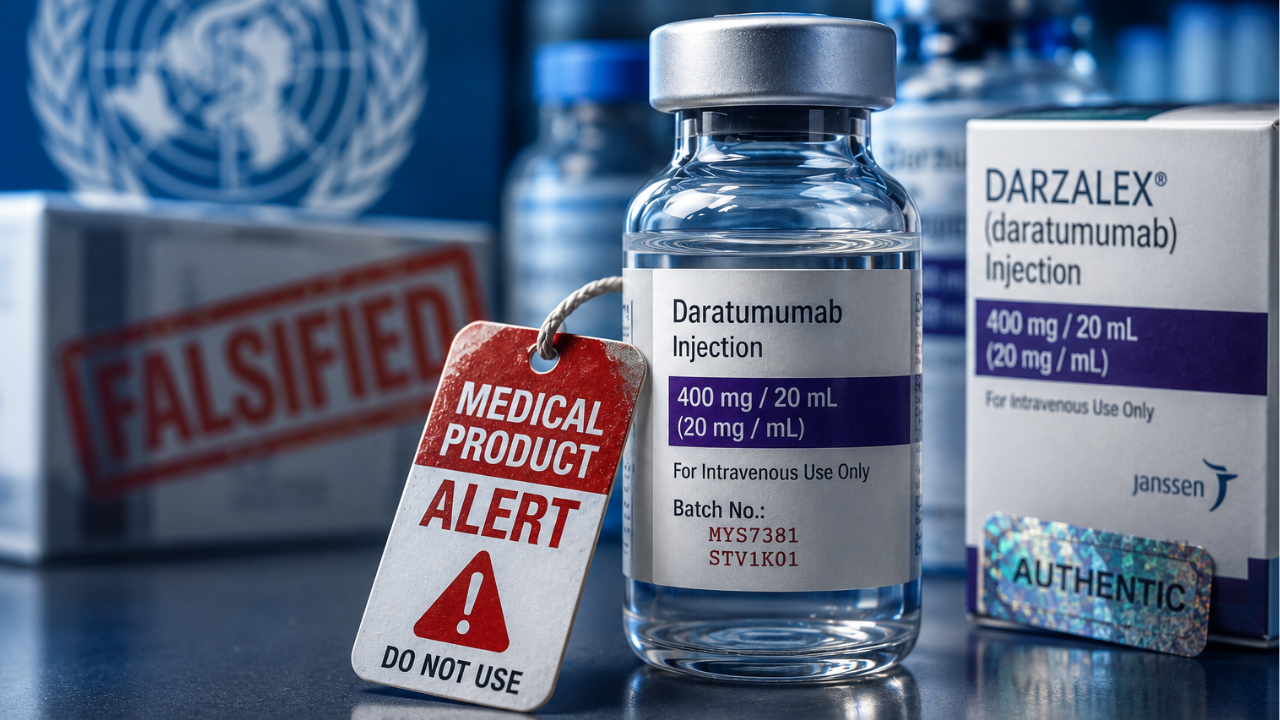
The World Health Organization (WHO) has issued a global medical product alert after identifying falsified batches of the cancer medicine DARZALEX (daratumumab). It also issued a warning that the counterfeit products could cause serious health risks to patients and disrupt the treatment process. WHO Warns Against Fake Cancer Drugs The WHO issued an alert against the circulation of falsified DARZALEX (daratumumab). The incident came to light in May and June 2026. According to the WHO, the falsified injections were found in the Maldives and Mexico after being supplied by unauthorised distributors. In at least one reported case, hospitals received fake medication, prompting international concern over gaps in the pharmaceutical supply chain. About The Cancer Medicine DARZALEX (daratumumab) is an antibody that is used to treat multiple myeloma, cancer of plasma cells in the bone marrow, as well as amyloid light-chain (AL) amyloidosis, a rare blood disorder. The drug plays a crucial role in the treatment of various types of cancer. That is why the WHO said that the circulation of its compromised version could cause delayed therapy, treatment failure, and potentially life-threatening consequences. Read more: Why Sustainable Weight Loss Requires More Than Cutting CaloriesWHO Identified The Counterfeit Batch Numbers WHO said the fake products deliberately misrepresent their identity, composition, or source. The manufacturer, Janssen, confirmed that the batch numbers MYS7381 and STV1K01 are not valid, and any DARZALEX product bearing these batch numbers should be considered falsified and must not be used. The Maldives Food and Drug Authority also reported visible particulate matter inside vials from one of the counterfeit batches. The UN health agency has urged national regulatory health bodies, healthcare providers, wholesalers, and distributors to strengthen security across the pharmaceutical supply chains to prevent the infiltration of counterfeits. It also advised countries to closely monitor unregulated pharmaceutical markets, where counterfeit medicines are more likely to circulate. Read more: ICMR & IIT Bombay Create Placenta-On-Chip To Study Pregnancy Disorders & Drug SafetyWHO issued precautionary measures to avoid purchasing falsified medications: Healthcare professionals should report suspected falsified products, unexpected side effects, or lack of therapeutic effects to their national regulatory authorities and health and disease bodies. WHO has advised patients and caregivers to obtain medicines only from licensed pharmacies and authorised healthcare providers. Patients must also inspect packaging carefully and seek medical advice if they notice any unusual appearance or suspect their medication may not be genuine. The global health organisation stressed that people should not use any product suspected to be falsified and should report it to health authorities immediately. Falsified Drugs Are A Growing Global Threat The latest warning adds to a growing list of WHO medical product alerts involving counterfeit cancer medicines. In recent years, the WHO has issued alerts for various falsified cancer drugs including IMFINZI (durvalumab), IBRANCE (palbociclib) and DEFITELIO (defibrotide), highlighting the growing threat of counterfeit medicines that could disrupt life-saving treatment courses. The WHO estimates that more than one in ten medical products in underdeveloped and developed countries are either substandard or falsified, making poor-quality medicines one of the world's major public health challenges.