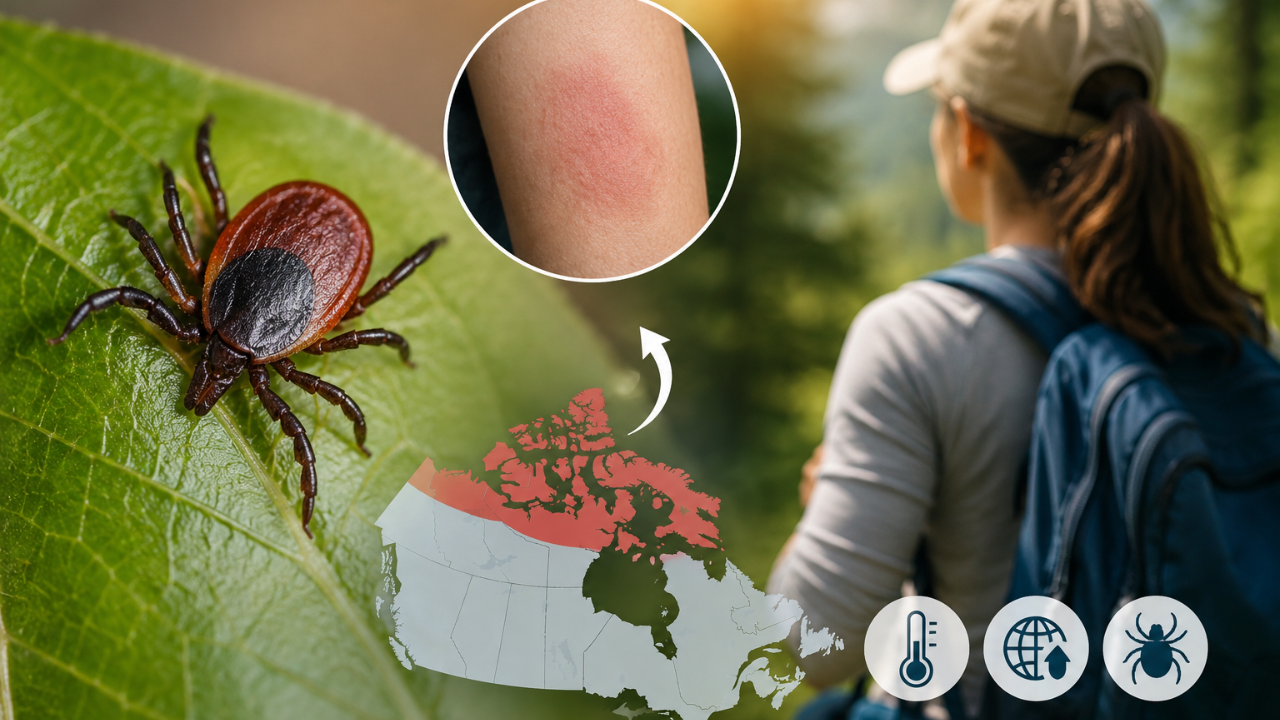
Due to climate change, the range of disease-carrying ticks across Canada have increased. Health experts have recently warned about a lesser-known infection that is spreading across the country rapidly. It is called anaplasmosis. For years, Lyme disease has dominated conversations around tick bites. Experts are now saying that another illness transmitted by the same black-legged tick is spreading into new regions as warmer temperatures create favorable conditions for ticks to thrive. Tick-Borne Infection Plagues Canada The warning comes after a recently published report in the Canadian Medical Association Journal (CMAJ) highlighted anaplasmosis as an emerging disease in Canada. Experts urged healthcare providers to diagnose it early as delayed treatment can lead to severe complications. The report described a patient who developed heart inflammation (myocarditis), after contracting the infection, highlighting the fact that while many cases are mild, some can become life-threatening. What Is Anaplasmosis? Anaplasmosis is caused by the bacterium Anaplasma phagocytophilum. It is transmitted through the bite of infected black-legged ticks (Ixodes scapularis) and western black-legged ticks (Ixodes pacificus). Unlike Lyme disease, which primarily affects the skin, joints and nervous system, anaplasmosis infects white blood cells, weakening the body's immune system. The symptoms of anaplasmosis commonly develop within one to two weeks after a tick bite and often resemble the flu. They include: Fever and chillsSevere headacheMuscle achesFatigueNausea or loss of appetiteAlso read: Bella Hadid Opens Up About Challenges Of Living With Lyme DiseaseWhy Anaplasmosis Cases Are Rising In Canada? Warmer and longer spring and summer and shorter winters are creating the ideal breeding grounds for black-legged ticks. These ticks are expanding farther north into regions where they previously could not survive. At the same time, warmer conditions are extending the period during which ticks remain active. Public health officials say that ticks can now be active whenever temperatures remain consistently above freezing. The Public Health Agency of Canada has reported that the geographic range of ticks carrying diseases such as Lyme disease, anaplasmosis and babesiosis continues to expand across several provinces, including Ontario, Quebec, Manitoba, New Brunswick and parts of Atlantic Canada. Early Detection And Diagnosis Are The Key Although many people recover completely with prompt treatment, anaplasmosis, if left untreated, can cause serious complications affecting the lungs, kidneys, nervous system and heart. Older adults, people with weakened immune systems and those whose treatment is delayed face the highest risk of severe illness. Canadian health authorities recommend that treatment begin as soon as doctors suspect anaplasmosis rather than waiting for laboratory confirmation, since early intervention significantly improves outcomes. Protecting yourself during tick season is one of the ways to ward off risk of infection. Health officials recommend several simple precautions to reduce the risk of tick bites: Wear long sleeves and long pants in wooded or grassy areas.Apply insect repellents containing DEET or icaridin.Perform thorough tick checks after spending time outdoors.Remove attached ticks immediately. As Canada's climate continues to warm, experts say the country's tick-borne disease landscape is changing rapidly. While Lyme disease remains the most recognized threat, physicians warn that anaplasmosis is no longer a rare infection.