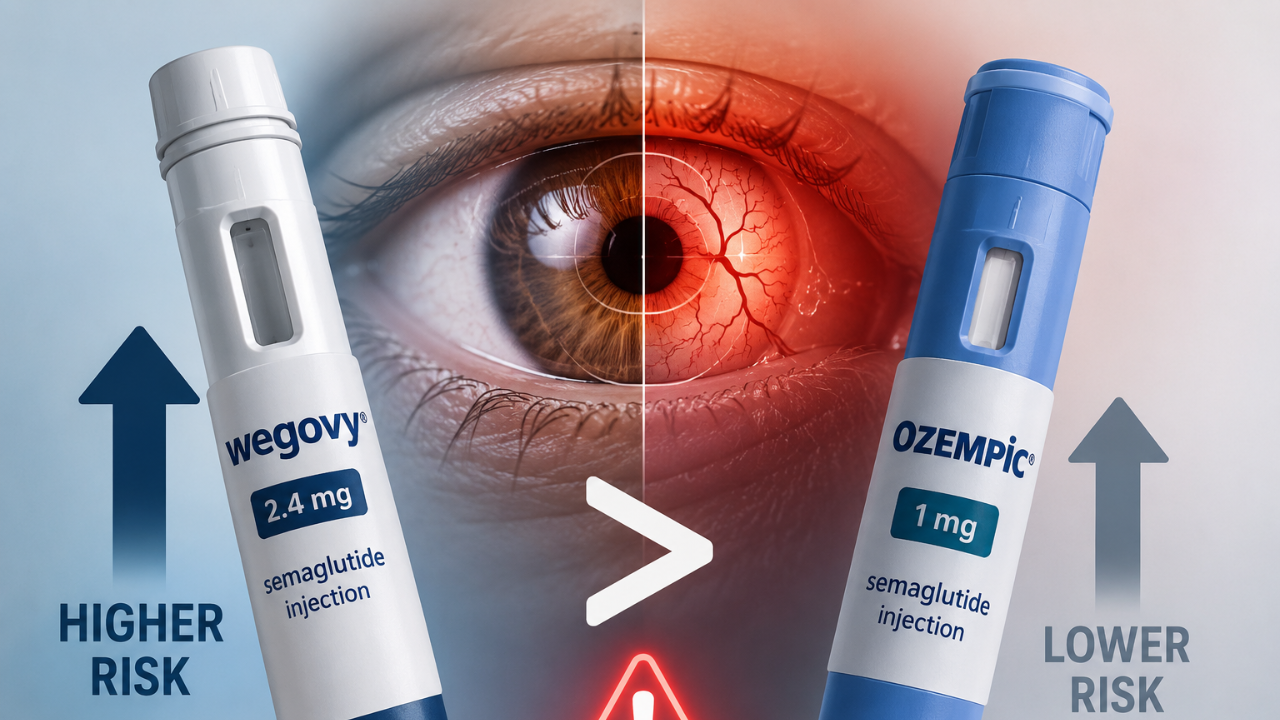
A new safety analysis has found that Wegovy, the recently launched blockbuster weight loss medication containing semaglutide, may cause a rare but dangerous eye condition that can lead to sudden and permanent vision loss. The analysis, published in the British Journal of Ophthalmology, compared Wegovy, semaglutide tablets and other GLP-1 drugs like Ozempic by examining more than 30 million reports from the U.S. Food and Drug Administration's Adverse Event Reporting System (FAERS) submitted between 2017 and 2024. Scientists found a safety signal that linked semaglutide medicines to non-arteritic anterior ischemic optic neuropathy (NAION), also known as eye stroke. Wegovy More Likely To Cause Blindness Than Ozempic The signal appeared to be nearly five times stronger for Wegovy than for Ozempic, despite both medicines containing the same active ingredient, semaglutide. NAION occurs when blood flow to the optic nerve suddenly gets reduced, causing damage to the nerve responsible for transmitting visual information from the eye to the brain. The patient experiences painless vision loss in one eye. While some patients experience partial improvement, the vision loss is frequently permanent. There is currently no proven treatment to reverse the damage. Researchers state that the findings do not prove that Wegovy causes NAION. Instead, they observe a typical signal, meaning an unexpected pattern observed in a large safety database that requires immediate further investigation. Such pharmacological analyses are useful for identifying rare and adverse side effects that may not emerge during clinical trials. Why Wegovy Poses A Greater Risk Of Rare Blindness? Also read: Novo Nordisk Launches Awiqli In India: All About The World's First Once-Weekly InsulinThe stronger link observed with Wegovy and NAION compared with Ozempic has also raised new questions. Both drugs contain semaglutide, but Wegovy is prescribed at higher doses for obesity, while Ozempic is used to treat type 2 diabetes. Researchers say that factors such as higher dosing, differences in patient populations, or underlying health conditions could help explain the disparity, although more research is needed. The latest findings build on growing scientific interest in the potential eye-related risks of GLP-1 receptor agonists. Previous observational studies have also reported an increased risk of NAION among semaglutide users, prompting regulators in Europe to add the condition as a very rare side effect to semaglutide product information last year. Health experts emphasize that patients should not stop taking Wegovy without consulting their healthcare provider. For most users, the drug's benefits in managing obesity and reducing associated health risks are likely to outweigh the extremely rare risk of developing NAION. However, anyone taking Wegovy who experiences sudden blurred vision or loss of vision should seek immediate medical attention. Wegovy Manufacturer Explores Semaglutide Implant The GLP-1 medication industry is in a boom. Novo Nordisk, the maker of GLP-1 medicines like Ozempic and Wegovy, is currently exploring a new way to deliver weight-loss treatment that could reduce the need for weekly injections. The implant, known as NPM-139, is a miniature device developed using Vivani Medical's proprietary NanoPortal technology. Rather than requiring patients to inject semaglutide every week, the tiny implant is placed beneath the skin and slowly releases the medication over an extended period. If successful, it could mark a significant step toward making GLP-1 drug more convenient for people living with obesity.