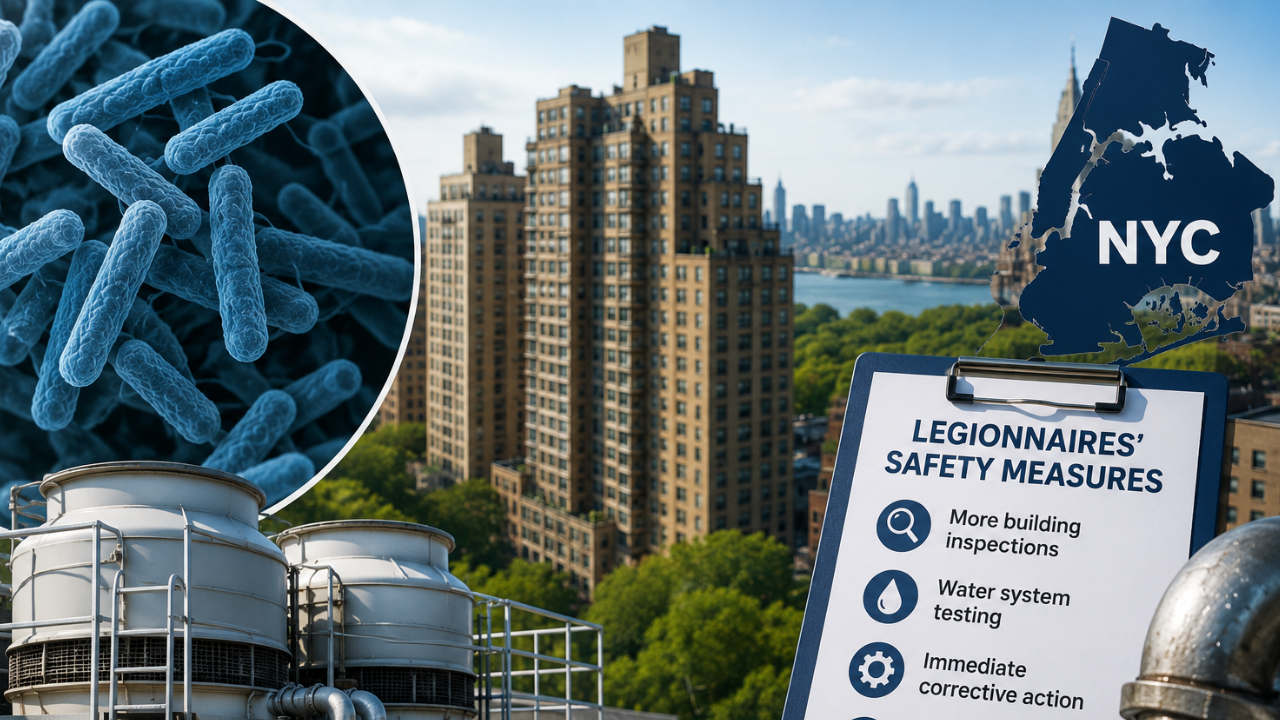
New York City just rolled out new measures in a response to prevent Legionnaires’ disease after a major outbreak on the Upper East Side left 11 people dead and 94 infected.The new measures, announced by Mayor Zohran Mamdani and the NYC Health Department on September 1, aim to improve monitoring of cooling towers, speed up testing and enforcement, and make information about possible risky systems easier for the public to access. The Upper East Side cluster, which affected the Carnegie Hill and Yorkville neighborhoods, has now ended in terms of exposure. However, investigation is still in progress to find out exactly how the outbreak began. Whole-genome sequencing results expected this fall could help determine whether the Legionella strain found in patients matches bacteria detected in nearby cooling towers. What Safety Measures Has NYC Announced?Also read: Parkinson’s Is Rising Across US, But Not Equally: Why Are Some States Seeing More Cases Than Others?One major change will connect the Health Department's cooling tower registration system with the Department of Buildings' construction permitting system.The goal is to identify unregistered cooling towers before they begin operating, after the city found unregistered systems during both the Upper East Side investigation and a previous outbreak in Central Harlem.New York will also create a citywide map of registered cooling towers, allowing residents to see their locations and review inspection histories, including whether buildings have complied with Legionella sampling requirements. The map and an annual public education campaign are expected by spring 2027. Cooling tower owners cited for violations will receive the earliest hearing date permitted, which is 15 days after a summons is served. Since May 8, the Health Department has conducted 800 field inspections, with more than 460 resulting in at least one violation. The city says $80,500 in fines have been paid. Why Are Cooling Towers Important?Also read: US Newborns Are Missing A Crucial Vitamin K Shot Which Can Lead To Brain BleedingLegionella bacteria can grow in warm water systems and become a health risk when contaminated water produces tiny droplets or mist that people breathe in.Cooling towers are among the systems that can allow the bacteria to spread through the air. Most people exposed to Legionella do not become ill, but the risk is higher among older adults, smokers and people with chronic diseases or weaken immunities. Legionnaires’ disease is a severe form of pneumonia. Symptoms can include fever, cough, muscle aches, headache and shortness of breath, and the infection can become life-threatening. Legionnaires’ does not spread from person to person. Speedy Testing And New Cooling Technology As of August 31, 94 people had been diagnosed and 11 had died in the Upper East Side cluster. No patients remained hospitalized.The Health Department plans to explore and implement faster culture-testing methods and other approaches that could reduce the time needed to confirm whether Legionella is present. This could be key in preventing future outbreaks. The Upper East Side had nearly four times as many cooling towers in the affected area as were identified during the 2025 Central Harlem cluster, making rapid testing considerably more challenging. The city will also establish a scientific team to examine new cooling tower technologies and alternative cooling systems.Mayor Mamdani said, "New Yorkers deserve a government that moves with urgency to keep them safe."NYC Health Commissioner Dr Alister F. Martin added, "Rigorous standards only matter if we are constantly working to make them stronger."