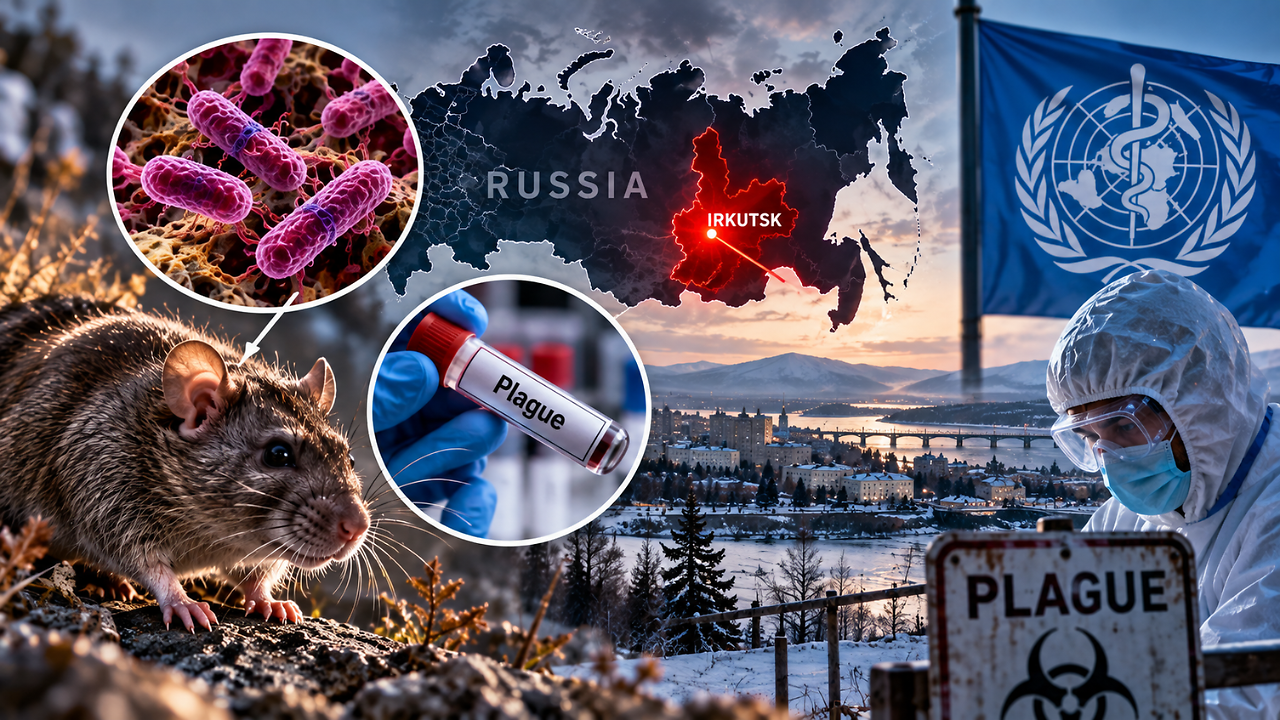
Russia has told the World Health Organization (WHO) that no cases of plague have been recorded in Irkutsk, the Siberian city that has sparked international headlines after a laboratory worker from an anti-plague research institute died after suspected exposure to pneumonic plague infection.The WHO said Russian authorities responded on October 6 to its request for information under the International Health Regulations (IHR), saying the woman’s illness had initially appeared to be a typical acute respiratory viral infection.Russia also reported that no plague case had been recorded in Irkutsk, either in the woman or among her contacts.However, the exact cause of the woman’s death still remains unclear.Russia Says No Plague Cases In Irkutsk View this post on Instagram A post shared by Tedros Adhanom Ghebreyesus (@drtedros)]]>The WHO recently said, “WHO is aware of media reports that a laboratory worker in Irkutsk oblast, in the Russian Federation, died of suspected pneumonic plague, and that nearly 200 of her contacts were under medical observation and being tested."“On 3 October, WHO asked the Russian authorities under the International Health Regulations (IHR) for any further information they had, so we could assess the risk.” The WHO said Russia reported that “no case of plague has been recorded in Irkutsk, either in her or in anyone else.”Adding further, the health body said, "They informed WHO that an epidemiological investigation had been conducted, preventive and control measures implemented, and identified contacts placed under medical observation and tested. They reported that no high-threat pathogens had been detected among the contacts and that medical observation of all identified contacts had been completed."But the agency is still seeking an answer on what caused the fatal pneumonia as the lab worker's death still remains a mystery. It said, “WHO has remained in contact with the Russian health authorities and has offered technical support. WHO has requested further information to clarify the cause of the severe pneumonia, the pathogen that prompted the public health measures, and media reports of a second employee with pneumonia of undetermined cause.”Also read: Russia Plague Scare: What Black Death and Anthrax Outbreaks Teach Us About Lab SafetyLab Worker's Death Still Remains UnexplainedThe 28-year-old woman, identified by Russian media as Darya Shipilova, worked at the Irkutsk Anti-Plague Research Institute of Siberia and the Far East. She died on October 2 after developing severe pneumonia of "unknown origin", according to Russian authorities.Her death sparked precautionary measures including quarantine. According to reports, around 200 people who had contact with her placed under medical observation. Russian health authorities said testing of those contacts found no dangerous infectious-disease pathogens. Some contacts reportedly tested positive for COVID-19 or rhinovirus.Reports circulating on social media claimed she may have been infected after a laboratory accident involving Yersinia pestis, the bacterium that causes plague. Russian authorities have rejected the laboratory-accident theory, and there is currently no independent evidence confirming that such an incident occurred.Also read: Russia Plague Scare: Is Pneumonic Plague Deadlier Than Bubonic & Septicemic Plague?What Could Confirm Plague?Javier Pizarro-Cerda, head of the Yersinia Research Unit at the Institut Pasteur in Paris, told CNBC that he was “very surprised” by the reported death because laboratories handling plague generally use strict protective measures.“You work with a full body suit. You work with masks. You work with gloves. So even if you break a tube, normally you should be protected,” he said.Pizarro-Cerda also said Russia has a plague vaccine, although he described its protection as low and transient compared with standards elsewhere.Pizarro-Cerda said plague testing can be performed rapidly and that an autopsy should provide evidence if the woman had pulmonary plague.The laboratory worker reportedly died on October 2, giving authorities several days to conduct diagnostic tests. Still, there is no confirmation that pneumonic plague caused her death or that a laboratory accident occurred.Key questions remain whether Yersinia pestis was detected, whether there was evidence of laboratory exposure, and whether genetic testing can establish the source of any infection.The suspected plague is still being investigated. The concern stems partly from the nature of the institute where Shipilova worked. The facility studies dangerous pathogens, including plague, in a region where the disease occurs naturally among wild animals.Pneumonic plague is the most severe form of plague because it affects the lungs and can spread between people through respiratory droplets. Plague is treatable with antibiotics when diagnosed and treated promptly.The WHO has assessed the public-health risk as moderate-to-low for Irkutsk, low for Russia overall and very low for the WHO European region.