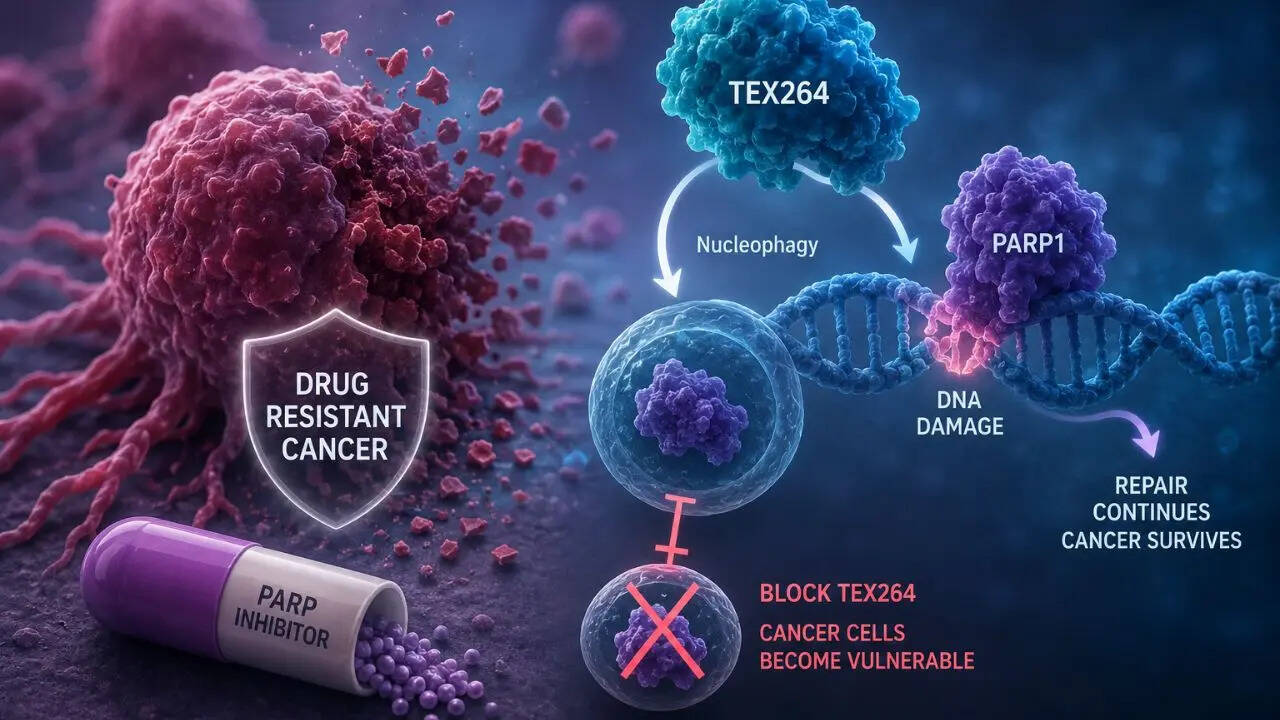
Scientists have discovered an Achilles' heel that helps some of the most aggressive cancers escape treatment. The discovery that could pave the way for new targeted therapies against specific drug-resistant tumours. Researchers at Nanyang Technological University (NTU) Singapore, identified a protein called TEX264 that enables cancer cells to escape the therapeutic effects of a widely used class of targeted cancer drugs known as PARP inhibitors. The study is published in Nature Cell Biology. What Does This Mean For Drug-Resistant Cancers? The findings could have positive implications for patients with triple-negative breast cancer, as well as ovarian, prostate, and pancreatic cancers that are treated with PARP inhibitors. These cancers eventually become resistant to the drugs. "Our findings have identified a new biological process involving TEX264 as a key mechanism of drug resistance in an aggressive form of cancer," said Professor Kristijan Ramadan, who led the research. "We coined this new biological mechanism 'autophagy of DNA lesions', or simply 'nucleophagy'. This makes TEX264 a potential target for future cancer therapies."Also read: Don't Fear The Biopsy, Fear The Delay How Do Some Cancers Escape Treatment? PARP inhibitors work by blocking PARP1, a protein that repairs damaged DNA inside cancer cells. Without this repair system, tumour cells accumulate DNA damage and die. However, many cancers eventually become resistant to this treatment. The researchers discovered that TEX264 helps remove trapped PARP1 proteins from damaged DNA through a newly identified clean-up process called nucleophagy, allowing cancer cells to continue repairing themselves and escape the treatment. This is the cellular recycling system that makes cancer resistant to treatments. When scientists blocked TEX264 in experiments, PARP1 remained stuck on DNA, DNA damage accumulated, and the cancer cells became far more vulnerable to therapy.Also read: US FDA Approves New Blood Test To Screen For Colorectal Cancer What Are PARP Inhibitors? PARP inhibitors are targeted anti-cancer medicines used to treat tumours that already have defects in DNA repair genes like BRCA1 or BRCA2. They are approved for several cancers, including ovarian, breast, prostate, and pancreatic cancer. While many patients initially respond well, resistance develops in an estimated 40% to 70% of breast and ovarian cancer cases.Also read: Scientists Find Rare Contagious Skin Cancer In Fish From US, Canada: Should Humans Worry? Importance Of This Study Instead of targeting the DNA repair machinery directly, the new study targets an entirely different weak spot, the cellular cycle that cancer cells exploit to discard damaged repair proteins. Researchers believe drugs that inhibit TEX264 or block nucleophagy could potentially restore the effectiveness of existing PARP inhibitors, offering a new targeted treatment strategy for patients whose cancers no longer respond to therapy. The researchers caution that the findings are currently based on laboratory studies, and more research, including clinical trials, will be needed before therapies targeting TEX264 can reach patients. The promising results adds to growing efforts worldwide to overcome one of oncology's biggest challenges: preventing cancers from evolving resistance to life-saving treatments.