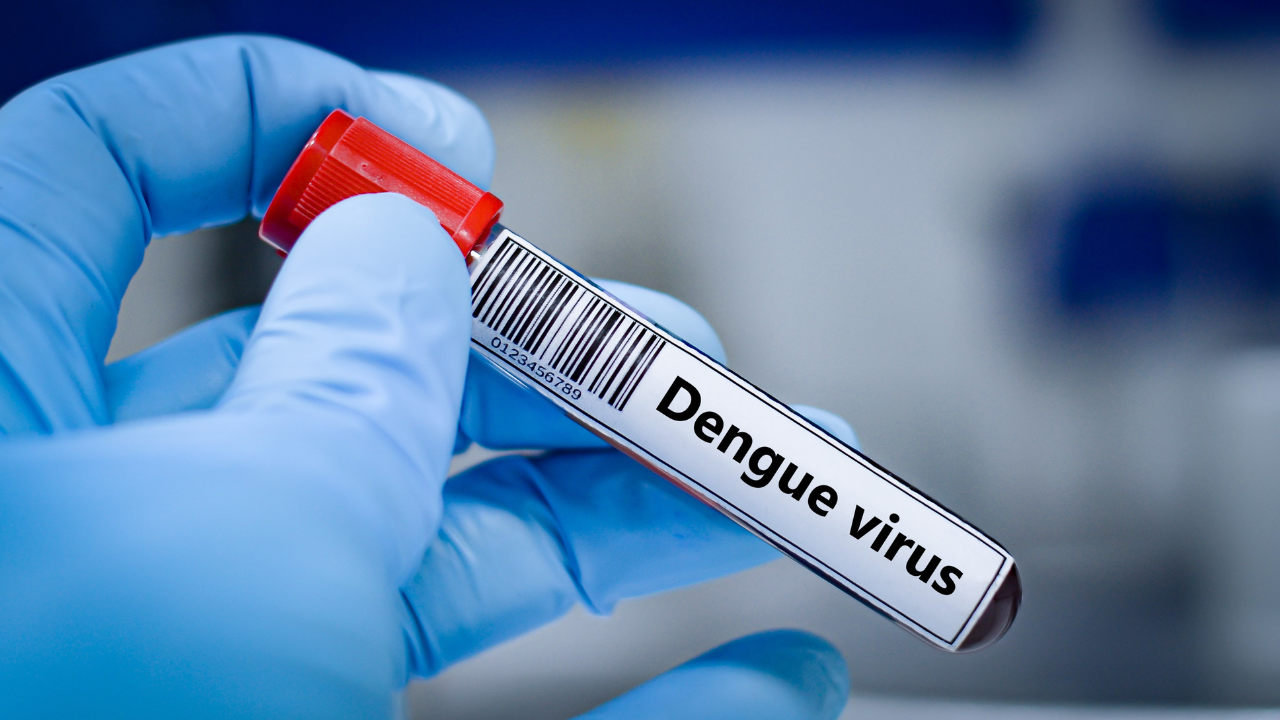
Even as dengue continues to wreak havoc globally, with more than 7.37 million cases reported worldwide so far in 2026, an experimental monoclonal antibody (mAb) has shown promise as a potential treatment in a Phase 2 trial.Led by Pune-based Serum Institute of India, the trial found that Dengue-mAb cleared dengue viremia and fever within 24 hours, offering early evidence of a potential therapeutic effect against the virus.“This first-in-patient phase 2 randomized clinical trial demonstrated the safety of Dengue-mAb and its action on the clearance of dengue virus and fever,” the researchers, including those from Serum, said. “This is, to our knowledge, the first evidence of a preliminary therapeutic effect in patients with dengue.”What Did The Trial Find?Detailed in JAMA Network Open, the researchers found that the experimental Dengue-mAb was safe and well-tolerated and showed evidence of a therapeutic effect.Dengue-mAb is a human-engineered, recombinant monoclonal antibody that neutralized all four dengue virus serotypes in animal studies and demonstrated safety in a Phase 1 trial in healthy adults.Also read: Dengue, Chikungunya, Zika-Carrying Mosquito Breeding In UK: Are You At Risk?The findings were based on a randomized, placebo-controlled trial involving 250 adults with dengue and a history of fever onset within 48 hours. Participants received one of four doses of Dengue-mAb — 3, 5, 7, or 9 milligrams per kilogram (mg/kg) — or a placebo, with 50 participants assigned to each group.The primary outcomes were reduction in viremia at 24 hours and causally related serious adverse events (SAEs).The antibody showed rapid activity against dengue virus and fever at all four dose levels tested.Among participants who had detectable viremia at baseline, those treated with the 5- to 9-mg/kg doses became negative for dengue virus by eight hours, compared with 72 hours with placebo.At 24 hours, fever clearance ranged from 92.9% to 100% in the Dengue-mAb groups, compared with 58.3% in the placebo group.Why Does This Matter?Read More: Dengue Is Spreading Beyond Monsoons And Into New Regions Across India, Says Expert Dengue affects more than 200 million people each year, mainly in tropical and subtropical regions, and is expanding into new areas amid climate change and rapid urbanisation. The incidence of severe disease is also rising, increasing the need for effective treatments.The result matters because there is currently no licensed antiviral drug for dengue anywhere in the world. Three vaccines are licensed, but people who develop dengue today generally receive supportive care, including fluids, fever control and monitoring, rather than a treatment that acts directly on the virus.Dengue-mAb targets the virus, not just the symptoms. The rapid reduction in viremia raises the possibility of a treatment that could change how dengue is managed. However, whether the antibody can prevent severe dengue, hospitalization or deaths is not yet known.Much of the dengue burden falls on health systems that may struggle to deliver an infused biologic to outpatients within 48 hours of fever onset.What Happens Next? The finding is still early. Phase 2 trials assess whether a drug produces a measurable effect in a relatively modest number of patients. They are not the studies regulators use to approve a medicine, and this candidate remains years away from becoming widely available.Dengue Cases Worldwide And In IndiaAccording to WHO global surveillance data, more than 7.37 million dengue cases have been reported worldwide, including about 2.83 million confirmed cases and more than 5,100 deaths. India has reported more than 33,000 cases and over 40 deaths.