
- Health Conditions A-Z
- Health & Wellness
- Nutrition
- Fitness
- Health News
- Ayurveda
- Videos
- Medicine A-Z
- Parenting
Sonia Gandhi Admitted To Hospital, Doctors Say 'Nothing Serious'

Wikimedia Commons
Sonia Gandhi, Congress Parliamentary Party chairperson was admitted to the Sir Ganga Ram Hospital on March 24, 2026 in late evening. As per reports, she was feeling unwell due to the change in weather and has been put under observation.
Team of doctors who is attending her said that there is nothing serious.
Earlier this year in January, Sonia Gandhi was admitted to Sir Ganga Ram Hospital after she suffered respiratory discomfort.
What Happened To Sonia Gandhi Early This Year?
While reports mentioned that her condition was "absolutely stable", she had a problem of chronic cough. This was due to capital city's pollution. Due to increase in population during the peak winter season in Delhi, she had been regular with hospital visits and check-ups. Hospital source, while speaking to the news agency PTI said that "it is a routine admission".
Read: Sonia Gandhi Admitted to Hospital After Delhi Pollution Aggravates Bronchial Asthma
Did Delhi Pollution Make Sonia Gandhi Sick?
According to reports, she had complained of some respiratory discomfort. Once her medical examination was done, it was found that "her bronchial asthma had been mildly exacerbated", confirmed Dr Ajay Swaroop, Chairman of the hospital. A hospital source told PTI that this is due to the combined effects of cold weather and pollution.
As a precautionary measure, she was admitted in hospital for further observation and treatment. The physicians who were treating her took a decision on her discharge based on her clinical progress.
Sonia Gandhi's Health History
On June 7, 2025, she was admitted to the Indira Gandhi Medical College and Hospital (IGMC) in Shimla for a routine medical-check up. She was also later discharged after her medical examination. As per Naresh Chauhan, Principal Advisor (Media) to the Himachal Pradesh Chief Minister, she was brought in due to minor health concerns. However, he said that after being put in observation by doctors to assess her condition, she was stable.
Dr Aman Chauhan, Deputy Medical Superintendent at IGMC said, "Her blood pressure was slightly on the higher side, but there is nothing serious. No additional tests were conducted; only routine investigations were carried out. She was not given any special medical advice because everything was perfectly fine."
In the same month on June 15, she was admitted to Sir Ganga Ram Hospital again under the Department of Surgical Gastroenterology for a stomach-related issue. Before that she was again in the Delhi hospital on June 9, for a medical check up.
Earlier in September 2022, she travelled to the United States for a deferred medical check-up which was postponed due to the COVID-19. Due to this she missed a significant portion of the Monsoon Session of Parliament in 2022. Her son and Congress leader Rahul Gandhi accompanied her during the trip.
India Launches Second Intensified 100-day TB Mukt Bharat Campaign
Credit: PIB
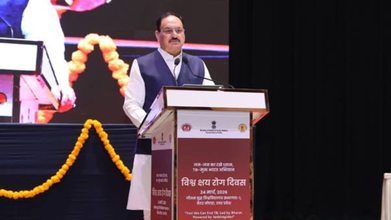
After the huge success of the first phase of its 100-day TB Mukt Bharat campaign in 2025, India has launched the next phase of a focused and intensified campaign to end tuberculosis — the most infectious disease in the world — in the country.
The campaign was launched by Union Minister for Health and Family Welfare Jagat Prakash Nadda at a national-level event held in Greater Noida to commemorate World TB Day 2026.
He reaffirmed India’s unwavering commitment to eliminating tuberculosis, ahead of the global Sustainable Development Goals target of 2030.
The second phase marks “a decisive, mission-mode push to accelerate progress towards TB elimination”, the Ministry of Health said.
The campaign is expected to “cover 1.58 lakh villages and urban wards, each guided by granular, locally tailored micro-plans, ensuring precision in implementation and measurable outcomes,” it added. The villages and wards were identified using AI-based assessment of 30+ indicators.
“World TB Day 2026 as both a moment of reflection and a renewed call to action in India’s journey towards a TB-Mukt Bharat,” said Nadda, while delivering the keynote address.
The 100-day campaign
The 100-day campaign was first launched on December 7, 2024, and it continued till March 24. It aims to accelerate TB detection, rapid decline in TB incidence, finding of missing cases, reducing mortality, and following a Jan Bhagidari or community approach.
In 2025, the campaign targeted a selected 347 high-priority districts across 33 States/UTs. It was later scaled nationwide and deployed advanced tools such as portable X-rays, AI-enabled diagnostics, and molecular testing.
Nadda noted that the 100-day campaign led to the detection of “nearly 10.9 lakh asymptomatic patients who exhibited no classical symptoms at the time of testing”.
The campaign led to the identification of the “invisible” pool of infection that would otherwise have remained undetected and contributed to continued transmission in the community, the Minister said.
Other key milestones achieved in the fight against TB since December 2024 include:
- screening of vulnerable population – more than 20 Crores
- new TB patients diagnosed - 32,65,215
- asymptomatic patients diagnosed - 10,90,742
- TB preventive treatment initiated - 16,45,493
- Ni-kshay Poshan Yojana paid - 8,36,754
- New Ni-kshay mitras registered - 5,40, 028
- Food Basket distributed - 31, 91, 091.
India Acing Forward In Fight Against TB
In 2024, India notified 26.18 lakh TB cases — the highest so far. TB notification has remained a key area of concern. A total of 67, 933 gram panchayats have achieved the TB-free status, the Ministry
“Over the past decade, India’s TB response has evolved into a transformational, people-centric movement, driven by innovation, equity, and strong political commitment,” Nadda said.
Also read: Tuberculosis in 2026: Why It Still Remains India’s Silent Epidemic
The Minister highlighted key achievements from 2015 to 2024. This includes:
- a 21 percent reduction in TB incidence — from 237 to 187 per lakh population
- a 25 percent decline in TB mortality — from 28 to 21 per lakh population
- treatment coverage increased — 92 percent from 53 percent in 2015
- sharp decline in undetected cases — from >10 lakhs annually to <1 lakh
- treatment success rate increased — 90 percent — higher than the global rate of 88 percent.
- Over 3,000 handheld AI-enabled X-ray units deployed
- NAAT laboratories scaled up to over 9,800
- TB services integrated across 1.8 lakh Ayushman Arogya Mandirs
- Nikshay Poshan Yojana transferred over Rs 4,590 crore to 1.39 crore TB patients since 2018
- Ni-kshay Mitra initiative participation increased to over 7.16 lakh citizen.
Harish Rana’s Family Donated His Heart Valves And Corneas After His Death From Passive Euthanasia
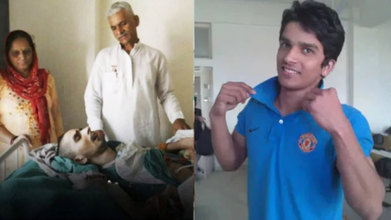
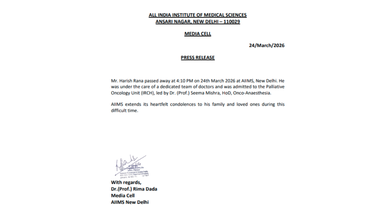
After 13 years of wait, on March 24, at 4.10pm, Harish Rana took his last breath in AIIMS Delhi and became the very first case of passive euthanasia in India. Two days after the Supreme Court permitted euthanasia in his case, on March 14 he was shifted to AIIMS Delhi and his life support was withdrawn. He waited for ten days without any life support.
Harish Rana Donates Heart Valves and Cornea
News agency ANI also noted that his family donated his corneas and heart valves after his death. As per the Association for Advancing Tissue and Biologics, heart valves can be donated after death and used in life-saving and life-enhancing transplants. The National Institutes of Health notes that valves are typically removed within 24 hours of death.
NHS Organ Donation notes that since corneas do not contain blood vessels, it eliminates the risk of transmitting most types of diseases. The donated cornea could be used for patients experiencing corneal blindness or damage to restore sight. The cornea is usually removed in a 15-minute procedure after 6 to 8 hours of death.
Read: Harish Rana, India’s First Passive Euthanasia Case, Dies at AIIMS
Harish Rana - First Case of Passive Euthanasia In India
It was in 2013 when he suffered severe head injuries after he fell from the fourth floor from his PG accommodation while he was studying at Panjab University. He had been bedridden ever since, and survived on feeding tube. His father filed a petition seeking passive euthanasia under the guidelines Supreme Court had laid down in 2018 under Common Cause judgment. This is the second time the parents have approached the apex court.
In 2024, the court also suggested that Rana could receive home-based care with support from the Uttar Pradesh government. The home-based care includes periodic visits by doctors and physiotherapists. The court suggested that in case home care was not feasible, he could be moved to Noida's district hospital. However, his parents have noted that his condition continued to worsen. Family advocate Rashmi Nandakumar also informed the bench that "nothing seems to be working out".
"He is falling ill quite often and is repeatedly admitted to hospital," she said. The advocate further added that the family only sought passive euthanasia, which is withdrawal of treatment, and not any active intervention.
Justice Pardiwala also read medical reports and observed, "Just look at the condition of the boy. It's pathetic."
Recent court ruling on this case involved a bench comprising Justice JB Pardiwala and Justice KV Viswanathan that allowed the withdrawal of life support for Harish Rana.
Shingella Outbreak: What Should You Know About The Infection

Credits: Canva
European health agencies are flagging a rise in infections caused by Shigella infection among travellers returning from Cape Verde, prompting renewed focus on hygiene and food safety during international travel.
What is Shigella and why is it concerning?
Shigella is a highly infectious bacteria that causes gastrointestinal illness, commonly known as shigellosis. Symptoms typically include diarrhea, fever and stomach cramps, which can range from mild to severe. Globally, the burden is significant. Estimates suggest around 188 million cases occur each year, leading to over 1.6 lakh deaths.
The infection spreads easily through contact with contaminated food, water or surfaces, and even through person-to-person transmission. This makes it particularly concerning in travel settings such as hotels and resorts, where shared facilities are common.
Cases linked to Cape Verde travel
Health authorities in Europe have observed a noticeable uptick in travel-related infections. According to surveillance data, the UK Health Security Agency reported 158 cases since October 2025, with a majority linked to international travel. Among these, most travellers had recently visited Cape Verde, particularly popular tourist areas like Santa Maria and Boa Vista.
Similarly, the European Centre for Disease Prevention and Control has tracked hundreds of cases across multiple countries, including the UK, France, Sweden and the Netherlands. Investigations suggest that many infections are caused by a specific strain of Shigella sonnei, indicating a possible common source or ongoing transmission route.
However, authorities note that while the numbers are higher than expected, the situation does not necessarily meet the threshold of a large-scale outbreak.
Is it an outbreak or not?
There is a difference in how the situation is being interpreted. European agencies have described it as an outbreak due to the rise above typical background levels. In contrast, Cape Verde’s public health officials maintain that their surveillance systems have not detected an outbreak.
Local authorities point out that cases of diarrhea can increase in hotel settings worldwide and that not all rapid tests used in private clinics are specific to Shigella. More detailed investigations are currently underway to determine the exact source of infections.
Who is most at risk?
Certain groups are more vulnerable to infection. These include young children, people with weakened immunity, and those travelling abroad. Experts also note that exposure risk increases in environments where hygiene practices may vary.
Interestingly, many affected travellers were staying in high-end, all-inclusive resorts, suggesting that even premium accommodations are not immune to such risks.
Travel advice and precautions
Despite the concerns, Cape Verde’s tourism authorities continue to emphasize that the destination remains safe. With over 1.2 million visitors annually, including a large number from the UK, officials argue that the proportion of infections remains relatively small.
Health experts agree that the focus should be on prevention rather than avoidance. Simple measures can significantly reduce risk. These include frequent handwashing, using hand sanitizers, and consuming freshly cooked, well-heated food. Avoiding raw or undercooked items and being cautious with water sources is also recommended.
Travel medicine specialists highlight that gastrointestinal illness is relatively common during international travel, especially in warmer destinations. In fact, a significant proportion of travellers may experience some form of digestive issue during their trips.
- Follow Us :


© 2024 Bennett, Coleman & Company Limited