
- Health Conditions A-Z
- Health & Wellness
- Nutrition
- Fitness
- Health News
- Ayurveda
- Videos
- Medicine A-Z
- Parenting
Statin Muscle Pain: Scientists Finally Explain What That Is
Credits: iStock
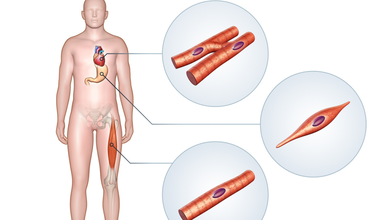
Statin pain and what is it, scientists finally explain. A study by University of British Columbia finally explained what statin muscle pain is and what triggers it. Statins have long been a cornerstone of cardiovascular care. By lowering “bad” LDL cholesterol, these drugs have significantly reduced the risk of heart attacks and strokes for millions worldwide. Yet, for a notable number of users, statins come with an uncomfortable trade-off: muscle pain, weakness, and, in rare cases, severe muscle breakdown that can even lead to kidney failure.
For years, doctors have known that these side effects occur, but not why. Now, a new study offers a detailed answer.
Researchers from the University of British Columbia (UBC), in collaboration with the University of Wisconsin–Madison, have identified the molecular trigger behind statin-related muscle problems. Their findings, published in Nature Communications, could pave the way for safer cholesterol-lowering drugs in the future.
Why Do Statins Affect Muscles?
Muscle-related side effects are among the most common reasons people stop taking statins. Symptoms range from mild soreness and fatigue to rhabdomyolysis, a rare but dangerous condition where muscle tissue breaks down and releases proteins that can damage the kidneys.
Until now, the biological mechanism behind this damage remained unclear. The new research zooms in on what happens inside muscle cells when statins are present.
Statin: The Role of Calcium in Muscle Cells
To understand the problem, researchers focused on a protein called the ryanodine receptor (RyR1), which plays a critical role in muscle contraction. RyR1 acts as a gatekeeper, controlling the release of calcium inside muscle cells. Calcium is essential for muscle movement, but only in carefully regulated amounts.
Using cryo-electron microscopy, an advanced imaging technique that allows scientists to view proteins in near-atomic detail—the team observed how statins interact with this receptor.
What they found was striking: when statins bind to RyR1, they force the channel to remain open. This leads to a constant leak of calcium into the muscle cell. Over time, this calcium overload becomes toxic, damaging muscle tissue and explaining the pain, weakness, and, in severe cases, muscle breakdown seen in some patients.
A Closer Look at How Statins Bind
The study examined atorvastatin, one of the most widely prescribed statins globally. However, researchers suggest the same mechanism may apply across the statin class.
They discovered that statins bind to RyR1 in an unusual three-part formation. One statin molecule attaches while the channel is closed, priming it to open. Two additional molecules then bind, forcing the channel fully open and keeping it that way. This sustained opening is what causes the harmful calcium leak.
This detailed binding pattern offers the clearest explanation yet for statin-induced muscle side effects.
What This Means for Future Treatments
While severe muscle injury affects only a small fraction of the more than 200 million statin users worldwide, milder symptoms are far more common and often lead patients to discontinue treatment. This is a serious concern, as stopping statins increases cardiovascular risk.
The new findings provide a potential solution. By modifying the parts of statin molecules that interact with RyR1—while preserving their cholesterol-lowering effects—scientists may be able to develop safer statins with fewer muscle-related side effects.
Why This Study Matters
Beyond statins, the research highlights how advanced imaging technologies are transforming medicine. By visualizing drug–protein interactions at near-atomic resolution, scientists can move from observing side effects to understanding their exact cause.
For patients, this could mean a future where statins remain just as effective—but far easier on the muscles, improving long-term adherence and overall quality of life.
41 million children aged 5-19 living with high BMI in India: Study

Credit: iStock
A whopping 41 million children between the ages of 5 and 19 are living with high body mass index (BMI) in India, according to a recently released report.
The World Obesity Atlas 2026 shows that India is now among the top three countries globally for the highest number of children affected by overweight.
Nearly 14 million children in the same group were also found to be obese, the report showed.
In children aged 10-19 years, more than 26.402 million were overweight or obese.
Between 2010 and 2025, India had a 4.8 percent increase in the prevalence of high BMI and obesity among children aged 5-19 years.
High BMI To Surge Chronic Disease By 2040 In India
By 2040, the report also projected a substantial increase in the risk of diseases among children aged 5-19 years due to a high BMI in India. This includes:
- Hypertension (high blood pressure) is expected to spike by 4.21 million from 2.99 million
- hyperglycemia (high blood sugar) to 1.91 million from 1.39 million
- high triglycerides (excess fats in the blood) to 6.07 million from 4.39 million
- metabolic dysfunction-associated steatotic liver disease (MASLD) to 11.88 million from 8.39 million
Childhood obesity in India is expected to surge to a whopping 56 million by 2040 -- nearly a 20 percent rise from 2025, according to the report released by the World Obesity Federation.
Of the 56 million, about 20 million children in the country will be obese, while the remaining 36 million will be overweight.
Globally, the number of children aged 5-19 years living with obesity or overweight is predicted to increase to 507 million by 2040 -- from 419 million in 2025.
Another report, Children in India 2025, raised the concerns of high triglyceride levels -- too much fat in the blood -- among children in India. Over one-third of Indian children aged 5–9 have high triglycerides.
High Triglycerides can increase the risk of heart disease, Type 2 Diabetes, fatty liver, and pancreatitis, especially when combined with obesity or unhealthy lifestyles.
How To Prevent
“Don't keep on buying junk food from outside. Second, get the child involved in activity, physical activity, sports, and games. Third, the family as a whole should commit to being healthy,” Dr. V Mohan, Chairperson of Dr. Mohan's Diabetes Specialities Centre, was quoted as saying to India Today.
He also urged to sleep on time, cut down on screen time, and not to watch toxic things on television.
"These three or four simple things if you do, childhood obesity can be reduced in India," the noted diabetologist said.
Amid rising levels of obesity in the country, Prime Minister Narendra Modi in January 2025 made a clarion call to fight obesity and reduce oil consumption. He called it a "hidden enemy" and a "silent crisis".
In response, the Central Board of Secondary Education (CBSE) oin May 2025 issued a directive to install "Sugar Boards" in schools.
Later in July, the Ministry of Health also asked for the installation of "sugar and oil boards" in government offices to help build a healthy India.
The boards consist of informative posters and digital boards highlighting the harmful impacts of the amount of sugar and oil present in popular food items. It also displays the effects of these foods on the human body as well as shares the recommended amounts of fat and sugar for individual intake.
Missouri Reports 2 Cases Of Deadly Clade I Mpox, US Tally Rises To 3 In 2026

Credit: Canva
Two adults living in Missouri have been diagnosed with the more severe Clade I Mpox, taking the total number of cases in the US to three this year.
As per the US CDC, since November 2024, there have been 12 reported cases of clade I Mpox in the country. With the two cases in Missouri, the total tally rises to 14.
The Missouri Department of Health and Senior Services (DHSS), in a statement, said that both individuals had recent international travel to countries where Mpox is more prevalent.
Further investigation revealed that the two cases are unrelated to one another and are not believed to be connected to any locally acquired Mpox cases.
“While risk to the general public remains low, Mpox is still active,” said Dr. George Turabelidze, state epidemiologist.
“We recommend those who are at risk for Mpox infection to get vaccinated and ensure they complete the 2-dose series,” Turabelidze added.
Earlier this week, New York City reported the first case of Mpox Clade I in the US.
Last week, health authorities in Argentina announced the country's first locally acquired case of mpox clade Ib, raising concerns about the potential for community transmission in South America.
Clade 1 Outbreaks
According to the CDC, more than 53,000 clade I monkeypox cases, including more than 200 deaths, have been reported in several countries in Central and Eastern Africa since January 1, 2024.
Between March 2025 and March 2026, 30 countries have reported 37,170 confirmed cases of the deadly strain, including 165 deaths.
The majority of the cases are reported from the Democratic Republic of the Congo, Sierra Leone, and Uganda.
The CDC maintains that the risk of clade I Mpox to the general public in the US remains low, while for men who have sex with men, it is low to moderate.
What is Mpox? Why is Clade 1 more deadly?
Mpox is a disease caused by two different genetic types of the mpox virus, called Clade I and Clade II.
The Missouri health department said that Clade I is more likely to cause severe illness and death, especially in people who have a weak immune system.
The latest records also show that Clade I has a mortality rate of 1-10 percent compared to Clade II’s 1-4 percent.
Both types of the virus spread primarily through direct physical contact with a symptomatic person with Mpox or through contact with used items contaminated with the Mpox virus. It is not spread through the air.
But, statistics have shown that Clade 1 infects children more than adults.
People with Mpox are considered infectious until all their lesions have crusted over, the scabs have fallen off and a new layer of skin has formed underneath, and all the lesions on the eyes and in the body (in the mouth, throat, eyes, vagina and anus) have healed too.
Other symptoms of mpox which may develop prior to a rash can include
fever,
chills,
headache,
exhaustion,
muscle aches,
sore throat,
swollen lymph nodes.
The CDC urges rapid response measures, such as contact tracing and vaccination, to effectively stop disease spread.
Vaccination reduces the risk of getting mpox and can reduce symptoms if infected.
Ozempic Will Go Generic, Weight-loss Drug Cost Could Lower By 90%
Credits: Canva
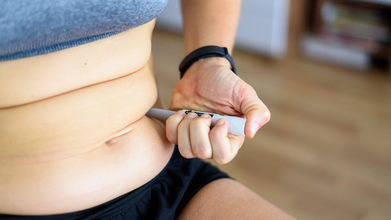
Semaglutide: Weight loss drug like Ozempic and Wegovy are going to go generic in countries. This means the drug, but in cheaper rates, will be available to the 40 per cent of the world's population.
Novo Nordisk that until now had the monopoly over the drug will lose patent protection in several of the world's most populous countries. Health and Me had also previously reported that the first generic version is expected to arrive in India by this weekend. Soon after, generic drugs will also become available in China, Canada, Brazil, Turkey, and South Africa.
“The availability of these drugs, which have been restricted to high-income countries to very wealthy people, will now be democratized by the generics,” said Leena Menghaney, an activist in New Delhi focused on treatment access. The new markets will open up a huge customer base for the generic weight loss drugs. In India and China, there are more than 800 million obese adults or overweight, and more than 300 million adults have diabetes.
Drugs Could Be Cheaper By 90%
The generic drugs are expected to hit the shelves of Indian markets by 21 March, and costs are expected to be lower by 90 per cent. Drug makers like Nacto Pharma and Eris Lifesciences announced to roll out the weight loss jabs over 50 per cent cheaper than the innovator's price in April. They have also introduced vials for Rs 1,300 per month, which is about 90 per cent cheaper than Ozempic.
Dr Reddy's Laboratories is also gearing up to launch its generic semglutide injection in the country in March under the brand name Obeda. Other companies like Sun Pharma and Zydus Lifesciences too are entering the rat race of launching multiple generic versions to make the treatment more affordable for patients with obesity and weight-related health risks.
Until the patent is expired, the semaglutide therapies are owned by the original company. In India, semaglutide injections like Ozempic and Wegovy are soled at a high cost that has limited accessibility to many patients.
Industry analysts, as reported by NDTV, expect that one generic semaglutide enters the market from March 21, 2026, prices could be cut roughly by 50 per cent as compared to the prices it started with. This means Wegovy which was previously sold for around Rs. 10,000 per month could fall somewhere between Rs 3,500 to Rs. 4,000 per month for starter doses.
Dr Reddy's Laboratories have positioned their generic brands competitively, and could potentially offer discounts of up to 50 to 60 per cent in early competition.
How Does Semaglutide Work?
Semaglutide works as a GLP-1 receptor agonist that mimics the GLP-1 hormone to regulate appetite and blood sugar. It slows gastric emptying and makes you feel fuller longer. It also signals the brain to reduce hunger and cravings, and triggers the pancreas to release insulin when blood sugar is high.
They work by increasing insulin release in a glucose-dependent manner, decreasing the liver's production of glucagon, and slowing down the emptying of the stomach, which helps lower blood sugar levels after a meal. They also act on the brain to suppress appetite and increase feelings of fullness, leading to reduced calorie intake.
In people with type 2 diabetes, notes Harvard Health, the body's cells are resistant to the effects of insulin and body does not produce enough insulin, or both. This is when GLP-1 agonists stimulate pancreas to release insulin and suppress the release of another hormone called glucagon.
These drugs also act in the brain to reduce hunger and act on the stomach to delay emptying, so you feel full for a longer time. These effects can lead to weight loss, which can be an important part of managing diabetes.
- Follow Us :


© 2024 Bennett, Coleman & Company Limited