
- Health Conditions A-Z
- Health & Wellness
- Nutrition
- Fitness
- Health News
- Ayurveda
- Videos
- Medicine A-Z
- Parenting
Trump's Slurred Speech At Champion of Coal Event Sparks Health Concerns

(Credit - The White House/X)
President Donald Trump’s slurred speech at a recent event has sparked renewed concerns for his health. During a White House ceremony, where President Trump was being crowned the “Undisputed Champion of Coal”, his speech briefly slurred and he mispronounced the word, “undisputed.”
A video clip of him saying “And I'm proud to officially name the undithpuut... When did this come out, Mr speaker.” has been making rounds on social media platforms like X. Speculations about President Trump’s dementia and memory loss have been taking over the internet. People are also drawing between the supposed email mentioned in the Epstein files that also mentioned Trump’s supposed memory loss and the continued rumors about his dementia.
Also read: Epstein Files Raise Questions About Trump’s Memory Decline
Is Slurred Speech A Sign of Dementia?
According to Harvard Health, yes, slurred speech can be a sign of dementia, more specifically vascular dementia. While many people associate dementia primarily with memory loss seen in Alzheimer’s, vascular dementia has a different cause and set of symptoms.
Vascular dementia is the second most common form of the condition. It is caused by reduced blood flow to the brain, often due to cholesterol-clogged vessels or a series of "silent" mini-strokes.
Health Conditions That Can Cause Slurred Speech?
Harvard health also explains that slurred speech typically appears in two scenarios
Following a Major Stroke
A significant blockage can cause an abrupt mental shift, often paired with physical symptoms like paralysis or slurred speech.
As a Core Symptom
Because symptoms depend on which specific area of the brain is damaged, some individuals may experience slurred speech and confusion even if their memory remains relatively intact.
Also Read: Donald Trump Alzheimer’s Speculation Rises After Niece Notices Worrying Sign
Trump’s Dementia Speculations
With the influx in conversation surrounding the health of President Donald Trump, it is important to remember that these are not proven claims. On social media, people often point to these "fumbles" as evidence of the president’s cognitive decline or dementia. However, we must understand that the situation is much more complex than that
The White House maintains that the President is in "excellent overall health" and has even released MRI results to back that up. Trump himself often pushes back aggressively against the media for questioning his fitness.
While the public is quick to speculate, experts like neurologists and specialists in aging, say we should be careful. They argue it is impossible, and unprofessional, to diagnose someone just by watching them on TV.
Other Reasons Why Trump’s Health Made News
In 2025, public debate frequently centered on President Trump’s physical health, sparked by visible signs like hand bruising and swollen ankles.
Hand Bruising
Health doubts had been sparked when a bruise on Trump’s hand was highlighted. However, the White House clarified that the bruising on his right hand was a common side effect of daily Aspirin use for heart health, potentially worsened by frequent handshaking.
Swollen Ankles
Similarly, his swollen ankles during the ASEAN summit were attributed to Chronic Venous Insufficiency (CVI), a condition where leg veins struggle to pump blood back to the heart, in an official report from the White House.
MRI Scan
Official MRI results of President Trump also described his cardiovascular and abdominal health as "excellent,". This was shared by Dr. Sean Barbabella, the White House physician, who said that the scans were routine checkups for a 79-year-old and were exceptional for his age.
Cognitive Screening
Trump claimed he "aced" an IQ test, but experts identified it as the MoCA dementia screening. This basic 10-minute exam checks for cognitive impairment rather than measuring a person's general intelligence.
Eye Drops: US FDA Recalls Over 3 Million Products Over Safety Concerns
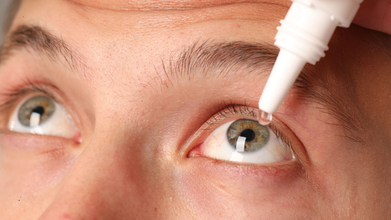
Credit: Canva
The US Food and Drug Administration has recalled over three million eye drops in the country over safety concerns.
The 3,111,072 products were manufactured by California-based K C Pharmaceuticals and were sold under names such as “Dry Eye Relief Eye Drops,” “Sterile Eye Drops,” and “Artificial Tears Sterile Lubricant Eye Drops,” according to the FDA notice.
K C Pharmaceuticals made the voluntary recall of the eye drops in early March.
The eight types of eye drop products were sold at major retailers, including CVS, Walgreens, and Rite Aid. They have expiration dates ranging from April to October.
Eye Drops: Why Are These Recalled? What Did The US FDA Say
The FDA, in its Enforcement Reports, stated that the products recalled “lack of assurance of sterility.”
While so far, there are no reports of injuries associated with the eye drops, the FDA notice classified the action as a “Class II recall.”
Class II recalls apply to products that can cause “temporary or medically reversible” health problems.
As per the FDA, "the probability of a serious health issue is remote," over these products, and that is why the recall is categorized as a Class II, USA TODAY reported
"Patients and consumers can continue using the medicine unless otherwise directed by the recalling company or FDA," the regulator said in a statement to the publication.
Also read: Can 'Eye Strain' Lead To Brain Cancer? Experts Explain
Which Eye Drops Have Been Recalled?
NBC News reported that the recalled products include:
- Sterile Eye Drops AC (tetrahydrozoline HCl 0.05%, zinc sulfate 0.25%), 0.5 fl oz (15 mL) bottles
- EYE DROPS Advanced Relief, (dextran 70 0.1%, polyethylene glycol 400 1%, and tetrahydrozoline HCl 0.05%), 0.5 fl oz (15 mL) bottles
- Dry Eye Relief Eye Drops (glycerin 0.2%, hypromellose 0.2%, and polyethylene glycol 400 1%) 0.5 fl oz (15 mL) bottles
- Ultra Lubricating Eye Drops (polyethylene 400 0.4%, propylene glycol 0.3%), Sterile, 0.5 fl oz (15mL) bottles
- Sterile Eye Drops Original Formula (tetrahydrozoline HCl 0.05%), 0.5 fl oz (15mL) bottles.
- Sterile Eye Drops Redness Lubricant (glycerin 0.25% and naphazoline HCl 0.012%), 0.5 fl oz (15 mL) bottles
- Sterile Eye Drops Soothing Tears (polyethylene glycol 400 0.4% and propylene glycol 0.3%), 0.5 OZ 0.5 fl oz (15 mL) bottles.
- Artificial Tears Sterile Lubricant Eye Drops (polyvinyl alcohol 0.5%, povidone 0.6%), 0.5 fl oz (15 mL) bottles.
Here’s What You Can Do Instead?
Also read: Struggling With Dry Eyes? Study Reveals Surprising Treatment- Tips To Prevent This Disease
The key to ensuring that your eyes are protected from environmental factors like the sun, dust, and dirt, especially for those who work outdoors or spend long hours on screen, is investing in good sunglasses with ultraviolet protection.
"For those who are using computers a lot, you need to blink your eyes constantly, take breaks in between, and drink a lot of water. Dehydration is also a contributing factor to dry eye," Dr Anita Sethi, who is Principal Director and HOD Ophthalmology, Max Multi Specialty Centre at Panchsheel Park.
She also recommends using zero-number protective glasses and computer glasses that can decrease strain and dry eye.
While advising people to stay away from natural remedies like turmeric or ginger put inside the eye, Dr Sethi urged people to consume more “foods rich in vitamin E, antioxidants” to maintain eye health.
“Colored vegetables and fruits, and even maintaining thyroid and vitamin D levels, because these also contribute to dry eye,” the ophthalmologist said.
Scientists Link Vaping to 2 Types of Cancer; DNA-Damaging Chemicals to Blame

Vape pens have chemicals that can damage DNA. (Photo credit: iStock)
Smokers turn to vaping thinking that it is cooler and more convenient. Little do they realise that this seemingly convenient act could cause long-term damage, most of it irreversible. Scientists now fear that vaping could be linked to not one, but two forms of cancer. E-cigarettes can trigger lung and mouth cancer, and this is a consequence of the DNA-damaging chemicals found in vapes. Researchers at the University of New South Wales in Sydney came to this conclusion after reviewing studies on mice that developed lung tumours after being exposed to aerosol. Reports also suggest that heavy smokers are more prone to mouth cancer.
Why are vaping pens linked to cancer?
Vapour from pens has a relatively better fragrance compared to conventional cigarettes, as these pens are flavoured. However, researchers say that these pens contain chemicals that can cause cancer, damage DNA, and lead to tissue inflammation. Researchers also say that e-cigarettes contain nicotine, which is likely to trigger lung and mouth cancer. However, the extent of this effect in humans is still unknown.
Read more: Parents Who Smoke May Be Passing Severe Lung Disease Risk To Their Children
Lead researchers of the study said that they would only be able to determine the precise risk once long-term studies are available. Contrary to popular belief, while many believe that vaping is far safer than smoking, the study’s findings act as a warning for all those who use a vape but have not smoked a cigarette in their life. Experts at the University of Sydney noted that vaping is a safer alternative to smoking for smokers. However, the research has drawn criticism for being “problematic” and “misleading”.
Experts at University College London said that no one would argue that e-cigarettes are completely risk-free. Rather, they said, vapes should be used as a harm-reduction tool to help smokers quit the habit, thereby reducing their risk of chronic and acute health problems, such as heart disease. The review, however, does not give a free pass to use e-cigarettes. It issues a warning against the use of vapes, citing risks of lung and oral cancer. At a time when vape use has increased suddenly, overtaking the popularity of smoking, research is necessary to discourage people, especially youngsters, from adopting the habit in the first place.
Cancer Is The 10th Leading Cause Of Death In Indian Children: Study

Leukaemia is one of the most common forms of childhood cancer. (Photo credit: iStock)
Cancer, a rare occurrence? Unfortunately, not anymore. According to recent findings from an analysis published in The Lancet, cancer is one of the top 10 causes of death among Indian children. This is an alarming statistic, signalling an under-recognised public health problem. Data in the Global Burden of Disease Study 2023 noted that even as infectious diseases decline, noncommunicable diseases like cancer are emerging as a serious threat to child survival and well-being. In India, this epidemiological shift is particularly concerning in the context of childhood cancers. Despite being rare, they are highly treatable when detected in the early stages—yet most cases are diagnosed late.
As per the Indian Council of Medical Research’s National Centre for Disease Informatics and Research (ICMR-NCDIR), childhood cancers accounted for 3–5 per cent of cancer cases reported in India in 2022. The country sees an estimated 50,000 to 60,000 cases every year among children aged 0–14 years. This makes it one of the highest burdens globally. In 2023, 377,000 cases of childhood cancer were reported globally, along with 144,000 deaths, according to The Lancet research paper.
Hidden cancer burden in India
When it comes to childhood cancers in India, leukaemia, or blood cancers, are the most common, followed by lymphomas and tumours of the central nervous system. Collectively, these categories comprise most cases of childhood cancers in the country. The statistics vary across regions, with Delhi reporting the highest number of cases due to better diagnostic facilities. However, experts believe that the actual burden is likely to be much higher. Incomplete cancer registration and limited access to proper diagnostic facilities in underserved and rural areas are to blame for delayed diagnosis.
Why is childhood cancer detected late in India?
Experts say that cancer deaths in India can largely be attributed to delayed diagnosis. Early symptoms of cancer in children include fatigue, fever, unexplained weight loss, and swelling in certain body parts. These symptoms are often overlooked, leading to delays at multiple levels. According to the ICMR 2022 factsheet, a significant proportion of children reach hospitals only at advanced stages of the disease. By then, treatment becomes more complex, more expensive, and less likely to succeed.
Access to cancer care for children
Access to cancer care for children is uneven in India. Paediatric oncology services are largely limited to hospitals in tier-one cities, forcing families from rural areas and smaller towns to travel in order to access proper treatment. This imbalance results in delayed care, especially for economically vulnerable families. Financial limitations are another barrier in the process—even if treatment costs are subsidised, expenses such as travel, accommodation, and loss of income can be overwhelming.
Read more: 41 million children aged 5-19 living with high BMI in India: Study
Irregular survival patterns
Globally, survival rates for childhood cancers exceed 80 per cent in high-income countries. In India, outcomes are uneven. The ICMR 2022 factsheet noted that survival depends on the stage of diagnosis, type of cancer, and where the child is treated. Hospitals in India are reporting improving survival rates for certain forms of cancer, such as acute lymphoblastic leukaemia. The ICMR factsheet also highlights the need for a dedicated approach to paediatric cancer care, including better infrastructure, trained doctors, and stronger referral systems.
- Follow Us :


© 2024 Bennett, Coleman & Company Limited