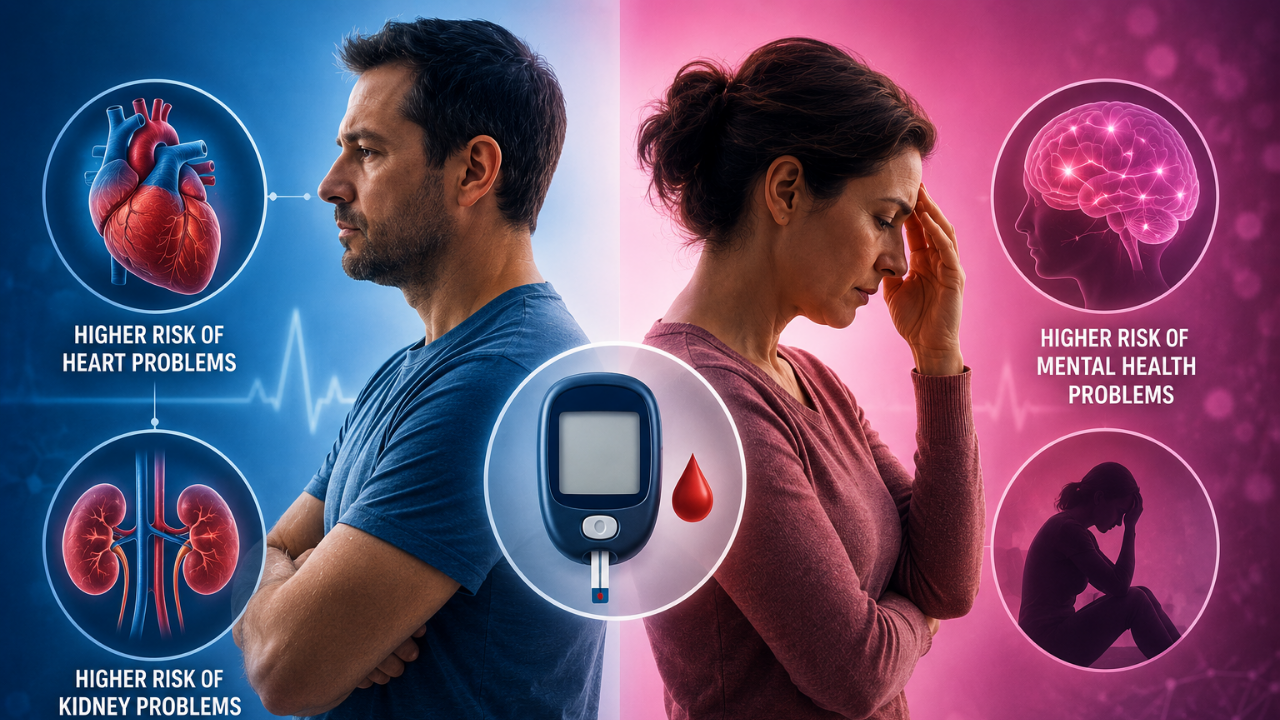
Type 2 diabetes may be the same disorder, but it may look quite different in men and women. A new study based on 28,720 people newly diagnosed with type 2 diabetes has found distinct patterns in the complications that come after diagnosis. Men were more likely to follow a trajectory involving cardiovascular disease or end-stage kidney disease, while women were more likely to develop mental health conditions like anxiety, depression or somatoform disorders. The study, published in PLOS Medicine, followed patients diagnosed between 2010 and 2020 using linked UK healthcare records. Participants were followed for a median of 6.8 years, allowing researchers to examine not just which complications occurred, but also the order in which they developed. Men Saw Stronger Heart And Kidney Disease Complications Among men, 8.4% followed a trajectory involving cardiovascular disease or end-stage renal disease, compared with 5.3% of women. Men also tended to develop these complications earlier than women. Hypertension, however, remained the most common complication across both sexes, affecting 21.1% of men and 20.2% of women. The finding matters because type 2 diabetes can damage blood vessels over time, increasing the risk of cardiovascular disease and kidney problems. But the study suggests that the sequence and timing of these complications may not be identical in men and women.Also read: US FDA Approves Eli Lilly’s Mounjaro To Reduce Cardiovascular Risk In Diabetics Women Were More Likely To Develop Mental Health Conditions 8.1% of women developed a mental health condition compared with 5.3% of men. These included anxiety, depression and somatoform disorders. Prof Ravinder Goswami, senior endocrinologist at AIIMS, told the Times of India that diabetes can affect men and women differently. He noted that men may develop diabetes at a younger age, while women with diabetes can lose the natural cardiovascular protection generally associated with the premenopausal period. Also read: Lowering Cholesterol May Protect Your Brain As Study Links Statins To 15% Lower Dementia RiskWhy Could Diabetes Behave Differently In Men And Women? Sex hormones, body-fat distribution, age at diabetes diagnosis, cardiovascular risk factors and differences in seeking healthcare can all influence how complications related to type 2 diabetes emerge. The study found that women had higher average healthcare utilisation. On the other hand, lower healthcare engagement among some men could represent a missed opportunity to detect complications earlier. The researchers also found that people who developed a mental health condition after their diabetes diagnosis had a shorter survival trajectory. Among people following the same disease pathway, men died on average nine years younger than women. That does not mean depression or anxiety automatically shortens a person's life by nine years. Rather, the finding highlights how the combination of diabetes and subsequent health problems can identify a particularly vulnerable group. Should Diabetes Be Treated Differently In Men And Women? The researchers say their study supports sex-specific complications of diabetes and earlier intervention, rather than completely separate treatments. For men, that could mean paying particular attention to cardiovascular and kidney health. For women, routine attention to mental health alongside physical complications is especially important. The study is observational, so it cannot prove that being male or female directly causes a particular diabetes complication.